
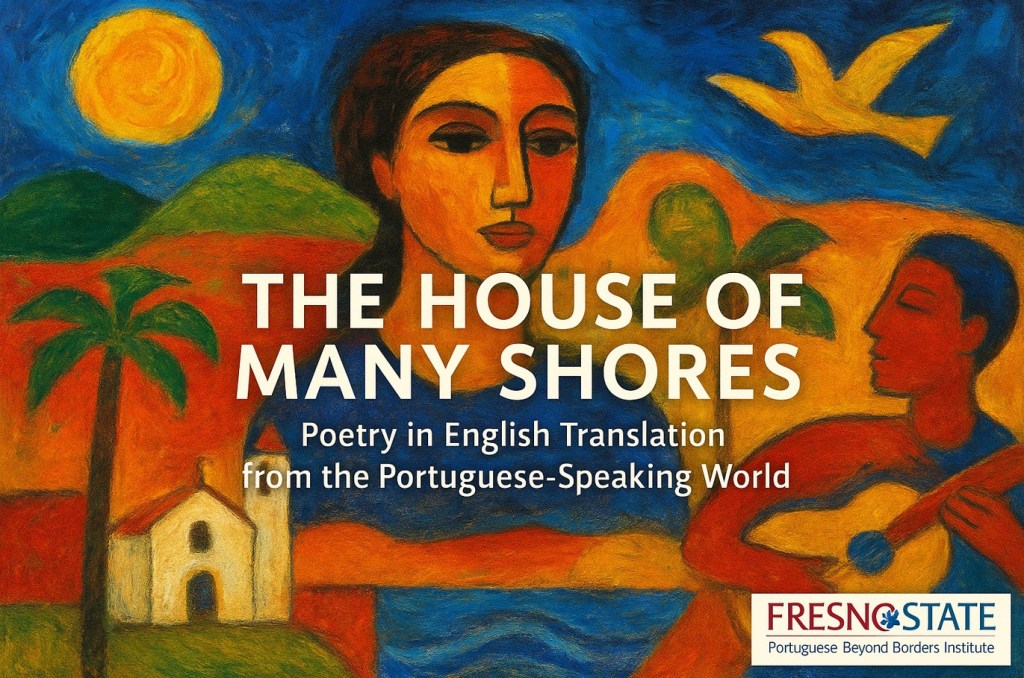
Empty Hands by Jofre Rocha

My hands are bare—
stripped of offerings,
emptied by the tempests of time.
Only in my eyes do I cradle the dream,
that fragile ember that refuses extinction.
Within me, the dark sediment remains—
the bitter relics of a race
that named itself human
but forgot its own reflection.
My hands are bare—
and yet I return laden with invisible treasures
for you, my comrades of the long night.
Behold my humble cargo,
the luggage of a freed slave:
a fistful of wind-blown pages,
my verses steeped in hunger,
salted by the breath of the sea.
My hands are bare,
and my baggage—only these sorrowed words.
But for you, companions of endurance,
I bring an open heart
to pulse with your grief,
and open arms
to clasp the rough beauty of our solidarity.
I return empty-handed, yes—
empty as the morning after exile—
yet within my eyes the dream endures,
a star unbroken by despair.
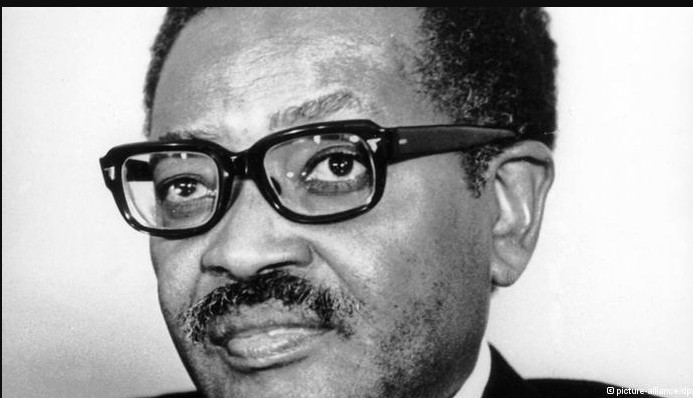
The Cry of Africa by Agostinho Neto
Through the corridors of centuries,
a cry resounds—
rising from the treacherous gleam of eyes
that bartered men for gold and illusion;
from desires intoxicated by conquest
and veiled in romantic deceit.
Listen—
in the drumbeat’s ache, Africa cries.
In the laughter of the enslaved, Africa cries.
In the mockery of labor, Africa cries.
Even in her immortal joy,
she cries—my brother Nguxi, my friend Mussunda—
within the circling wound of violence,
beneath the powerful enchantment of the earth,
where springs erupt with the fierce pulse of life.
Everywhere, from every soul,
the cry of Africa spills—
a hemorrhage of rhythm from ancestral wounds,
a river of red memory touching the soil,
where blood turns to seed,
and forests blossom in fragrant defiance.
Africa cries in the leaf and in the fruit,
in the supple grace of the zebra,
in the desert’s thirst,
in the serenity of waters that mirror the sun.
She cries even in the beauty
of human creation—
for her hands built temples,
and her sweat carved the geometry of nations.
It is the cry of centuries,
woven from servitude and survival,
from black dramas and white consciences,
from the lethargy of those who dreamed without justice,
and the innocence of those who believed the lie.
This cry—
this violated truth—
has withered within the iron circles
of dishonest gallows,
where corpses of freedom were sacrificed
to machines of counting and greed.
In violence,
in violence,
in violence—
the cry persists,
echoing through the marrow of the world.
The cry of Africa is not a wound alone—
it is a symptom,
a mirror held before our trembling hands.
We carry within us other lives,
other joys,
still denied by the false lamentations
of those who speak in our name.
And yet—
even when love falters
and our eyes grow dry—
Africa’s cry remains:
a heartbeat disguised as silence,
a resurrection waiting beneath the dust.
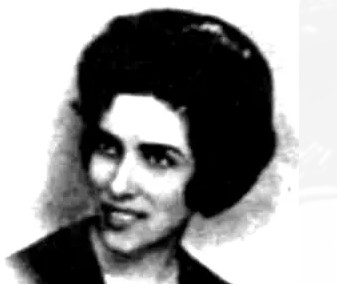
It’s Time, My Friend by Alda Lara
It’s time, my friend—
let us rise and walk.
From far horizons, the Earth calls,
and none can silence her ancient voice.
She calls with the murmur of roots,
with the wind’s insistence through forgotten bones,
with the sorrow of seeds still waiting for rain.
Upon her skin,
the same burning sun scorched our dreams;
the same sorrowful moon brushed our foreheads in silence.
And though your skin is night
and mine a paler dawn,
we were born of the same mother—
this patient, wounded Earth.
Come, brother—
the hour has come.
Let my heart open
to the salt of your grief
and the radiance of your joy.
Let my hands, pale with inheritance,
reach across time to clasp
your dark, enduring hands,
so that together our sweat may mingle,
our labor fuse,
and the rusted walls of injustice
crumble into the dust from which we came.
Come, comrade—
beyond the horizon another ocean trembles,
its tides aflame with hope.
Do you hear it?
It is the Earth—
her cry, her hymn, her summons.
It’s time, my friend.
Let us walk—
toward the dawn that awaits us both.
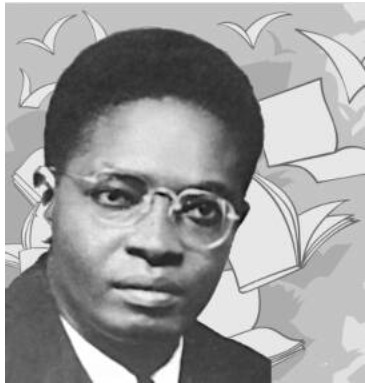
Evening of the Child by Viriato da Cruz
Night falls thick as pitch,
and by the warmth of their grandmothers’ voices,
the children grow enchanted
by the old Bantu tales…
“Once upon a time, there was a gazelle,
mistress of a goat without a mate…
…Cunning, the slow tortoise —
tuc… tuc… — came stepping in
to the council of animals.
(‘So late he has arrived!’ they cried.)
He opened his mouth and spoke—
pronouncing the final judgment:
‘Fear not the force of the strong!
If the lion hoards what is not his —
fight against Evil, triumph for Good!
Take from the lion, give to the gazelle.’
But when outside,
the angry wind weeps through the cracks,
and branches of tall mulembas
rustle and moan,
and loose doors beat against the massembas,
the children huddle tight, wide-eyed:
— Eué!
— It’s the casumbi…
And the grown-ups —
not far from there,
shelling beans for the quitande —
the grown-ups laugh with delight.
They laugh, yes, because they say
the casumbi harms only those
who carry no love in their hearts;
for others, in the dark night,
seek that other voice of casumbi,
that other voice — Happiness.
Song of Birth by Ana Paula Tavares

The fire is kindled.
The hands are ready.
The day has paused
in its slow descent
toward the mouth of night.
Within the basin of water,
hands weave a new skin—
a tender shimmer
where life prepares its breath.
White cloths await,
a pot murmurs its fever,
and beside it,
the blade gleams—
cold, obedient, ancient.
A thin thread of pain
measures the hours,
while twenty calabashes of pleasure
turn to butter beneath the wind’s patience.
The moon—
a still coin of silver—
rests upon the whetstone.
A woman opens herself to the night,
offering the unspoken silence
of a cry that blooms without sound,
without gesture—
only silence,
unfolding into cry,
set free between tears.
The elder women unravel memory,
their voices lighting
the corridors of darkness;
their palms, warming themselves
to sow the embers of new fires.
And in the center of this ritual,
a woman burns—
consumed by a cold flame,
a pain like all others,
greater than all others—
the flame of birth,
the burden of becoming.
She burns in the hollow of night,
gathering the river into her body
while the children sleep,
their dreams heavy with milk,
their souls floating
in the hush before dawn.
All poems translated by Diniz Borges
 Filamentos (artes e letras)