
BELLIS AZORICA
It is a good idea to translate emblematic works of the written word with a taste for salt and publish them on the North American university market.
It deserves thanks on behalf of Azoreans without borders and praise for the benefit of Azorean literature.
This is the purpose of the interesting project Bellis Azorica (the scientific name of a plant endemic to the Azorean islands), coordinated by Dr. Mário Pereira from Tagus Press at the Center for Portuguese Studies and Culture at the University of Massachusetts at Dartmouth and accompanied – very well accompanied and very well advised – by Professor Onésimo Almeida, from Gávea-Brown Publications in the Department of Portuguese and Brazilian Studies at Brown University in Providence, as part of an investment co-funded by the Government of the Azores, through the Regional Directorate for Communities.
Thanks to this project—which is not unprecedented but necessary—some representative titles of Azorean literature have been freed from the bonds of the islands and have gained the wings of the English language to fly higher and reach further into the immense North American book market.
There, they are available to a potential audience of millions of readers, including, preferably, the children and grandchildren of our emigrants, who thus acquire and pass on identity references of Azorean culture.
This transatlantic flight of the literary Azores, which deserves to be continued and extended, also has a distinct component of regional impact through the meritorious initiative of the dynamic publishing house Letras Lavadas, with the publication of these works also on the Azorean market, specially dedicated to the growing number of tourists visiting the Azores:
– Stormy Isles, by Vitorino Nemésio, translated by Francisco Cota Fagundes (2019)
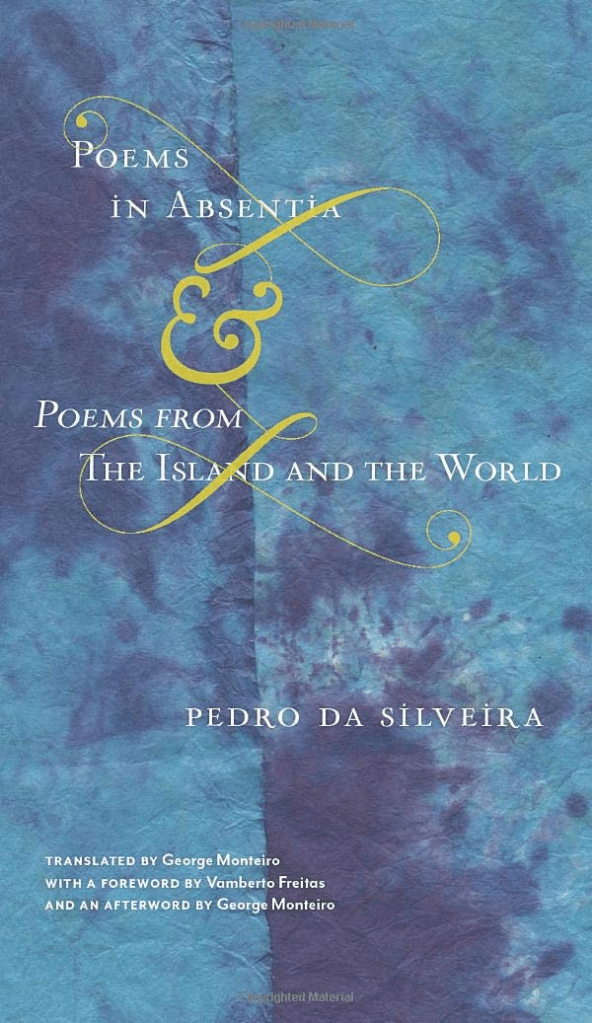
– Poems in Absentia & Poems from The Island and the World, by Pedro da Silveira, translated by George Monteiro (2019)
– The Undiscovered Islands, by Raúl Brandão, translated by David Brookshaw (2020)
– Smiling in the Darkness, by Adelaide Freitas, translated by Katharine Baker (2020)
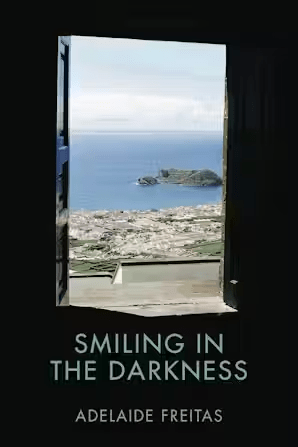
These four works have, first and foremost, the interest in the theme and the quality of the writing in common.
But their four authors, certainly by mere and happy coincidence, are all linked, directly or indirectly, some more than others, to different geographies of the Azorean diaspora – as is typical of everything or almost everything done in the Azores.
Adelaide Freitas stands out as having the most obvious connection, with an academic career spread across both banks of the “Atlantic River” (as Professor Onésimo would say): she attended Ponta Delgada High School and New Bedford High School, graduated from the University of Massachusetts, did her master’s degree at New York University and her doctorate at the University of the Azores.
But in the other three authors, we also find some diasporic relationship, in this case with our first emigration destination:
Vitorino Nemésio taught in Brazil and even pushed for the foundation of the Casa dos Açores in Rio de Janeiro in 1952;
Pedro da Silveira, who was born 100 years ago on the beginning of Europe, the island of Flores, published Os últimos luso-brasileiros: sobre a participação de brasileiros nos movimentos literários portugueses do Realismo à dissolução do Simbolismo in 1987;
Raúl Brandão was a regular contributor to the magazine Portugal-Brasil, a fortnightly publication founded and directed by Augusto de Castilho in 1899.
For a long time, the Azorean tides of our authors have washed up on American shores, but now they are landing on dry land to be better known, better known, and better appreciated, as they deserve to be.
As part of the Bellis Azorica project, other important Azorean authors have already been or will be translated and published in the United States:
– Dias de Melo, Dark Stones, translated by Gregory McNab
– Natália Correia, In America, I Discovered that I was European, translated by Katharine Baker and Emanuel Melo
– Antero de Quental, Sonnets and Selected Poemas (bilingual edition), edited by Onésimo T. Almeida & Mário Pereira
– Cristóvão de Aguiar, Raiz Comovida, translated by David Brookshaw
This is a long but fruitful road that we must continue to follow, also reaching out to the new generation of Azorean literature.
Thanks to the dynamism of its director, Diniz Borges, Bruma Publications, the publishing arm of the Portuguese Beyond Borders Institute at California State University, Fresno, is now also following this path.
The bridge linking the ten Azorean islands on both sides of the Atlantic (to use the expressions of Nemésio and Onésimo) is also – and perhaps above all – cultural.
_____
José Andrade is the Regional Director for Communities of the Government of the Autonomous Region of the Azores
Based on a text from his book Transatlântico – As Migrações nos Açores (2023)
Translated by Diniz Borges
In full transparency, we did not ask Dr. José Andrade to mention Bruma Publications in the article. The article was translated as it was written. We thank him for mentioning Bruma Publications in an article that rightly features Professor Onésimo Teotónio Almeida’s pioneering work and Bellis Azorica’s great work. Adding to the full transparency, the director of PBBI-Fresno State is also on the advisory board of the Bellis Azorica collection by Tagus Press, UM Dartmouth.
 Filamentos (artes e letras)