
Every week, Filamentos (arts and letters in the diaspora) by Bruma Publications from the Portuguese Beyond Borders Insitute at Fresno State commemorates the 50th anniversary of the Carnations Revolution. Today we bring you some books on the subject in English. Since a few of our readers have requested more information, here are a few suggestions.
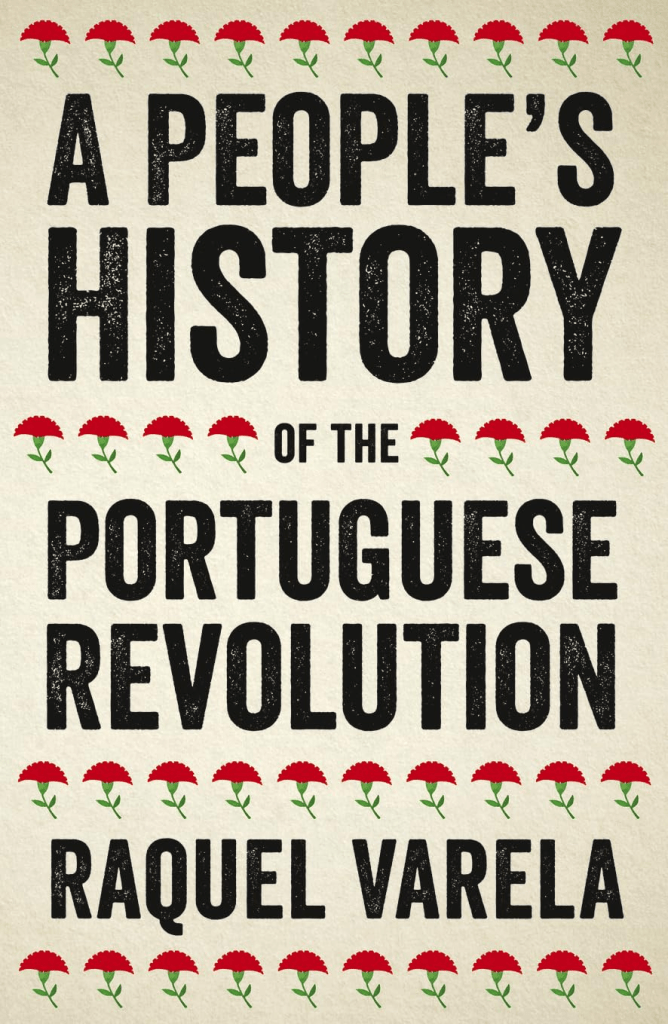
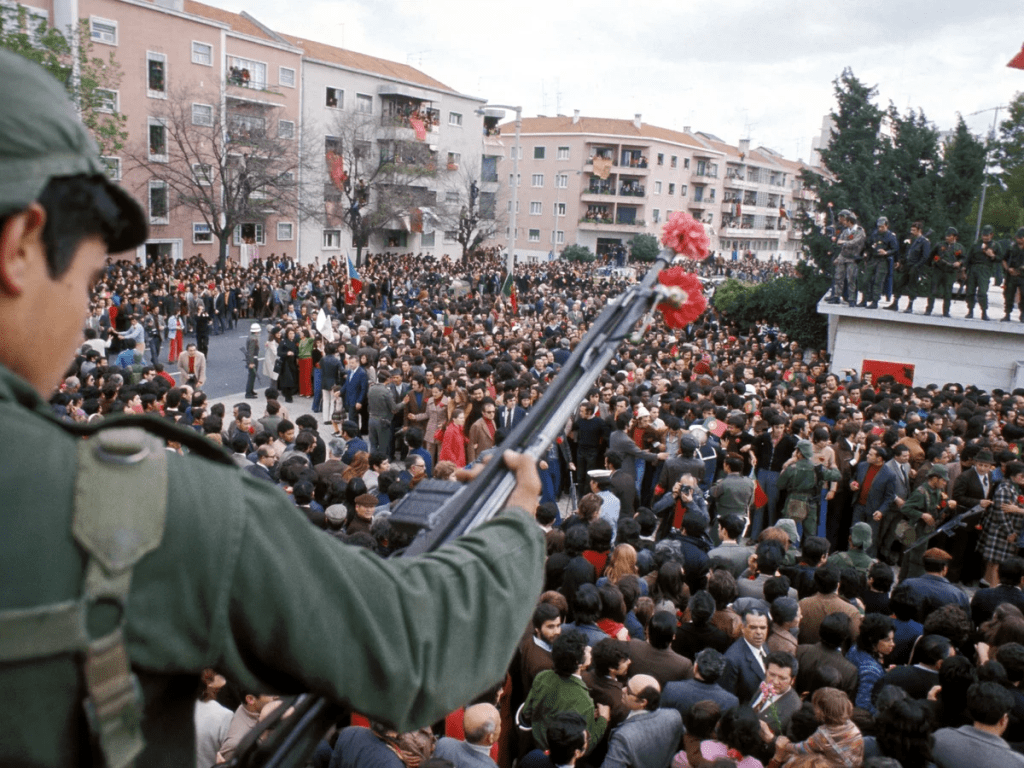
On the 25th of April 1974, a coup destroyed the ranks of Portugal’s fascist Estado Novo government as the Portuguese people flooded the streets of Lisbon, placing red carnations in the barrels of guns and demanding a ‘land for those who work in it’.
This became the Carnation Revolution—an international coalition of working class and social movements that also incited struggles for independence in Portugal’s African colonies, the rebellion of the young military captains in the national armed forces, and the uprising of Portugal’s long-oppressed working classes. Through the organizing power of these diverse movements, a popular-front government was instituted, and Portugal withdrew from its overseas colonies.
Cutting against the grain of mainstream accounts, Raquel Cardeira Varela explores the role of trade unions, artists, and women in the revolution, providing a rich account of the challenges faced and the victories gained through revolutionary means.
Editorial Reviews
Review
“Lively, brilliantly documented and filled with the voices of Portugal’s ordinary people, Raquel Varela’s book recovers the revolution from below that shook Portugal in 1974-5, a ‘democratic transition’ that revealed another world is possible. This book deserves the widest circulation.”
— Colin Barker, author of Festival of the Oppressed: solidarity, reform and revolution in Poland, 1980-81
Review
‘Lively, brilliantly documented and filled with the voices of Portugal’s ordinary people, this book recovers the revolution from below that shook Portugal in 1974-5’
‘An excellent, well-written, and radical introduction to a complex and immensely important history.’
About the Author
Raquel Cardeira Varela is a researcher at the Institute of Contemporary History at the Universidade Nova de Lisboa. She is also president of the International Association of Strikes and Social Conflicts and coeditor of its scholarly journal, Workers of the World: International Journal of Strikes and Social Conflicts.
From Amazon
Some of the topics covered in the book
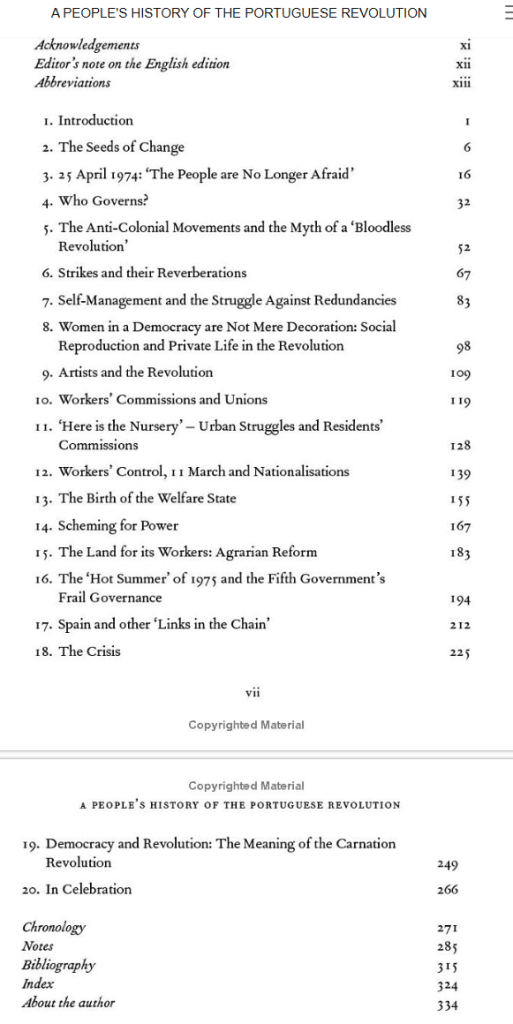
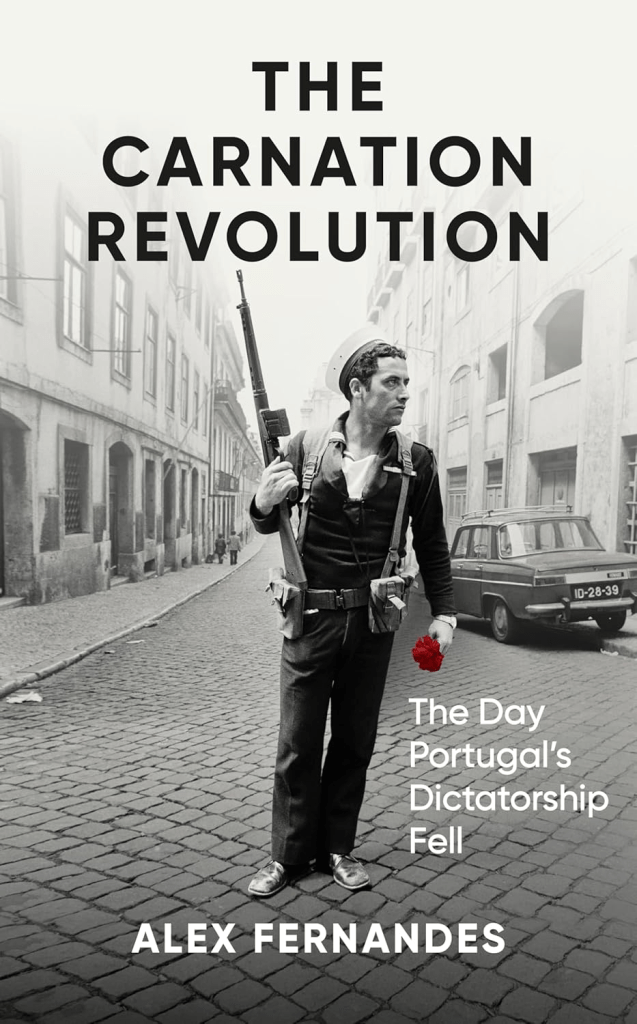
A new history of Portugal’s Carnation Revolution on its fiftieth anniversary
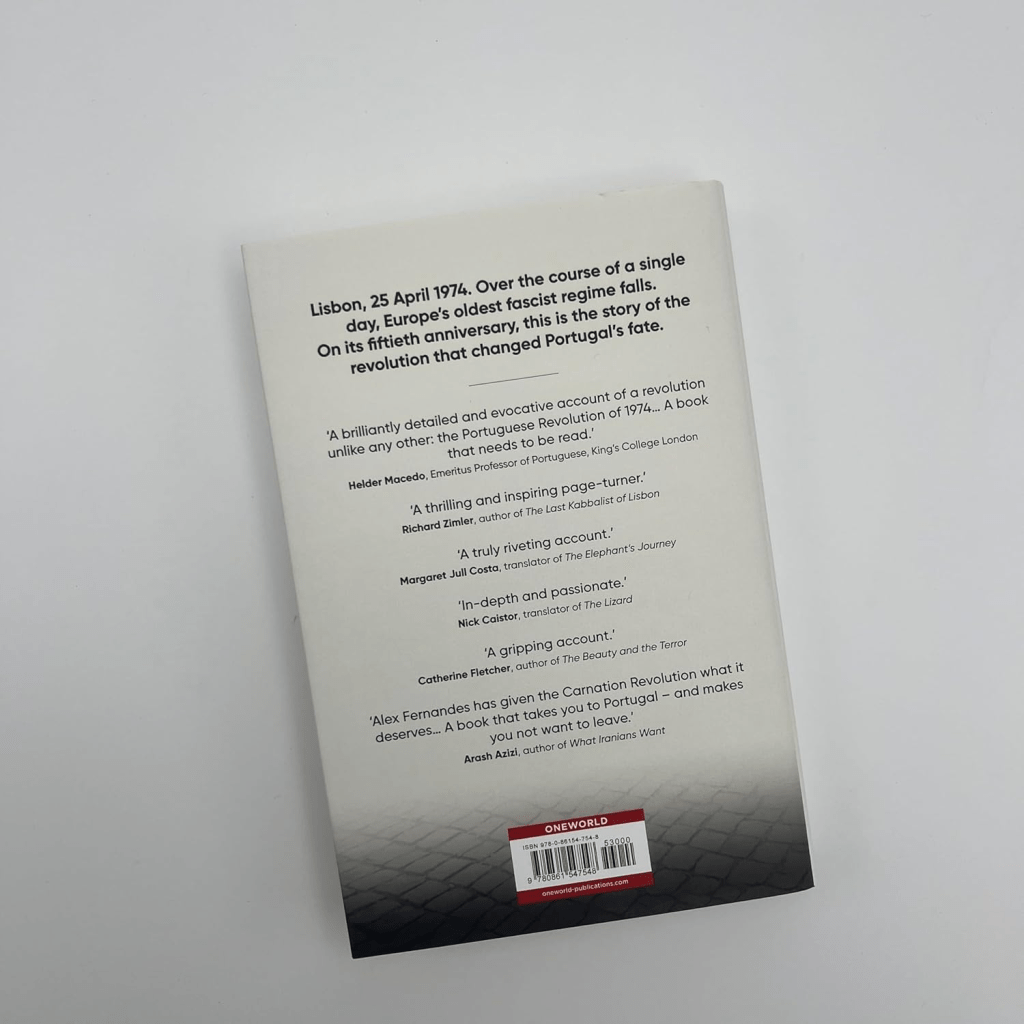
25 April 1974, Lisbon. Over the course of a single day, Europe’s oldest fascist regime falls. On its 50th anniversary, this is the story of the revolution that changed Portugal forever.
‘The Carnation Revolution reads like a political thriller.’ The Times
On the night of 24 April 1974, at five minutes to eleven, a Lisbon radio station broadcasts Portugal’s Eurovision entry. By 6.20 p.m. the next day, Europe’s oldest fascist regime has fallen. Hardly a shot has been fired. As citizens pour into the streets, they offer carnations to the revolutionary soldiers. For the first time in forty-eight years, Portugal is free.
The Carnation Revolution winds through the streets of Lisbon as the revolution unfolds, revealing the myriad acts of ordinary and extraordinary resistance that made 25 April possible. It’s the story of daring escapes from five-story prisons, soldiers disobeying their officers’ orders, and simple acts of courage by thousands of citizens. It’s how a group of young captains felled a globe-spanning empire.
***
Editorial Reviews
Review
‘The Carnation Revolution reads like a political thriller. Fernandes, a Portuguese writer living in London, deftly conveys what a madcap enterprise it was. … Fernandes has full command of the literature and historical archives on the revolution and his narrative deploys a level of detail few will find fault with.‘ The Times
‘The book offers a lively account of a phenomenon rare by the standards of southern Europe at the time — a military coup that ended authoritarianism, and restored democracy and civil rights to the people… It is a gripping tale.‘ Financial Times
‘I feel like I’ve been waiting three decades for precisely this book… In clear language, with a brilliantly detailed narrative, Alex Fernandes leaves us in no doubt why we should celebrate the fiftieth anniversary of the Carnation Revolution and never forget why it came about.’
Lara Pawson, author of This Is the Place to Be
‘The Carnation Revolution is a detailed, highly readable synthesis of Portuguese-language histories, told in the narrative present, with an emphasis on “history from below”.’ TLS
‘A brilliantly detailed and evocative account of a revolution unlike any other: the Portuguese Revolution of 1974… A book that needs to be read.’
Helder Macedo, Emeritus Professor of Portuguese, King’s College London
‘Alex Fernandes displays an encyclopaedic knowledge of modern Portuguese political history in this admirably detailed exploration of the revolution that ushered in democracy in 1974. A thrilling and inspiring page-turner.’
Richard Zimler, author of international bestseller The Last Kabbalist of Lisbon
‘A gripping account of an episode in European history that should be better known. Alex Fernandes narrates in vivid detail how junior officers disillusioned by Portugal’s colonial wars launched a daring coup to bring down a dictator, winning popular support in the face of the regime’s brutal repression.’
Catherine Fletcher, author of The Beauty and the Terror
‘This is a real page-turner of a history book, a truly riveting account of the build-up to Portugal’s near-bloodless 1974 Carnation Revolution, the revolution itself, and its messy aftermath, bringing all the participants vividly to life.’
Margaret Jull Costa
‘In this in-depth and passionate book about the 1974 revolution that changed Portugal’s destiny, Fernandes introduces us to the places where the historic events took place, and provides vivid portraits of the protagonists.’
Nick Caistor, translator of The Lizard by Jose Saramago
‘Alex Fernandes has given the Carnation Revolution what it deserves: an animating account that gives life to its course… Whether when he is writing of cafes in Lisbon where the revolutionaries gathered or the battlefields of Angola and Mozambique, where they were first radicalised, Fernandes’s prose is compelling with an eye for the details that make history come alive… A book that takes you to Portugal – and makes you not want to leave.’
Arash Azizi, author of What Iranians Want
‘The Carnation Revolution reads more like a thriller than a history book, taking the reader through the conspiracy of young captains who brought a democratic Portugal into existence.’ Jacobin
From Amazon
About the Author
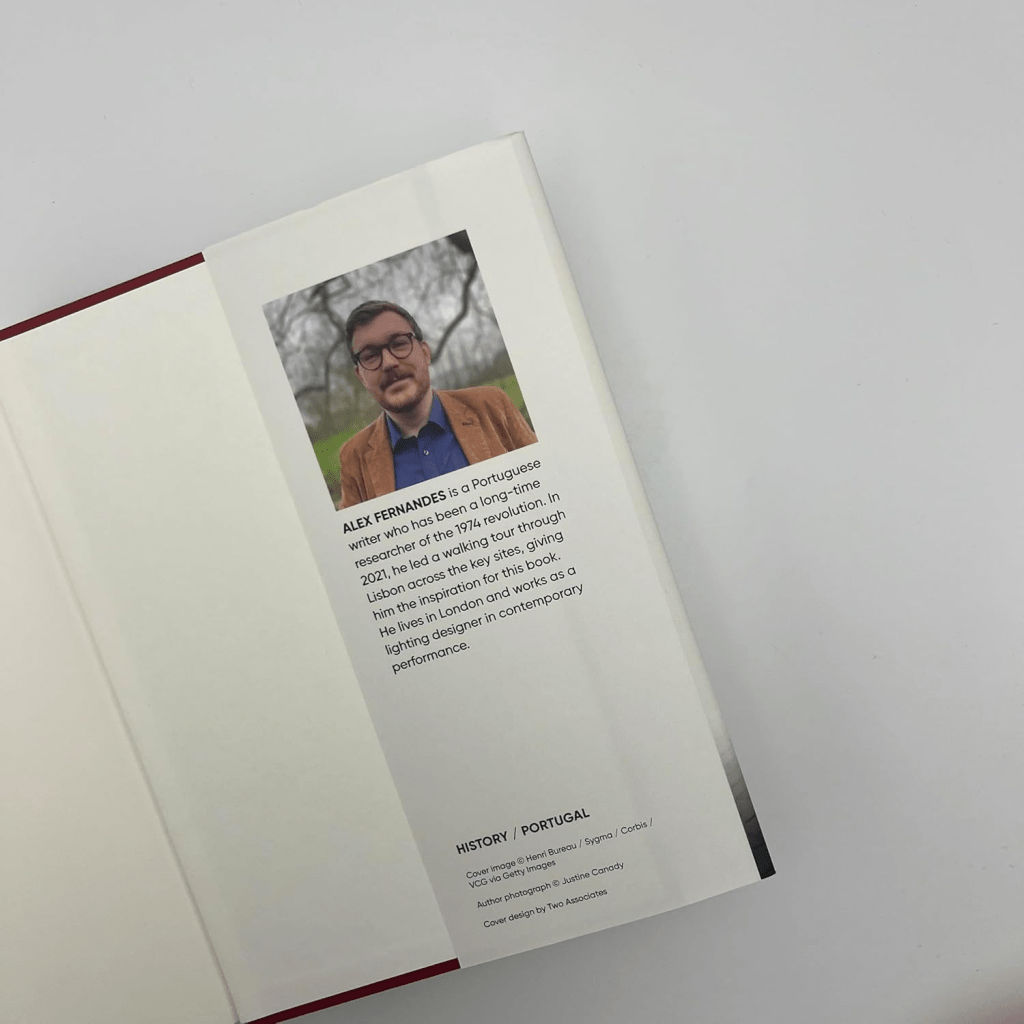
Alex Fernandes is a Portuguese writer who has long researched the 1974 revolution. In 2021, he led a walking tour through Lisbon, visiting the key sites which inspired this book. He lives in London and works as a lighting designer for contemporary performances.
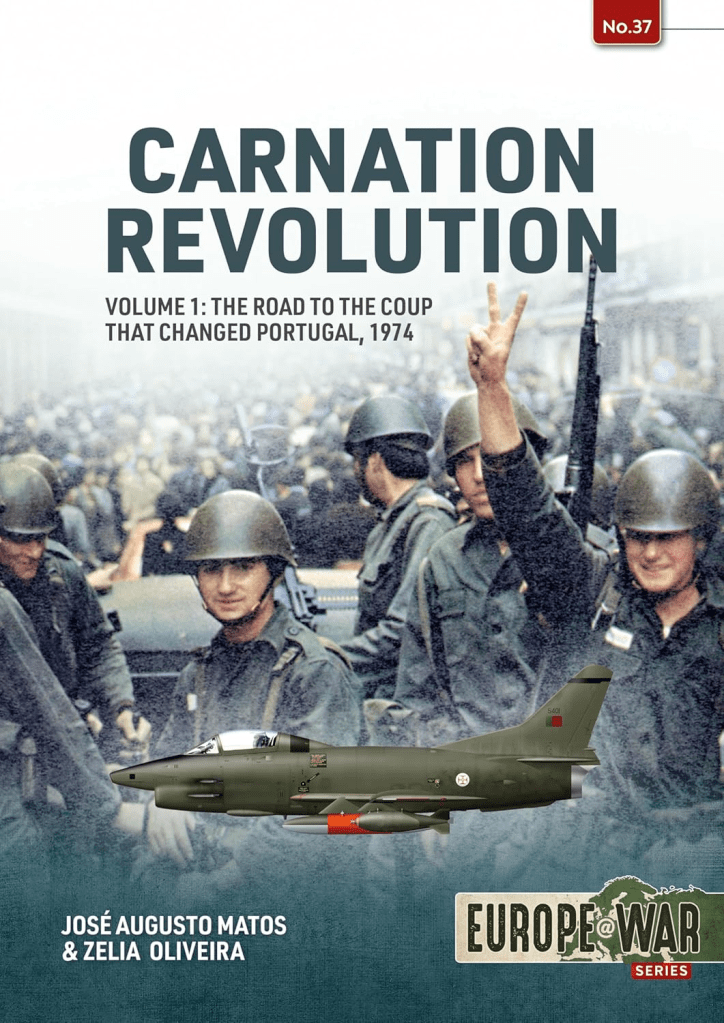
The first in a two-volume illustrated history of the coup that brought down the dictatorial regime that had been in power for over 40 years in Portugal.
On 25 April 1974, a movement of young captains brought down, with practically no resistance, the dictatorial regime that had been in power for over 40 years in Portugal. In the early hours of that day, a military movement unleashed a series of operations that, in less than 24 hours, defeated the forces loyal to the regime, neutralizing any possibility of reaction. Few forces resisted the insurgents, and the only resistance worthy of note came from the political police, who, in the heat of the revolution, opened fire on the surrounding crowd, causing four deaths.
In the streets of Lisbon, the people enthusiastically joined the military revolt. They started offering food, drinks, and red carnations to the soldiers, who decided to stick them in the barrels of their rifles, leading to the revolt being known as the Carnation Revolution. Although it began with a military coup d’état, 25 April paved the way for democracy, and there is no comparison to similar revolutions. It was also a unique event in the European context of the time that broke Portugal’s isolation and brought it closer to other Western democracies.
This book is the first in a two-volume history. It describes the background of the revolution, the causes that led to the revolt of the captains, and the situation in the Portuguese colonies in Africa, where guerrilla wars for their independence had been going on for more than a decade. Carnation Revolution Volume 1: The Road to the Coup that Changed Portugal is richly illustrated with photographs and specially commissioned artworks.
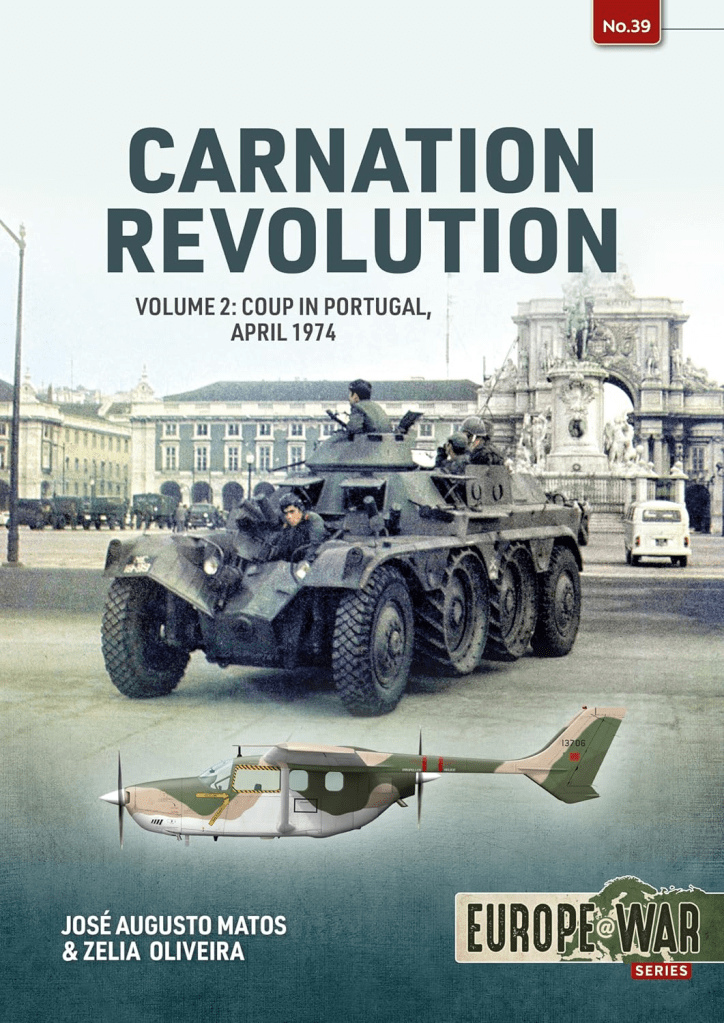
A detailed account of the intertwining political and military events of March and April 1974 in and around Lisbon.
In March 1974, a climate of conspiracy reigned in Portugal. Premier Marcello Caetano insisted on continuing the Portuguese presence in Africa and the wars against the liberation movements in Angola, Mozambique, and Guinea. Costa Gomes and Spínola, Portugal’s two most senior generals, did not share this view. Spínola, with Costa Gomes’s permission, had published Portugal e o Futuro (Portugal and the Future), a book that questioned the policy that had been followed until then and caused a major political earthquake throughout Portugal and its colonies.
At the same time, a movement of young captains prepared the regime’s overthrow. Tired of the war in Africa and the government’s inability to solve the overseas problem, the conspirators drew up plans to end the dictatorship and establish a democratic regime in Portugal. The first coup attempt on 16 March 1974 was neutralized by government forces, but the second attempt on 25 April was an overwhelming success. In under 24 hours, the insurgents controlled the streets of the capital, and Marcello Caetano was surrounded by rebel forces. With no options remaining, Caetano would hand power to General Spínola, who would become the new leader of the emerging regime. The people took to the streets of Lisbon to give red flowers to the soldiers, earning these events the name of ‘The Carnation Revolution.’
Carnation Revolution Volume 2: Coup in Portugal, April 1974 offers a detailed account of the intertwining political and military events of March and April 1974 in and around Lisbon as power swung irretrievably from a dictatorial government to an army intent on ending the colonial wars in Africa and restoring democracy to Portugal. This volume is illustrated throughout with original photographs and includes specially commissioned color artwork.
Sample from Kindle…
 Filamentos (artes e letras)