
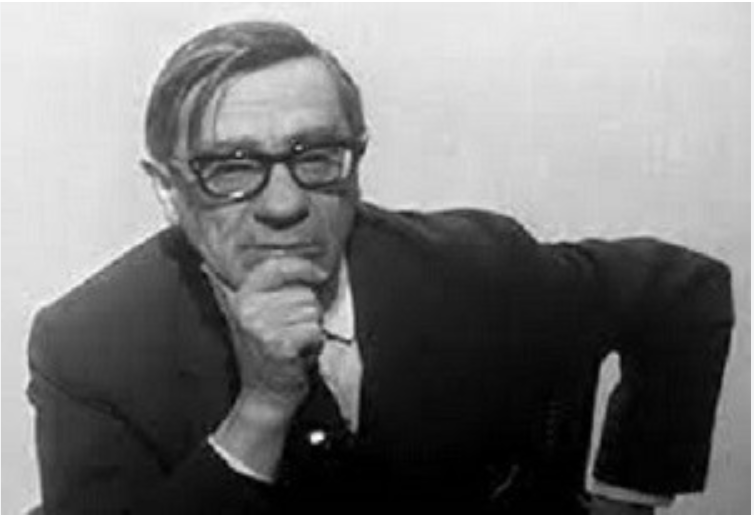
A group of young artists from the Azorean diaspora recently stated in São Miguel that “they no longer identify with the closed and gloomy version of Azorean identity as defined by Nemésio.” Fortunately, these three young people of Portuguese descent do not represent Azorean youth, and they must learn about one of the most significant names in their collective memory.
Fortunately, the island’s youth are educated in their five centuries of history and have a special affection for institutions, such as people and especially our poets, such as Vitorino Nemésio and Álamo Oliveira, Antero de Quental and Natália Correia, and so many others. Knowing that Vitorino Nemésio was born on the island of Terceira and on the local beach of Batalha da Praia, a poignant moment in the country’s destiny at the beginning of the 19th century, is already revealing information about his genius: in the decade of his birth and upbringing, Terceira was the only place in the archipelago where one could breathe Portuguese culture because, in the words of Antero de Quental, an Azorean from São Miguel, in 1832, “Terceira is an essentially Portuguese land” and it is here that “I feel more Portuguese every day.” Therefore, young people, when you come across the name Nemésio, revere it (= respect it) because it has its origins in the canons of the political history of the Azores, namely in our political motto “Better to die free than live in peace as subjects”; In fact, Nemésio follows in the footsteps of the Jesuit António Cordeiro, another Terceirense, who was the first in the Azores in the 18th century to think and write about improving Azorean autonomy.
When Nemésio wrote the essay, he named Açorianidade in July 1932 to participate in the 5th Centenary of the Discovery of the Azores; he did not write it for poetic merit, but as a civilizational and, therefore, political contribution: it was a time of great regionalist unrest in defense of district administrative autonomy. This is confirmed by another essay with the same title that Nemésio published in September of the same year. Thus, in patchwork format: in the first essay, after stating in the second paragraph that it is “impossible for him to make the slightest contribution” as a study or reflection on the purpose of the commemoration “to help the Azorean consciousness take care of itself and contribute to the Azores, as an autonomous body of Portuguese lands (an authentic breeding ground for 15th-century Lusitanian culture), enter a phase of renewed activity, reconstruction, and human and civic effort,“ in the following paragraphs Nemésio declares ”the essence of my consciousness as an islander,“ ”first and foremost, attachment to the land, this elemental love that knows no reasons, only impulses; – and then the feeling of an ethnic heritage that is closely related to the greatness of the sea,“ ”a kind of intoxication of isolation permeates the soul and actions of every islander, structures their spirit, and seeks a quasi-religious formula for coexistence with those who did not have the fortune to be born, like logos, in the water,” “half a millennium of existence on volcanic tuffs, beneath clouds that are wings and creatures that are clouds, is already a respectable amount of time,”- “we are, therefore, new people. But Azorean life does not date spiritually from the colonization of the islands: rather, it projects itself into a telluric past that geologists will reduce to time, if they wish… As men, we are historically welded to the people from whom we came and rooted by our habitat to lava hills that release from their very bowels a substance that penetrates us. Geography, for us, is as valuable as history,“ ”like mermaids, we have a dual nature: we are made of flesh and stone. Our bones are immersed in the sea.”
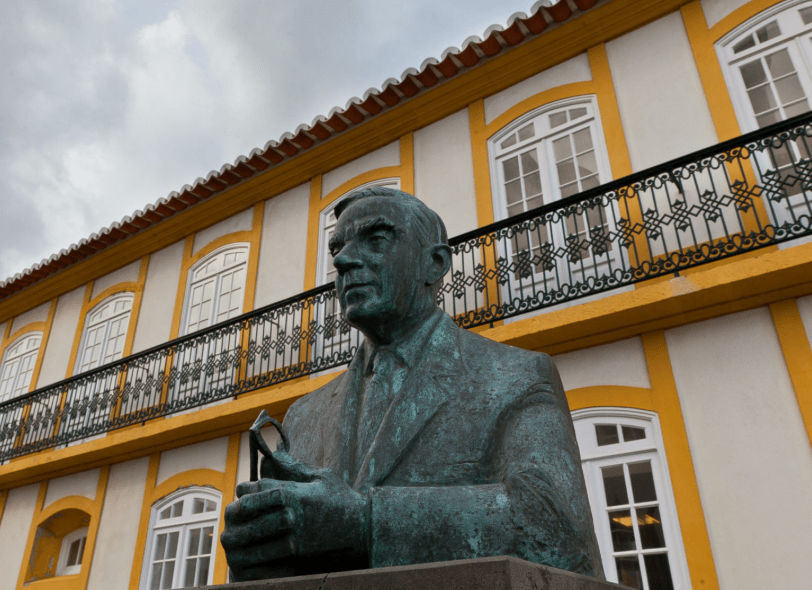
And in the second essay, Nemésio declares that at first, after their discovery, “In themselves, the Azores were of little value,” “but soon the islands plunged back into silence”; “that is why the fate of the Azores seems to me to be historically a limbo of obscurity. Their internal history, without outside interference, develops in a context of minor vicissitudes that only a few dramas, staged there, break. The islands became a breeding ground for external political experiments. D. António went there to try to resist, and the Restoration belatedly set up its machinery there. But the great page in the history of the islands is Liberalism. The Portuguese, who feel European again, go there to prepare, after exile, the invasion of Europeanism, and the national Robinson finds his island in Terceira. It is – says Herculano – “the rock of salvation.” He then concludes, “They are lands of peace and oblivion. It took four hundred years to give the Metropolis the most restless Portuguese spirit – Antero de Quental. They remained in their magnificent apartment, like outcrops destined almost exclusively for the claws of seabirds, “and yet, Portuguese souls live there, and a human comedy takes place there that has, at least, the grandeur of solitude.” In other words, Nemésio, perhaps without knowing it, became the most prominent autonomist figure because he determined, for the first time, the specific insular quality of the Azorean in Portuguese culture, and also because, for the first time, this quality justified a form of politics consistent with this Atlantic insular condition.
But that’s not all. In March 1976, Nemésio concluded this autonomous veneer in four poems, but without the Lusitanian veneer given the situation, this imaginary of Azorean identity: “in the still ashes, the green wind hides the bombs of independence… It is the people who pretend…“, ”Blocks of Ponta Delgada, Towers of Angra, Skies of Horta, the hour is struck, a chest bleeds at our door“, ”…why do they spy on the sea that has always been ours… Let’s save the Islands: I have my father’s and mother’s bones there,“ – ”… from a rock in the rough sea, which the Guideline of autonomy only through death makes a slave.” It is no coincidence that the 1975 independence movement, mainly from São Miguel, chose Nemésio as the first president of the Republic of the Azores; nor is it a coincidence that he refused: he refused because he was heir to the matrix of Portuguese/Azorean identity.
The Azoreans became aware of their autonomous status with Vitorino Nemésio.
In Diário dos Açores- Paulo Viveiros, director.
Arnaldo Ourique is a specialist on the Portuguese Constitution and the Azorean Autonomy. A researcher in the fields of Politics and Society.
 Filamentos (artes e letras)