A Revisit to the Work of Eduardo Mayone Dias and Our Immigration in California
Vamberto Freitas
Coming from an environment poor in varied life experiences, the typical Portuguese immigrant in the United States often retreats into a small cocoon of material concerns, encloses himself within his linguistic and cultural community, and fears contact with other groups—or avoids it altogether—whether because of difficulties in verbal communication or conceptual exchange.
—Eduardo Mayone Dias, Miscelânia Lusalandesa
For those here in the islands who may not know him: Eduardo Mayone Dias was born in Lisbon in 1927 and, after earning his degree at the University of Lisbon, soon left Portugal for abroad—first to Mexico and then, in 1961, to the United States. There, he earned his doctorate at the University of Southern California in Hispanic Literatures and went on to begin his academic career at the University of California, Los Angeles, where he taught Portuguese language and literature.
This text is drawn from a preface I wrote for his book Miscelânia Lusalandesa, published in Lisbon by Edições Cosmos in 1997. He has just appeared in Artesia, a city on the outskirts of Los Angeles where thousands of Azoreans live—a place with which he has always maintained a relationship of deep affection and which, on October 8, recently honored him for the publication of Memórias de um Burocrata Invisível: Autobiografia e Algo Mais, by Eduardo Alberto de Oliveira Rocha. I have not yet read this latest work, but I could not postpone these words any longer, since even then I was already referring to his bibliography devoted to our immigration and our life wherever it unfolds.
He was one of my mentors through his writing—in books and newspapers—and he never hesitated to invite friends into the home where he always lived, in the heart of the great metropolis. There are debts that can never be repaid; certain gifts cannot be returned. The work of Mayone Dias, of which Miscelânia Lusalandesa is only a light yet vivid sample—like Coisas da Lusalândia, also published in Portugal—constitutes a rare and invaluable record of Portuguese life abroad. He followed closely, over decades, the path of Portuguese immigration in America.
He could very well have chosen the ivory tower that an institution like the University of California offers its faculty. Yet he always understood that Portuguese cultural presence in the United States should go beyond university lectures on the canonical figures of our world and include the lived reality of an entire people who began arriving there in the late nineteenth century, during the legendary Gold Rush. It was in this way that “Portufornia”—the curious and diverse world of the Portuguese in California—became, I believe, the most studied and widely documented segment of our diaspora. Today, many continue this work, especially through publications of the Portuguese Heritage Publications of California, based in San José, in the heart of Silicon Valley.
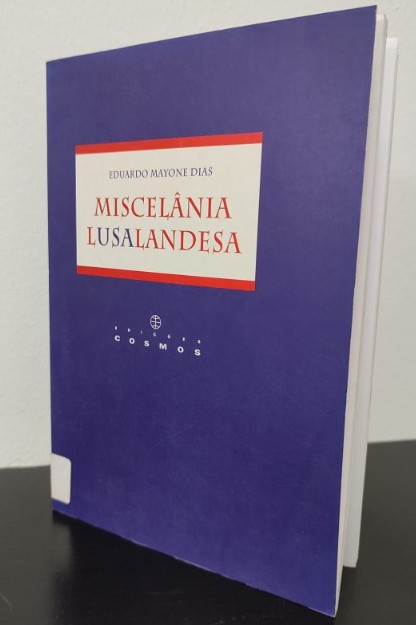
Miscelânia Lusalandesa is composed of a series of studies, chronicles, and commentaries on our Californian life, past and present, previously published in various Portuguese and immigrant periodicals. Together they form a unified work by theme, though expressed in many different forms. For Mayone Dias, this represents one facet of his discreet “revolt” against the closed academic niche. The study of any human group—no matter how politically or culturally inconsequential it may appear—requires no apology or justification. We are all, whether as individuals or as communities anywhere in the world, living mirrors of the nation—or, in the American case, the nations—to which we belong.
All of his interventions in this field seek, above all, to respond to questions of utmost importance, indispensable to a complete understanding of who we are within that mosaic of peoples that America continues to be. From Hawaii in earlier times—where Portuguese bones also lie buried and where even today some attempt to revive their ancestral Lusitanian memory in the most hidden corners of those islands and of California—Mayone Dias has insisted, almost alone, on understanding what it means to be Portuguese transplanted into environments radically different from our origins.
“A Presença Portuguesa no Havai,” for example, traces, with the full academic rigor of the historian, the arrival of a group from Madeira and the Azores to work on sugar plantations, meticulously describing their ethnic survival to recent times. It also points to what can happen to other communities that are not rejuvenated by the continuous arrival of new immigrants: their near-total disappearance as a national entity, due to the inevitable assimilation of successive generations into the dominant societies surrounding them.
Similarly, “Baleeiros Portugueses na América” recounts the epic of the first Azorean immigrants who arrived in America more than a hundred years ago and gradually took root, helping—alongside other ethnic groups—to develop California’s rich agricultural and dairy industries. The book Açorianos na Califórnia (1997), in turn, brings together interviews conducted over the years with both early “pioneers,” still sharp in memory, and younger generations, reflecting on what life in our communities was and continues to be.
The work of Eduardo Mayone Dias, as I have said, contains a bit of everything. It addresses aspects of immigrant life as varied as studies of Portuguese communities in San Diego who served America during World War II with their deep-sea fishing vessels; the crisis that later struck that community due to the decline of the North American fishing industry; vivid and often colorful “snapshots” that capture us in the tragicomic moments inherent in the condition of being “strangers in a strange land”; investigations and analyses of immigrant writing that we have always produced since our earliest adventures westward—everything that can help explain, and endure in the memory of, generations to come.
To this almost incredible persistence and dedication to recording the history of Portuguese presence in California are added qualities such as a natural capacity for empathy toward the group—always demonstrated by Mayone Dias—and, at the same time, an absence of any condescension toward what he understands to be our collective flaws or mere weaknesses. Our Azorean-California communities are dispersed throughout the state, separated by geography and by their autonomous development. There are centers of workers and merchants (San José and the areas around Artesia in Greater Los Angeles), as well as rural centers where agriculture and dairy production naturally predominate.
Mostly of Azorean origin, the differences and divisions brought from the islands tend to fade within this diversified socio-economic trajectory. Nearly the entire first generation belongs to the great wave of emigration renewed in the 1950s and 1960s, which, as we know, has largely stalled in recent times. It was precisely this group that vigorously initiated an authentic socio-cultural regeneration along the Pacific. Community associations were rebuilt; interest in and respect for ancestral culture and traditions deepened; and there emerged a renewed insistence—though with limited resonance in broader American society—on recognition of the total and continuous contribution of our communities since the earliest days in California.
It is by considering this historical period—the April 25 Revolution itself shook our immigration in several ways—along with earlier antecedents, that one must understand the dramas and comedies present not only in Miscelânia Lusalandesa but in countless other collections within his vast body of work.
Miscelânia Lusalandesa forms part of this great mirror-work of an entire people. It will remain in our archives forever, there to recall and gently teach those who wish to know about a geographically small Portugal from which emerged a heterogeneous people, capable of reinventing itself when placed in the most distant and unfamiliar corners of the world. It brings us, to be sure, only one portion of the Lusophone world—one that has never occupied its deserved place in the nation’s History. Yet facts and the reassessment of our realities assert themselves through efforts such as this.
The millions of Portuguese who left our country cannot remain forever mere sources of remittances or the object of occasional governmental speeches on now-routinized commemorative dates. They should not be reduced to an appendage of political rhetoric.
I join my voice here with that of others—Diniz Borges in particular—who have called for official recognition of the author’s work by the Government and the Regional Legislative Assembly of the Azores. It would be an act of pure justice, a dignified and official gesture of gratitude toward someone who not only produced a major body of work on Azoreans in California, but who was also a teacher to an entire generation—my own—in encouraging and supporting our attempts to energize our communities toward better integration within the broader North American society.
Eduardo Mayone Dias, Miscelânia Lusalandesa. Lisbon: Edições Cosmos, 1997.
Part of this text was drawn from the preface I wrote for this book in the year of its publication.
Originally published in my “BorderCrossings” column in Açoriano Oriental, October 20, 2017.
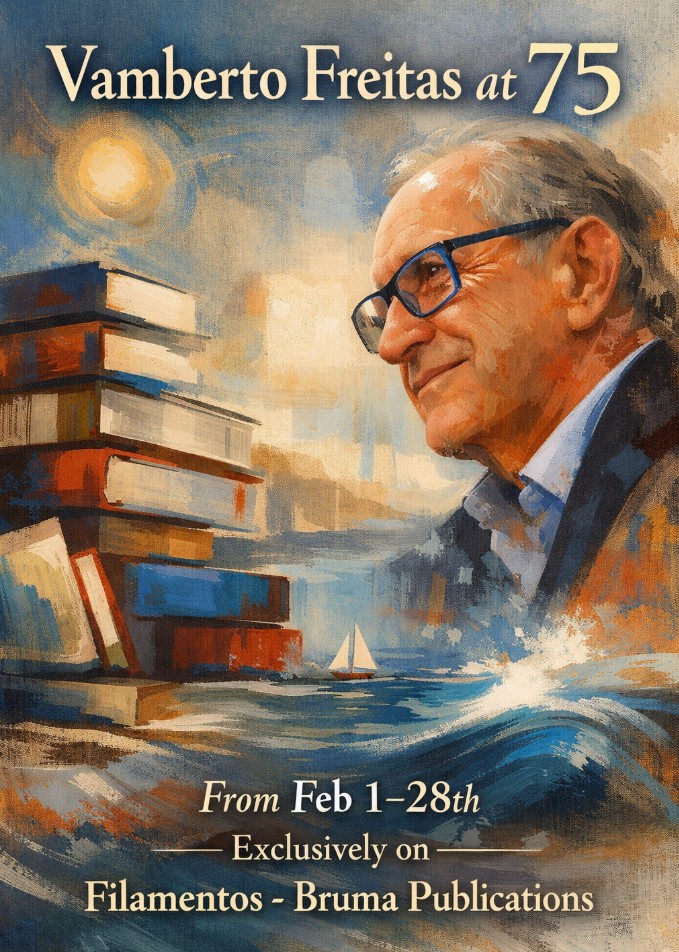
Vamberto Freitas at Seventy-Five
The Long Work of Critically Listening to and writing about Dispersed Voices
Filamentos – arts and letters
Bruma Publications | Portuguese Beyond Borders Institute (PBBI),
California State University, Fresno
Introduction
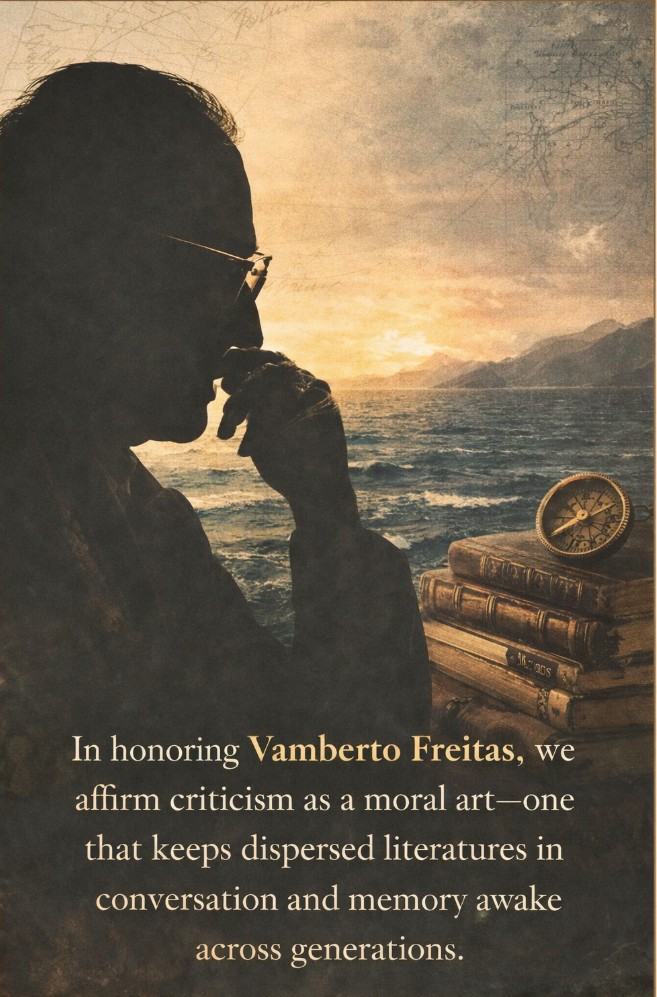
For more than three decades, Vamberto Freitas has practiced literary criticism as a form of sustained attention—patient, rigorous, and ethically alert. His work has traced the quiet, often overlooked trajectories of writers shaped by migration, insularity, and memory, especially those of American and Canadian authors with roots in the Azores. At seventy-five, his critical legacy stands not as a monument but as an ongoing conversation: a life of letters placed in the service of literature itself, where reading becomes an act of responsibility and criticism as a way of listening deeply to voices dispersed across geographies, languages, and generations.
Throughout the month of February, Filamentos – arts and letters, an initiative of Bruma Publications at the Portuguese Beyond Borders Institute (PBBI), California State University, Fresno, will honor this legacy with daily segments published from February 1 through February 28. Each entry will revisit, reflect upon, and extend the critical pathways opened by Vamberto Freitas, reaffirming the enduring relevance of his work within Atlantic, diasporic, and transnational literary studies.
Vision
To honor literary criticism as a form of cultural stewardship—one that listens across distance, preserves intellectual memory, and affirms the centrality of diasporic voices within the broader landscape of contemporary literature.
Mission
Through this February series, Filamentos – arts and letters seeks to celebrate the life and work of Vamberto Freitas by foregrounding criticism as a practice of care, rigor, and continuity. By publishing daily reflections, excerpts, and critical engagements, this initiative reaffirms Filamentos’ commitment to literature that crosses borders, sustains dialogue between islands and continents, and recognizes reading as an ethical act—one capable of holding dispersed voices in thoughtful, enduring relation.
 Filamentos (artes e letras)