
Keeping a diary is cold comfort for a writer whose voice has no place, time or outlet — despite continuing to say what, as a writer, one would say like no one else (p. 46).
It is a well-known fact that in Miguel Torga, Portuguese diary-keeping had one of its most prolific exponents: sixteen volumes published between 1941 and 1993. In this genre Vergílio Ferreira and José Saramago are also renowned names. But there is another writer who in terms of writing quality is in no way inferior to them, and who unfortunately remains barely recognized: the Azorean Fernando Aires (1928-2010), author of just five Diários (Era Uma Vez o Tempo) [Diaries (Once Upon a Time)] — but they are worth an entire body of literature.
A diary is one of the privileged means for revealing personalities. Works intended for publication and publicity are shielded by caution, lest any risk is run of saying more than one wishes. In a diary (an intimate record of the writer’s thoughts, attitudes, observations and experiences) one is more truthful, in the sense of being more natural and sincere.
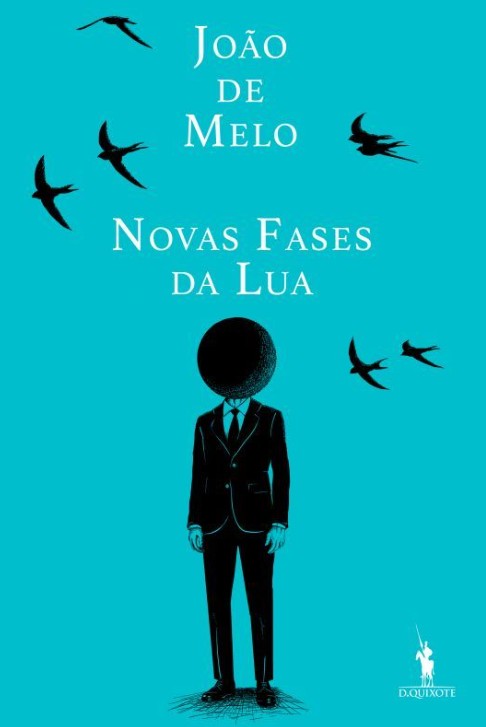
This observation comes apropos of a book that provided me with hours of enjoyable reading: Novas Fases da Lua [New Phases of the Moon] (Publicações Dom Quixote, 2025), by João de Melo, who has authored a work that enhances and illuminates Portuguese literature.
Writers write of themselves. Novas Fases da Lua is thus an important work for three reasons:
• First, because it informs us of João de Melo’s ideas, opinions and reactions to things, events and people in a specific time and place (2017-24).
• Second, because it sheds light on aspects related to specific events that have marked his country and the world, thus contributing to a more detailed, and therefore richer and more perfect, understanding of the period in question.
• Third, because it puts us in touch with the style of an author who continues to write with sensitivity, emotion, narrative elegance and literary refinement, always striving to cultivate the language of Camões.
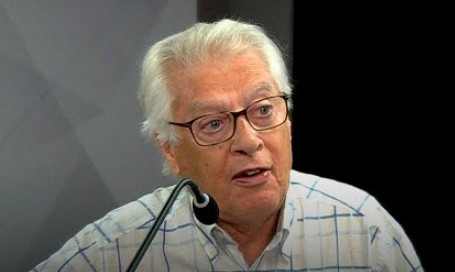
Highly attentive to what is happening around him, and endowed with a great critical sense, João de Melo embarks on reflection. With everything in this book he gives us material for thought, that is, grounds for analysis, reflection, ways to feel and angles of observation, without ever neglecting a profound human affirmation. He describes personal daily life and its relationship with others; he discusses his books, his situation as a writer, and the literary construction in which he is involved (for example, the embryonic phases of what would become the works Livro de Vozes e Sombras [Book of Voices and Shadows] (2020) and Longos Versos Longos [Long Long Verses] (2023); he speaks of authors and readings; reflects on travels (within the national space, Azores, Spain, where he conducted diplomatic duties); he portrays literary and official events; he celebrates friendship, is not dazzled by parties (especially Christmas celebrations), analyzes and comments on electoral acts, and criticizes government measures.
Above all, the writer reacts to the disarray in the world: he fears obscurantism and historical setbacks, namely the growth of populist parties and authoritarian drifts of the far right; he denounces all wars, especially Russia’s against Ukraine, Israel’s affront and barbarity against the Palestinian people of Gaza; he denounses dictators – those of yesterday and those of today: Stalin, Salazar, Assad, Putin, Xi Jinping, Kim Jong Un, Bolsonaro, Erdogan, Lukashenko, Nicolás Maduro, Rodrigo Durterte, Bashar al-Assad, and Trump, among others. João de Melo rebels against sexual abuses perpetrated by elements of the clergy; he distrusts the “blessings” of Brexit; he is concerned about global warming, the disintegration of Europe, social injustices, hunger, genocide, and the flight of migrants and war refugees who drown in the Mediterranean.
What did I like best about this book? The way João de Melo looks at others from the perspective of fifty years of published writing and authorship of more than thirty books in a range of genres.
Originally published as “Novas fases da Lua, de João de Melo – Diário (2017-2024)” at:
https://graciosadigital.blogspot.com/2025/11/opiniao-victor-rui-dores-novas-fases-da.html
Published in Portuguese of Filamentos on October 14, 2025
 Filamentos (artes e letras)