
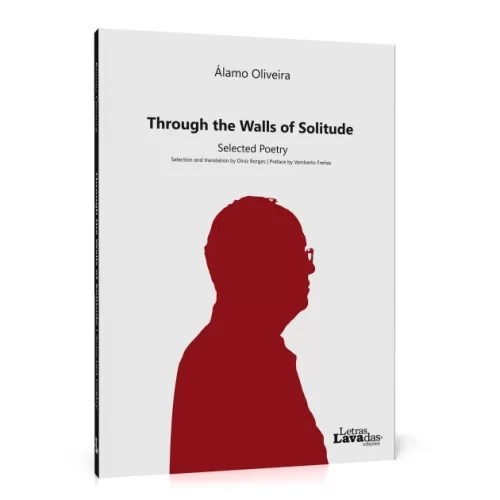
The poetry of Álamo Oliveira, collected in Through the Walls of Solitude, offers a luminous cartography of the Azorean soul, traversing the landscapes of love, nostalgia, solitude, social justice, freedom, equality, and the fierce defense of the voiceless. His words are volcanic yet tender, born from the eruptions of history and the whispered dreams of an island’s people. Each poem is a map where the reader walks barefoot across thorny injustices and serene longings, guided by a voice both personal and universal, rebellious and tender. Oliveira does not merely write about freedom; he fights for it against tyrannical governments, against the hypocrisy of institutions, and the silent violence of conformity. In his universe, freedom spans from the sacred right to speak to the equally holy right to love whomever the heart chooses.
This collection, which I had the pleasure of translating, becomes, I hope, a vessel carrying Oliveira’s intimate insurrections across oceans and generations. Álamo Oliveira writes for the farmers burdened by resigned illiteracy, the immigrants chasing fragile American dreams, and the lovers condemned by societal and religious dogmas. His poetry demands liberation: from the sins imposed by a powerful church, from the smallness of societal expectations, from the prisons of poverty, shame, and silence. Every poem is a prayer for dignity and a song for defiance, inviting readers to liberate their hidden voices. It is a sacred, trembling call to inhabit the fullness of our humanity without an apology.
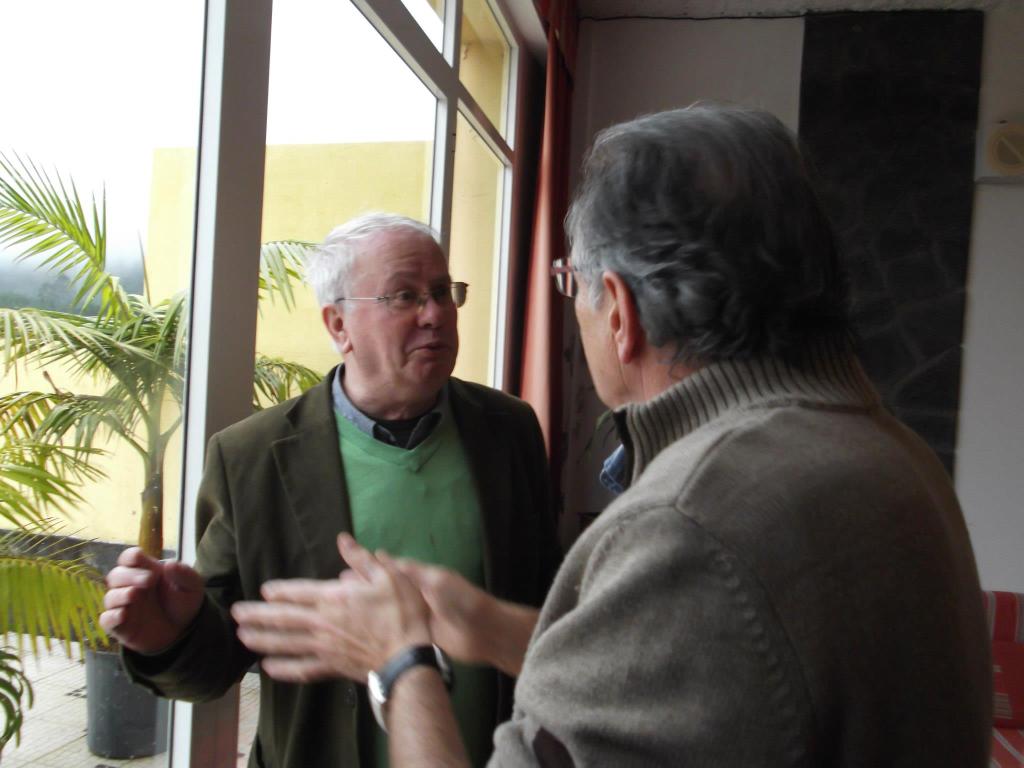
In his masterful introduction, Vamberto Freitas, the Azores’ most prominent literary critic, positions Álamo Oliveira as one of the most profound and fearless voices in the Azorean literary tradition. Freitas recognizes Oliveira not just as a chronicler of personal exile but as a conduit for the collective memory of the Azores and its diaspora. “Álamo Oliveira’s writing is as much a part of our collective Azorean memory as it is extended to the rest of the world,” Freitas writes, emphasizing the universal resonance of Oliveira’s voice. He also reminds readers that “even his dedications to some of his colleagues throughout his work constitute this continuous dialogue,” highlighting the relational depth of Oliveira’s literary world.
Vamberto Freitas rightly emphasizes Álamo Oliveira’s refusal to shy away from uncomfortable truths, including the exploration of marginalized sexualities, colonial trauma, and existential despair. “Besides everything else in his writing that makes direct reference to the existentialism of our communities, especially in California,” Freitas notes, “it was Álamo who wrote the novel I No Longer Like Chocolates, and just like the war novel already mentioned, he is our only author who hasn’t been fearful… of behaviors that until recently were taboo among us.” By doing so, Freitas prepares the reader for a journey that is at once lyrical, brutal, intimate, and sweeping – profoundly Azorean yet universally human.
To fully appreciate the emotional and political force of Through the Walls of Solitude, I believe it is essential to examine a few individual poems briefly. Each piece captures a facet of Oliveira’s vision, of his poetic universe, offering intimate windows into his enduring fight for memory, justice, and human dignity. In “my name,” Álamo Oliveira roots identity in the everyday and the ephemeral, refusing the grandeur of titles or heroism. “My name is written / on the soles of one’s shoes,” he declares, suggesting that dignity is found in small, persistent presences and that selfhood is an evolving act of memory and resistance.
In “Song for an End to War,” the poet dreams of a world where warriors are nourished by tenderness rather than bloodshed. Oliveira writes, “Serve the warriors of the century / a great banquet / of weapons dewed like roses,” imagining a radical transformation of violence into beauty, underscoring his deep yearning for peace and human dignity. The “island” portrays the maternal geography of the Azores as simultaneously nurturing and wounded: “Your womb / a dome grown in the sea / has dawns / has salt and thousands of projects / to pursue.” The womb imagery captures the birth of hopes and the resilience of the islanders. In “i am from the countryside,” Oliveira encapsulates the soul of rural Azores with a stunning litany of inherited pain — “i have in my brain / the resigned illiteracy / of those people with forced laughter” — yet also with enduring strength.
The most awesome “poem-flower-and-flowers” reflects on isolation and memory, meditating, “no one asks what lays beyond the rocks / and i — who have seen waves relishing our rocks / made a quiet promise to take pills / on the sly,” showing the poet’s simultaneous acceptance and yearning for escape. The “farmer’s prayer” offers a searing indictment of a distant God, pleading, “look over the husks that grow in our eyes / and over the stomach of the children born / from our nights of insomnia,” a desperate cry for divine justice amid rural poverty.
In “fable of the island,” Oliveira personifies the island’s struggle: “even today one can still hear the anguish of the wind / scrolling the coordinates of the people on the map,” suggesting a community marked indelibly by historical suffering. Finally, in “fable of love,” the poet blends innocence and rebellion, with the unforgettable injunction, “love one another!” issued by a Cupid “indifferent” to societal norms and divisions, creating a pure and radical vision of human connection.
Among the jewels of this collection, “manuel 6 times i’ve thought of you” stands as a towering achievement. Structured as six reflections on the life of Manuel, it chronicles a tragic bildungsroman that is also the story of Oliveira’s people. Manuel begins as a child, “a suspending butterfly / like an angel in a baroque altar,” innocent and joyful, but is gradually crushed by the brutal forces of poverty, societal expectation, and island fatalism. The progression from “chewed by loathing rats” to “your bare feet were the picture of your people” paints a devastating portrait of lost potential. Manuel’s dreams of America become “so far… that your stretched dreams / wouldn’t get there.” The poem’s final image — “three sons conceived in your eyes / and a withered cluster of hopes / hanging in the shed of your fantasy” is heartbreaking and unforgettable. Oliveira weaves personal tenderness with historical indictment, creating a character who is both specific and symbolic, deeply human and mythically tragic.

For me, translating Through the Walls of Solitude into English was an act of profound cultural preservation and renewal. I hope this collection can access their heritage’s emotional, historical, and philosophical depths for the second and third generations of Azorean-Americans, Canadians, and Bermudans. Many diaspora descendants cannot access the original Portuguese; this translation breaks that barrier, allowing them (including my grandchildren) to hear Oliveira’s cries, dreams, and prayers in their own language. I hope that this book is not just a literary bridge but a mirror, helping them ask — and sometimes answer — essential questions about identity, belonging, resistance, and love. I’m also hopeful that by bringing Oliveira’s fierce yet tender voice to an English-speaking audience, we can believe in the possibility of a cultural rebirth that goes beyond the occasional fun festa and delicious cuisine. A cultural rebirth rooted in the burning, aching beauty of Azorean poetry. Seeing this collection chosen as a finalist for the Northern California Book Awards in Poetry Translation was pleasing.
At its best, poetry leaps through latitudes and centuries, carrying with it words and worlds. Álamo Oliveira’s Through the Walls of Solitude reminds us that we belong to something larger than geography, larger even than history. We belong to the eternal human struggle for dignity, freedom, love, and voice. Oliveira offers the diaspora more than nostalgia in every verse — he offers renewal. He reminds us that identity is not confined to culinary festivals or folkloric costumes, but is alive in the restless, rebellious spirit that refuses to be silenced. Poetry becomes an act of insurrection, a seed of belonging, and a flame of hope. Through Álamo Oliveira’s poetry, the descendants of emigrants can reclaim a heritage that is dynamic, painful, beautiful, and profoundly alive — and in doing so, I truly hope that they can find themselves anew in the mirror of words.

In a world that often forgets the importance of fearless voices, poetry is needed more than ever. We need poets who call out injustices and sing of freedom, who remind us that love is a radical act, and that silence is complicity. We need verses that are not afraid to expose wounds, to challenge power, and to envision a more just and compassionate world. With their deep wells of memory and longing, the islands need their voices amplified — not to be lost in the winds of globalization, but to resound across seas and continents with all their beauty, rage, and hope. In celebrating the words of Álamo Oliveira, we affirm the enduring need for poetry — for fearless truth-tellers who can carry the dreams and wounds of a people beyond the walls of solitude and into the heart of humanity.
The world is hungry for only poetry’s clarity and courage. We need verses that shatter indifference and inspire solidarity in despair and disillusionment. We need poets who do not merely witness suffering but bear it in words that heal and ignite. The voices from small islands, seemingly remote places like the Azores, are vital: they carry the memory of endurance, the defiance of survival, and the dream of justice. Álamo Oliveira’s work stands as a beacon, proving that no voice is too small, no act of resistance too quiet, no island too distant. By lifting these voices into the global conversation, we reaffirm the transformative power of poetry to create empathy, forge connections, foster a sense of belonging, and ignite change that transcends all borders, generations, and silences.
Diniz Borges, California State University, Fresno.

To get the book:
In the Azores, Portugal, and throughout the European Union, please get it from Letras Lavadas
https://www.letraslavadas.pt/through-the-walls-of-solitude
Here in the US, please order it from Bruma Publications

As an e-book, you can order it anywhere through Kindle or Kobo, as a co-edition from Bruma Publications and Moonwater Editions.
 Filamentos (artes e letras)