
AZOREANS IN BAHIA – BRAZIL
Salvador da Bahia was the first colonial capital of Portuguese Brazil (1549-1763). One of the oldest cities in America, it was founded by order of King João III of Portugal as “São Salvador da Bahia de Todos os Santos”, in honor of the savior of Christianity.
Today, it has a population of almost three million inhabitants in 700 square kilometers. It is the most populous municipality in northeastern Brazil and the third largest in the country.
The city is located on the peninsula that separates the Bay of All Saints, the largest in Brazil, from the open waters of the Atlantic Ocean. The “Lower City” is home to port activities, and the “Upper City” is home to residential neighborhoods. Its initial and inner areas have a structure identical to that found in Lisbon’s Bairro Alto or the Terceira city of Angra do Heroísmo, both contemporaries of Salvador’s foundation.
The historic center, known for its Portuguese colonial architecture with landmark monuments dating from the 17th to the early 20th century, was declared a UNESCO World Heritage Site in 1985. Since then, it has been a sister city of Angra do Heroísmo.
According to an estimate by the Casa dos Açores da Bahia, around 50 Azoreans of Azorean birth live in the city of Salvador. They have had around 200 children and almost 1,000 grandchildren. They mostly live in the Itapuã neighborhood, where the Casa dos Açores is based. They come mainly from the island of Graciosa but also from Terceira or even S. Jorge, Pico, and Faial.
In 1980, the third of Brazil’s seven Houses of the Azores was established in the cheerful and welcoming city of Salvador, capital of Bahia.
The Casa dos Açores da Bahia is located in the poetic neighborhood of Itapuã, made famous to the world in the verses of Vinícius de Moraes. Many Portuguese emigrants crossed the Atlantic and arrived in Bahia to start a new life. They worked, started families, and tried to preserve their traditions here to remember their motherland and keep their roots alive.
After Rio de Janeiro (1952), at the same time as São Paulo (1980) and before Santa Catarina (1999), Rio Grande do Sul (2003), Maranhão (2019) and Espírito Santo (2022), the Casa dos Açores da Bahia formally brings together a representative and influential part of the Azoreans by birth living in the city of Salvador.
Its co-founder and current president is businessman Orlando Souza da Silva from Graciosa. He was born in Praia, on the island of Graciosa, eight decades ago. At 17, he emigrated to the beaches of Salvador, starting out as a helper at the “Armazém Açoriano.”
For more than four decades, with half a hundred first—and second-generation Azoreans living in the city of Salvador, he has been a member of the Casa dos Açores da Bahia, which only admits native-born Azoreans or their descendants for a monthly fee of 50 reais.
This income simply helps the board of directors meet the running costs of its 1,700-square-meter headquarters, a villa surrounded by greenery and manned by a permanent guard.
Rather than bringing together people from the Azores, this institution was created so that the descendants of Azoreans could get to know each other and socialize around their identity.
That’s why it holds regular get-togethers on the pretext of a rump, cod, or octopus and organizes an annual feast in praise of the Divine Holy Spirit, with traditional soups shared by around 250 people.
In the words of its president, Orlando Souza da Silva, the Casa dos Açores da Bahia is “a family.” “That’s the definition that best represents our Casa. It’s a place that preserves Azorean culture, a piece of that land, and, in fact, a piece of those islands in Bahian and Brazilian territory. For me, the importance of the place lies precisely in the integration of a family, made up of people who left their homes in search of new opportunities. From this family made up of fellow countrymen, we united other families. Today, my son is a partner in Casa dos Açores, and my grandson is following the same path, so we perpetuate our tradition, passing it on from generation to generation.”
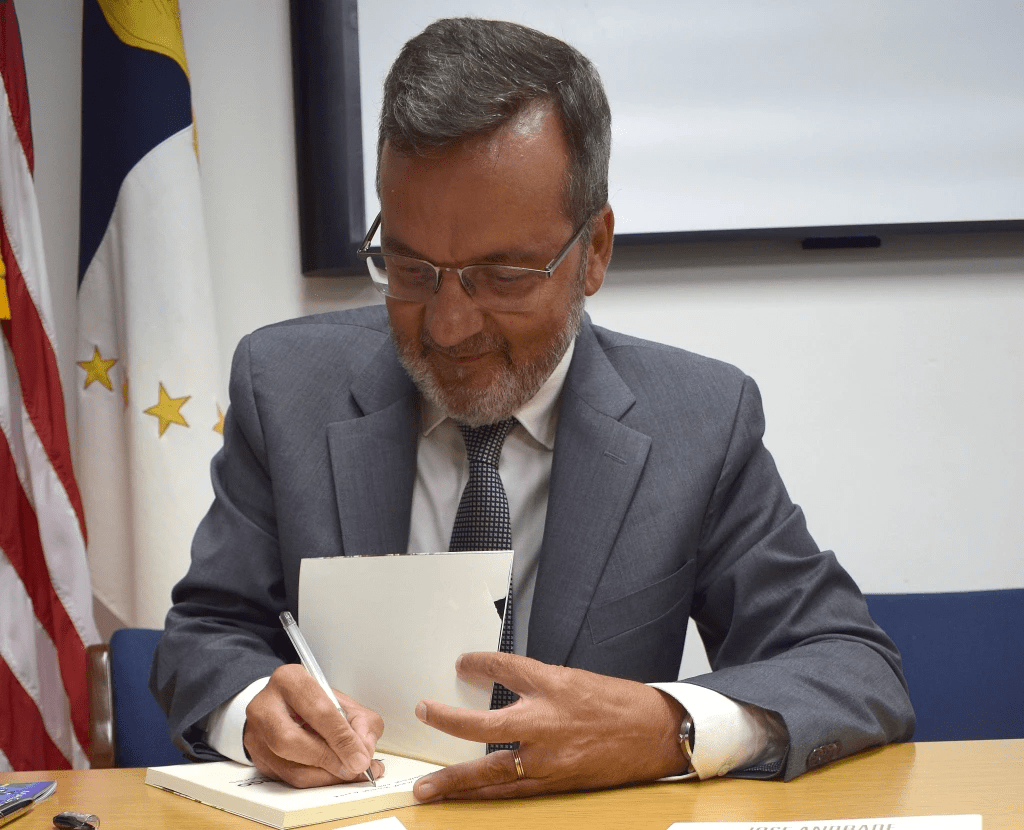
José Andrade is the Regional Director for Communities of the Government of the Autonomous Region of the Azores
Based on a writing from his book Açores no Mundo (2017)
 Filamentos (artes e letras)