
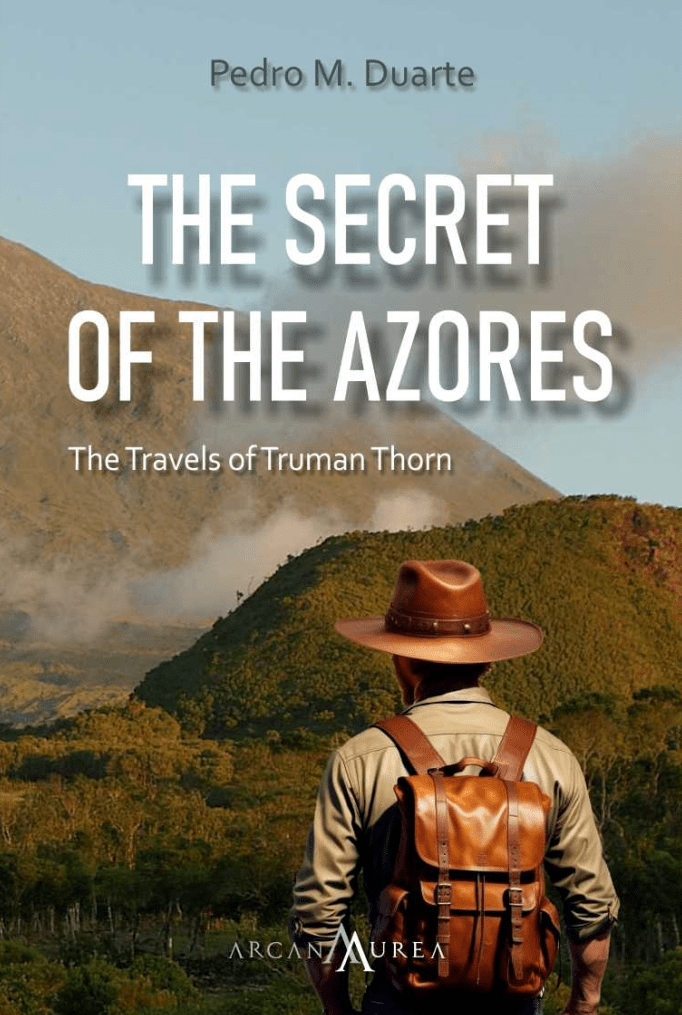
Correio dos Açores – Tell us a little about yourself and this literary project of yours
Pedro M. Duarte (writer) – My training as an architect has always made me look at ancient civilizations with enormous respect due, above all, to the many mysteries hidden and revealed through the stones of the ruins of their buildings. Vestiges have often managed to withstand centuries and even millennia precisely because they were built in the material that in those distant times was considered the most resistant for construction – stone – in which they left their civilizational, social, historical, religious, social, and often mystical mark. No architect can design new buildings without studying the history of those ancient peoples who reached quite sophisticated levels of civilization but who, due to various factors, fell into decay and even disappeared suddenly in some cases.
In 1993, I finished my degree and immediately enrolled in a postgraduate course in Architectural Culture. This allowed me to deepen my studies of many ancient civilizations that fascinated me with their pyramidal architecture – the Sumerians, Egyptians, and Mayans.
I practiced my profession for many years. However, architecture is now inundated with national and municipal laws and even rules for electronic design. And the truth is that I didn’t study to be a lawyer or a computer scientist. So, when I was conditioned by the pandemic lockdown, I decided to take the opportunity to write stories that would allow me to reveal aspects of ancient civilizations to readers using creative writing. In this case, adventure novels with a strong component of history, archaeology, and mysticism.
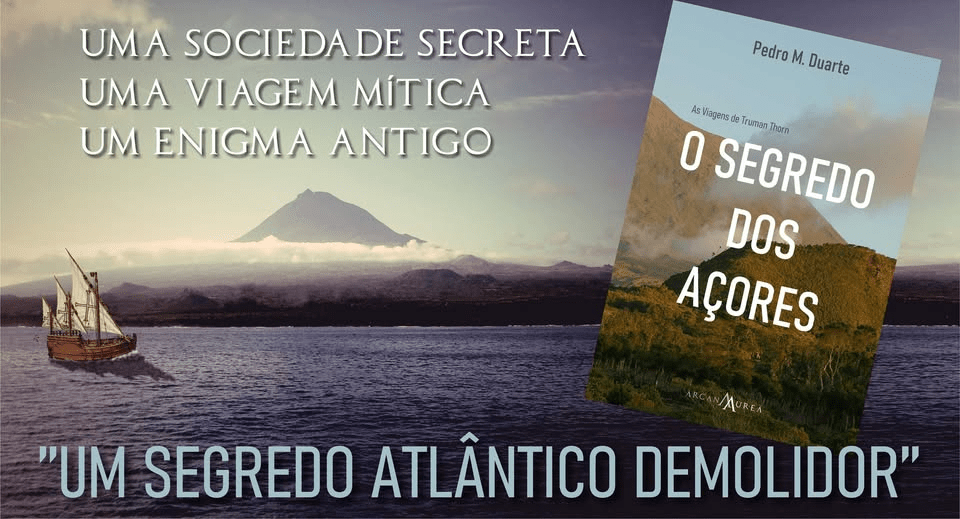
That’s why the main character – Truman Thorn – born from the keys of my laptop, is a 21st-century English archaeologist who uses the most modern and up-to-date archaeological and laboratory research techniques to answer certain modern-day mysteries. In the particular case of my first book, “The Secret of the Azores,” the mystery he wants to decipher concerns the origin of the similarity between the step pyramid structures in the Azores – the famous “maroiços” – and identical centuries-old constructions in the Canary Islands, but also throughout the Mediterranean, particularly in Sardinia, Sicily, southern Spain, and Morocco, which are usually associated with the late Bronze Age. To study this enigma further, Truman and his friend from Faial, Tiago Rodrigues, went to Pico Island to see these pyramidal structures built with volcanic stones up close. However, as they explore the various hypotheses, the two friends come across a powerful secret society guarding its inner circle for centuries, a shattering secret for Atlantic history; from that moment on, the narrative swings between possible historical truth and the centuries-old mysticism of certain myths, secrets, and legends.
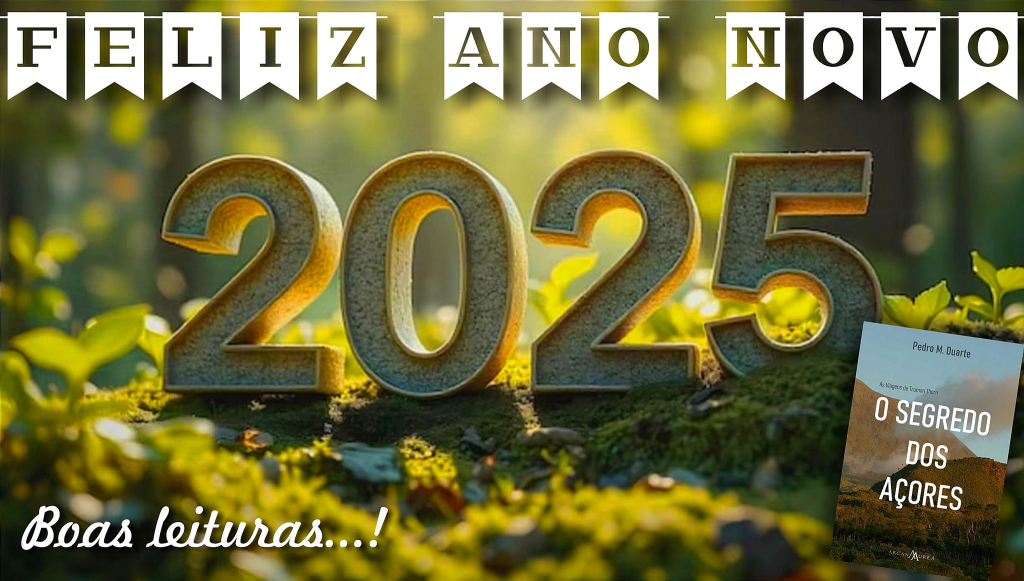
How did the idea for this work come about?
When I decided to write this first story about the character Truman Thorn, I already had a theme in mind. Precisely the step pyramids of the Azores because it was something that had intrigued me since 2018 when I discovered this type of structure by chance following an internet search about pyramids. The following year, I wrote a short article of a few pages comparing the various examples of this type of step pyramid found throughout the Mediterranean, Atlantic, and even in Mauritius. I sent the article to several European archaeology and history magazines. It was eventually published in the German magazine SagenHafte Zeiten (Mythical Times) in June 2020. The coordinator of this magazine – Swiss researcher Erich von Däniken – had become so interested in the topic that he came to Portugal in February 2020 to lecture on mythical historical themes, in which he included the topic of the step pyramids in the Azores. That day, I met his assistant Ramon Zürcher and the event’s organizer Ivan Dias at the São Jorge cinema in Lisbon, who challenged me to write a book on the subject. The seed was sown, and the pandemic lockdown became the fertile ground that made it germinate.
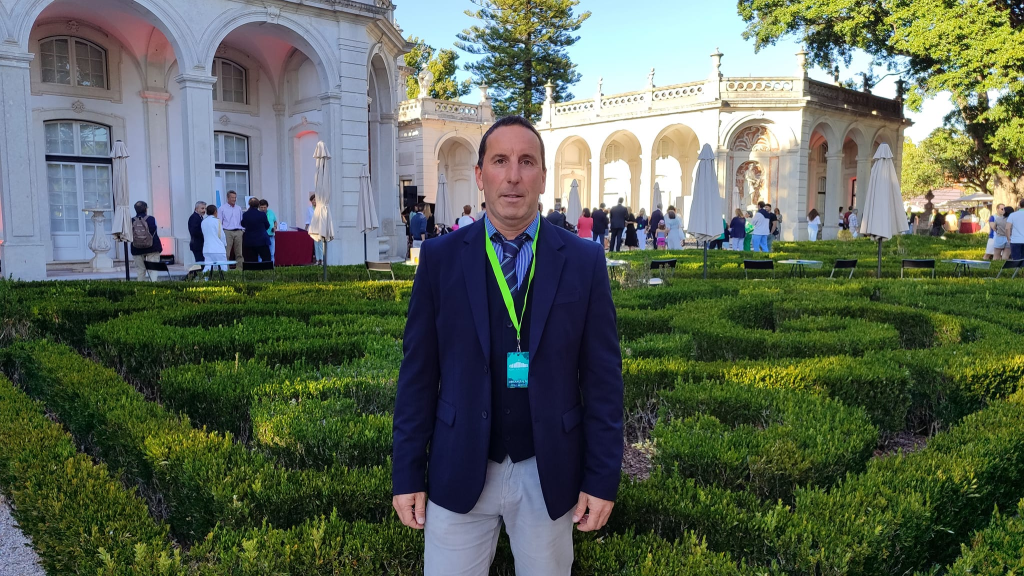
Why a story set in the Azores?
As the Azores is the geographic territory that connects the tectonic plates of Europe, Africa, and America, it also became a mythical-strategic meeting place for these and other more distant cultures, such as those from the East, especially after the Middle Ages. For this reason, during the Discoveries and in the following centuries, the Azores were positioned at the center of all maritime action, concentrating most of the most advanced cutting-edge technology of the time – nautical engineering – which made it possible to establish regular routes, forever reducing the long distances between continents that were previously farther apart in space and time. In this rich island and historical imagination, the Azores are often forgotten in their importance as a strategic link in this web of historical and cultural connections. For this very reason, they were the ideal place to develop the first adventure of this character, who is eager to decipher historical and archaeological enigmas that have arisen today based on some ancient remains that are still unexplained. Since there was such an identical process of occupation by European Christians of the various archipelagos of Macaronesia, could there be a common reason why these pyramidal structures were built in such a similar way, both in the Canaries and on Pico Island, Terceira and São Miguel? Undaunted, Truman Thorn went in search of answers. And what he discovered left him and his friend Tiago speechless… A secret was as unexpected as it was mythical.
What feedback have you had since the book was released?
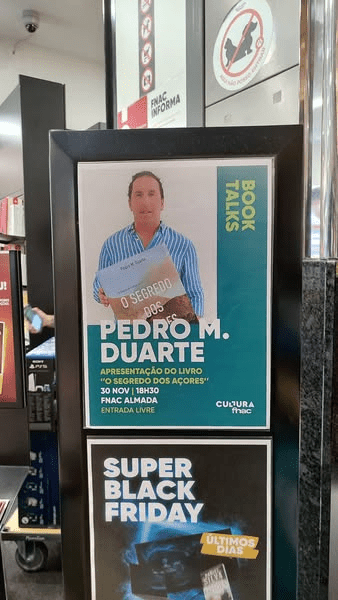
The book began to be distributed by the main bookstores on the mainland and islands in May of 2024 and on the main bookseller websites. It was officially launched on June 8th at the Lisbon Book Fair. I also gave several presentations and autograph sessions at the Coimbra, Porto, and Belém book fairs, as well as at FNAC, Casa dos Açores in Lisbon, and Livraria Letras Lavadas as part of the Folhas de Outono Festival, which ended with an interview with journalist Vera Santos for the “Açores Hoje” program on October 14. Subsequently, the book was also presented at the Outono Vivo Festival on Terceira Island.
From the point of view of public reception, I have generally received positive feedback from everyone who has read it from start to finish. Most of these testimonies have been published in the group and on the “Arcana Aurea” Facebook page, where I also provide many images on the themes narrated in the book. I’m obviously very happy with all this recognition from my readers. But, in a way, I’m not surprised because I’ve tried throughout the 620 pages of this story to create varied points of interest for all types of readers and audiences. Some like the historical part more, some are more enthusiastic about the adventure part, and some even use this book for their university or research work.
The study I did was very in-depth and detailed. After all, I spent three years writing and researching simultaneously. In it, I’ve gathered many ancient mysteries of the Azores and many ancient civilizations that may have crossed this immense Atlantic Ocean without their stories being properly told because they left very faint or almost imperceptible traces in the various Azorean landscapes. But an attentive and experienced eye – that of an archaeologist or historian, for example – could help bring at least some of these possible stories to light.
Do you have any plans for 2025?
The next book in the collection, “The Travels of Truman Thorn / Arcana Aurea,” which I’ll start writing in January and which will repeat the formula of being an author’s edition distributed by Dinalivro. The theme is still secret, of course…
Anything you’d like to add…
Due to the importance of this topic for the history of Atlantic navigation, especially concerning the periods from the Bronze Age to the end of the Middle Ages, I have decided to translate the book into English and Spanish. It is already in print and will be available in bookstores in the Azores and on Amazon at the beginning of January 2025. That’s the month when the Brazilian version was also launched by Editora Viseu. An edition in German is still being negotiated and prepared, as this market is very interested in history and archaeology, especially these themes that speak of ancient or pre-Columbian Atlantic navigations. It may also be translated into French and Italian at a later date. All in all, I hope this book fulfills the expectations of everyone who reads it.
Although only in Portuguese, here is the book launch at Letras Lavadas in Ponta Delgada, Azores.
José Henrique Andrade is a journalist for the newspaper Correio dos Açores-Natalino Vivierios, director. Pictures from https://www.facebook.com/groups/arcana.aurea
Translated to English as a community outreach program from the Portuguese Beyond Borders Institute (PBBI) and the Modern and Classical Languages and Literatures Department (MCLL) as part of Bruma Publication and ADMA (Azores-Diaspora Media Alliance) at California State University, Fresno, PBBI thanks the Luso-American Education Foundation for sponsoring FILAMENTOS.

 Filamentos (artes e letras)