
Filamentos (arts and letters in the Azorean Diaspora) thanks the researcher, academic, and translator Manuel Menezes de Sequeira, who lives on Flores Island, for this treasure.
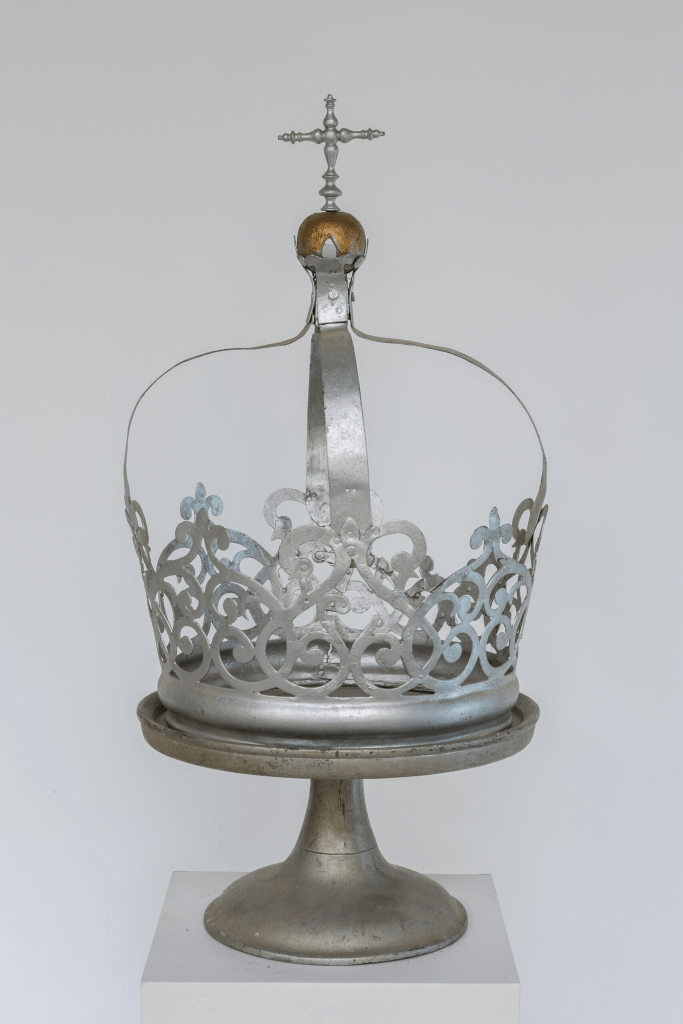
No tempo da Fror
«…Holy Spirit»…
In the middle of April, Margarida became occupied with the ‘function’ that Manuel Bana’s sister was organizing in Capelo. These feasts of the Holy Spirit fill the springtime in the isles with fantastic activity as men and women, in imitation of the fields, burst forth into bloom. From Easter through Pentecost until Trinity Sunday, for seven or eight weeks, the rites arise like a Christian efflorescence springing out of the pastoral life, the verdant clover meadows set amid those lava scars — the Mistérios.
From time to time, the bishops of Angra, perhaps recalling their predecessor, D. Fr. Jorge de Santiago, and his erudite battle for the purity of the Faith and of the cult, have tried to rid the islands’ official religion of these strange practices: the Paraclete amid the candles and the glowing eyes of girls, the Veni Creator sung in churches filled with fancy dress. The obvious offense of the foliões, in their clownish robes, dancing to the drumbeat before the high altar, was easily suppressed. The simple-souled islander is determined and tenacious, desiring a joyous and lively God, calling Him down to the intimate simplicities of hearth and fields. Surely, God pardons him…
The Holy Spirit, manifested in a silver dove atop a regal crown, links the Father in Heaven to His sons in the isles, just as the self-same bird marked on the Majorcan and Venetian charts those fanciful locations: Insula Columbi… Insula de Corvi Marini… Primaria sive Puellarum…
Island of Maidens, indeed. A bevy of them, filling through the streets strewing roses and honey-suckle, carry the emblem of the Divine Holy Spirit’ to the homes of rich and poor. The alferes da bandeira unfurl the standard of a make-believe royalty and a gingerbread empire. Then come the vereadores with their stewards’ staffs, and the pagem da coroa, the child or beggarman, crowned by the priest and invested with the grandeur of the kingdom. Amid the explosion of rockets, the band brings up the rear. ‘Imperador of the sixth week — Chico Bana!’… tum tum.
New boots, ring buns, tin trays of aguardente, a throne set amid candles and open roses in the corner of a humble cottage. ‘Let us enter! Eat, dance and make merry, gentlemen!’ It continues thus for seven days.
It had been agreed that Margarida would stay in Capelo from the Friday of the bezerro to the Sunday of the coronation. The bezerro (bullock, steer or calf) is sliced up for the offerings of bread and meat, set out on plates trimmed with sprigs of mint, on improvised trestles of boards and table linen in the street. The poor who give to the poor mortgage their souls to God.
Days of gluttony! Stewed meats and steaks for friends and comrades, from the cauldrons stirred by the ‘mistress of the function’. Joyful Sundays! For months Margarida had dreamt of those tables set in the orchard bowers, the viands, pots of roses, translucent goblets of wine, the sugared fennel cakes reverently clutched to young girls’ breasts. Frisky and beribboned, festooned with daisies and lightly dusted with the gunpowder of fireworks, the bezerro leads the horn and viola de Pezinho, its hide smelling of herbs, of lilies from the deep grottoes, mingled with the pastures and veils the island’s heart. A paper rose stuck between its horns, the beast is forced to kneel at the Imperador’s door as if the Holy Spirit wished to remind the isles of what they held in common with that poor neighborhood where the breath of cattle warmed the Virgin’s Son. The secrets of God…
On Saturday, the festa redonda, with strolling viola-players… In the tiny house, which smells of pine and pittospore, six boys line up opposite as many girls, moving to right, to left, like a quiet sea lazily ebbing and flowing. It was the Charamba. Manuel Bana, leaning against the altar of the Holy Spirit which rose in tiers of lights to the boudoir of the crown, never moved his gaze from the doorway. His guests from the city were due to arrive. They had promised to come. He had hired transport to bring Palmira Folarinha. He wished for a singer with a voice like Sr. Damião Serpa, star of the Terreiros… and Folarinha was a famed entertainer: she had a song of especial beauty which she used whatever the occasion. Feijão… master of the viola, ordered the turns of the Charamba with swaggering ease, second to none in the island: ‘And again! And turn about! One lady… Only one!’ The mounting scent of roses and the fabric of new skirts fired the hearts of all, and Folarinha lowered her roguish eyes as they gave place to a singer of her stature.
Translation by David S. Leslie
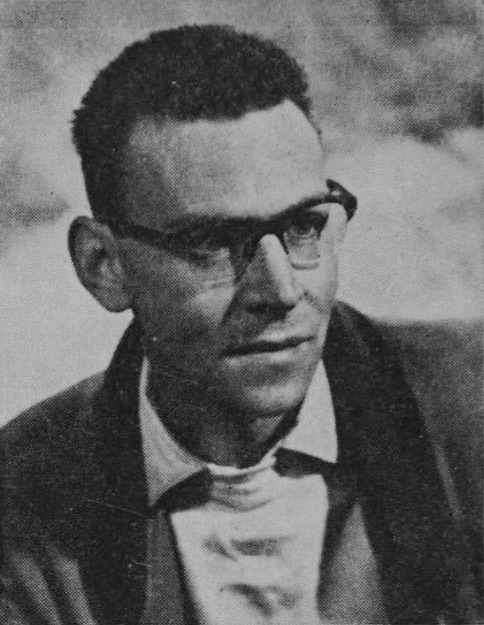
David Stuart Leslie, who corresponded with João Afonso (thanks for the tip, Vasco Medeiros Rosa), who incidentally sent him the news of the death of Vitorino Nemésio (does this letter still exist?), translated into English “No Tempo da Fror,” chapter XVIII of “Mau Tempo no Canal” (“Stormy Isles”), by Vitorino Nemésio. The translation was published in the Diário Insular newspaper, year 27, no. 7908, p. 6, of September 13, 1972.
(Tradução por David Stuart Leslie de «No Tempo da Fror», capítulo XVIII de Mau Tempo no Canal, de Vitorino Nemésio; in Diário Insular, ano 27, n.º 7908, p. 6, de 13 de Setembro de 1972)
 Filamentos (artes e letras)