
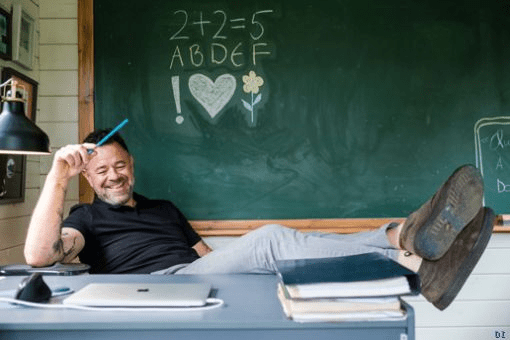
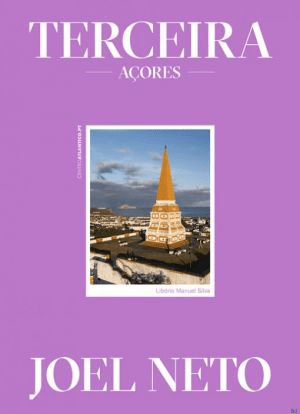
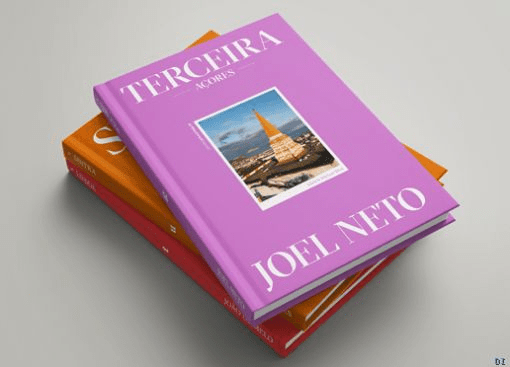
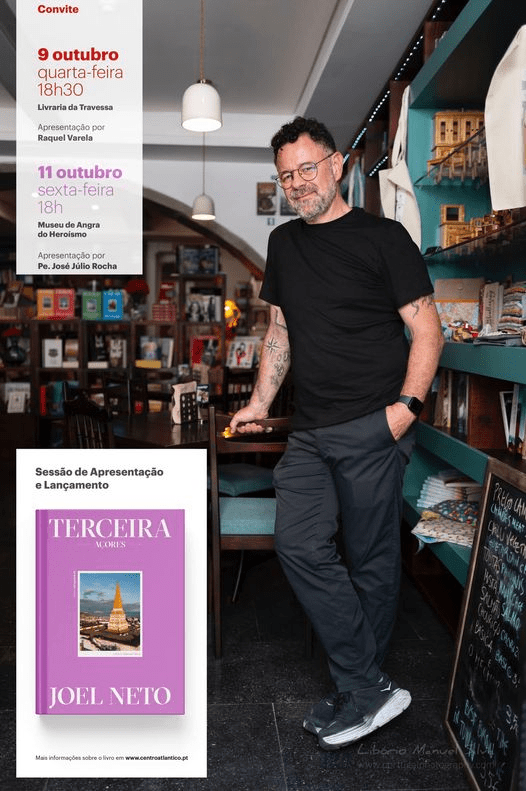
The sixth volume of the Portugal Collection is about Terceira. What was it like writing this book?
I don’t know if it’s a book you really write, at least not as much as a book you write throughout your life. Once you’ve made the commitment, you start thinking about what you could include and what you could say that’s different from the others. You realize that the main work you’ll have to do will be to systematize it because most of what you’re going to write about you’ve already thought about, flirted with, or let slip in other texts in more or less scattered strands. In fact, the great impulse here was to respond to the privilege of being part of an extraordinary group of writers and, simultaneously, to ensure that Terceira didn’t waste the opportunity of being the first non-continental territory in the collection. There are many respected writers: João de Melo, Rita Ferro, Bruno Vieira Amaral, Patrícia Reis, Hugo Gonçalves, Paulo M. Morais, etc., etc., etc. (many of whom have not even been announced yet, as this is only the first season, so speak, of the collection). And there are many cities and admirable places too: Lisbon, Cascais, Sintra, Setúbal, Sesimbra… It was an honor for me and an opportunity for Terceira. I’m glad I was able to defend it.
Which Terceira is this, and is it different through the eyes of a writer?
I don’t know if writers have a shared vision. Or maybe they do: they write from the point of view of possibility, much more than from that of science, of the Cartesian method, of differential diagnosis. But even so, I prefer to think that this is the Third of this writer and this man. In fact, this is the collection principle: places portrayed with total subjectivity – the portrait that only that person and no one else could make of them. My Third, the Third of this book, is staunchly republican, irrepressibly subversive, and dangerously hedonistic, if not sensualistic. It is the daughter of the Holy Spirit, more than anything else (and more than any other island), and, despite its historical relationship with the sea, it expresses itself in all its fullness in the planning of its interior, in particular through that extraordinary solution, perhaps manifestly, which are the cerrados (pastures). Moreover, it is also an exultantly curious land, as could be demonstrated with other eloquence through the recipe for alcatra or the Dona Amélia pastry. There are other things, too, but not all are good. The pockets of poverty and the indifference of a large part of the middle class, which I’ve written about elsewhere, also form an honest portrait of it.
The potential of cultural tourism for Terceira has been talked about for decades. Is it a reality to be explored or a myth?
It’s certainly not a reality. But it is a possibility – a potential, as you call it. Now, exploring it would require two things. Firstly, it would require us to be patient. It strikes me that, in local tourism, we’re always too eager to put the roof on the house, even when the walls aren’t up yet. We set priorities according to the European money available, without any long-term strategy. Then all it takes is for a gentleman in Brussels to wake up with a cold, for the regional government to fall all over itself, for the chambers of commerce to come out with a bunch of absolute certainties, and for investors to be persuaded to point their work and commitment in some other direction. Secondly, it would require us to better understand what (on the one hand) culture is, what is tradition and what is custom, and (on the other) what is art and entertainment. This is so we can provide all these things with a healthy dialog. But how do we get there if the way culture is being discussed in the Azores at the moment is – the paradox fits perfectly – infinitely un-cultural? We can simply recall the miserable parliamentary debate a few weeks ago, which spread to the newspapers about what kind of culture we want. Either culture pays for itself, or it doesn’t matter, says the position, which then adds some twisted nuances to continue to fund the one that gets its votes (but only that one). And it couldn’t be worse. I was a member of the Regional Council for Culture in the last two or three governments (maybe I still am; I don’t even know if it still exists, but I haven’t received any information about how it’s been cleaned up), and things were discussed like this: the person in charge would say some generalities and announce some bureaucracies; then the poetry lady would come and ask for more pens for the poets, then the music guy would come and ask for more reeds for the philharmonics; finally the painting lady would come and ask for more brushes for the painters; and, in the end, an innocuous minute would be signed, which basically only served for the lady from Corvo to take a trip to Terceira and the guy from Faial to settle a few scores with his colleague from São Miguel. It was a kind of cultural concertation in jest and with the delighted applause of the artists – our applause. No idea. And how does civil society position itself in the face of all this? “Look, if there’s opera, good; if not, let’s go to the bullfights, which is also art.” This, in consequence, may work well for us, and especially for our populist politicians (I’m already waiting for the articles and posts from the usual fools saying that I’m an enemy of bullfighting). Still, it doesn’t work for an educated traveler or even for a literate tourist, who are the people who could support so-called cultural tourism. But I’m still an optimist. I’ve just founded a bookshop in the center of Angra with Marta, and I’m confident that it will survive as long as we continue to know how to distinguish between art and entertainment, culture, tradition, and custom – and then manage to put them all into a healthy dialogue. An optimist or an incurable romantic, I’m not sure.
What differentiates this island from others in the archipelago, also in terms of tourism?
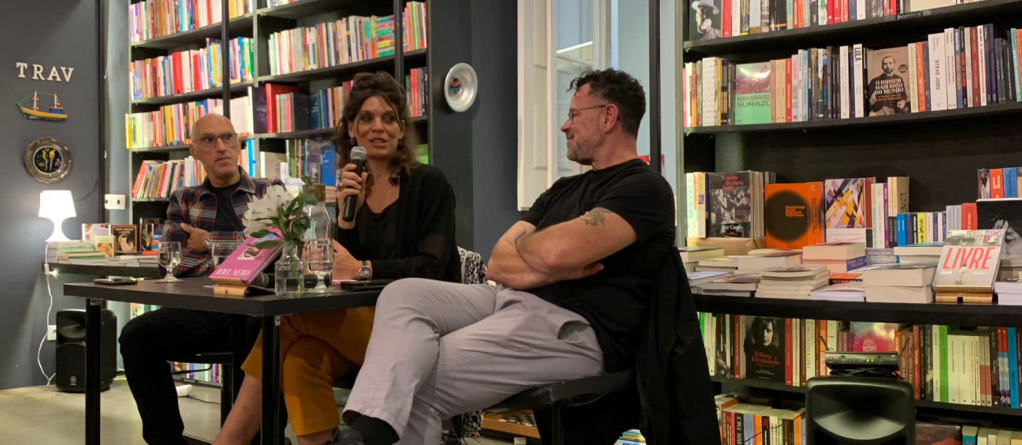
Terceira is the most prominent place I know without a shopping center. It has the perfect scale, therefore: it already allows for some diversity and some sophistication, but even so, a shopping center that sets out to destroy authenticity, particularism, and truth doesn’t work. I think that more than anything else, this is what sets Terceira apart from a tourist point of view. If you put a hundred thinkers in a conclave, looking for the definition of the ideal destination, the definition would start here: size. Then there’s the hospitality of the people, of course. The tangible presence of history. There is a permanent temptation to cross antonyms: sweet and salty in the same recipe, sacred and profane in the same festival, rich and poor in the same march. And then there’s literature. Let me pull the strings, too: we are the birthplace of one of the greatest Portuguese novelists of the 20th century, and we are already represented in some vital fiction and poetry. So here’s an idea: why don’t we federate Angra’s public readings, a sector in which we are national leaders? The República das Letras (by Miguel Monjardino) reads Homer at Angra Town Hall, the Museum reads Brandão, the Library has already read Nemésio, Jerónimo de Andrade reads Camões. We started this year in the book store. We read an Azorean author for the Sanjoaninas – all books read aloud, in many cases from beginning to end, with the participation of volunteers and guests. You could make a tourist itinerary out of it. Perhaps the new Hotel do Livro would also like to take part. And other institutions, both public and private. Here’s a suggestion for the culture council.
What is your favorite place on the island, and how have you written about it?
My favorite place on Terceira is my house in Terra Chã, which my grandfather built, where Marta came to live and Artur once remembered as his childhood home. This is, for me, the heart of Terceira, and it’s not open to tourists. There are many public places, but I don’t think they are any higher than Monte Brasil. It’s a magical park, an absolute privilege. A few days ago, we were in Assisi, Italy, and I thought that that hill above the city would love to be Monte Brasil, but it has neither the size, diversity nor the relationship between land and sea. It is precisely on Monte Brasil that my book begins.
In Diário Insular-José Lourenço-director
Translated to English as a community outreach program from the Portuguese Beyond Borders Institute (PBBI) and the Modern and Classical Languages and Literatures Department (MCLL) as part of Bruma Publication and ADMA (Azores-Diaspora Media Alliance) at California State University, Fresno, PBBI thanks the Luso-American Education Foundation for sponsoring FILAMENTOS.
 Filamentos (artes e letras)