
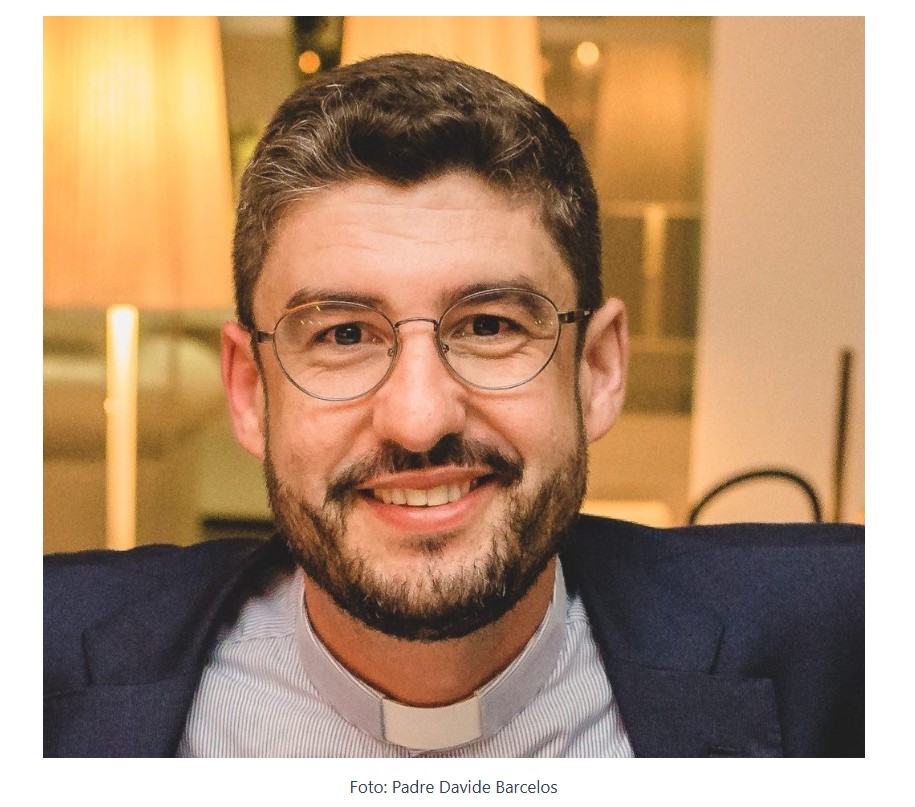
I am a priest. I pray. I celebrate the sacraments. I sit with people in their most fragile hours. I speak of God almost every day. And yet there is a truth—quiet, persistent, and difficult—that took me years to admit, and may be difficult for you to hear as well: gratitude does not come naturally to me.
This is not a minor flaw. It is, rather, a kind of spiritual wound—one I learned, over time, to conceal beneath the language of faith. For it is entirely possible to speak of God and still live as though everything were owed to you. Entirely possible to preach grace and fail to recognize it in the texture of your own life.
Not long ago, I was confronted with this reality in a way I had not anticipated. Not during a retreat. Not in the midst of a crisis. But through a book, plain in its prose, almost unsettling in its clarity. What I encountered there was not new knowledge. I had known these truths for years. But knowing, I came to understand, is not the same as living. And I had not been living what I so often proclaimed.
So I began to look back.
I revisited my own story—its disappointments, its quiet injustices, the seasons when I felt misunderstood, depleted, alone. And in that retrospective gaze, something uncomfortable began to emerge: I had grown accustomed to seeing what was missing. I had trained my eyes, almost instinctively, toward absence. And in doing so, I had ceased to notice what had already been given.
That realization altered everything.
For a heart that does not give thanks becomes heavy. It sharpens into a critique. It grows exacting, perpetually dissatisfied, always waiting for more. I may have prayed—but I did not rest. I may have served—but I did not savor. We are taught to wait for the right conditions before we allow ourselves to be happy, but gratitude is not the consequence of a perfect life. It is a spiritual decision.
And it was precisely this “decision” that led me into a more perilous terrain.
When the heart refuses to acknowledge what it has received, it begins—almost imperceptibly—to prove that it can achieve. My own spiritual desert acquired a name both ordinary and deceptive: autonomy.
There was, at first, nothing obviously dangerous about it. It began with a desire that any modern sensibility would deem admirable, even mature: the wish to cease living on what others provided and instead sustain myself through my own labor. Not out of pride, but out of responsibility. At a glance, it seemed beyond reproach. After all, Saint Paul himself worked with his own hands so as not to burden anyone. It is a compelling narrative—efficient, persuasive—and yet profoundly incomplete.
For I came to see how easily what we call “professional dignity” can mask something far more fragile: an inability to be cared for.
The issue was never work, nor money. The rupture begins when what is merely a means quietly assumes the place of the center. When I ceased to be a grateful man—one who receives—I became, without noticing, a man who acquires. The altar, once singular, began to share its space with the ledger. And a heart that cannot give thanks will always try to compensate.
No one is lost in a single moment. There are only small displacements: a little less silence, a diminished capacity to listen, decisions guided more by efficiency than by discernment, a subtle pleasure in results—in growth, in acquisition. We move from an uncomfortable dependence into an illusory self-sufficiency. To no longer live at the expense of others may be maturity; to live as though we need no one—not even God—is the precipice.
When everything begins to unravel, the first temptation is to name it failure. But there are losses that do not come to destroy; they come to reveal. They expose where we have placed our security. They uncover who we are when what sustained us is stripped away. Loss is painful, yes—but it is also purifying.
It was in that stripped, unadorned place that gratitude began to take root in me again—this time not as an idea, but as a necessity.
The decisive moment is not the fall itself, but the instant one pauses and recognizes, without defense or excuse, that one has lost one’s way. That moment is rare and precious because it is there that everything can begin again.
To begin again is not to return to where one started. It is to return with a clarity that only falling can provide. Something new enters the heart: a deeper, more honest gratitude—not for what goes well, but for whatever returns us to what is essential.
Perhaps the question is not, Was I wrong to desire this? but rather: Am I willing to live differently from this point forward?
In the end, the tension was never simply between the altar and the marketplace. The real fracture occurred the moment I could no longer say, with certainty, where the center lay.
And that is not a question one answers with words.
It is answered with a life.
In Igreja Açores.
 Filamentos (artes e letras)