
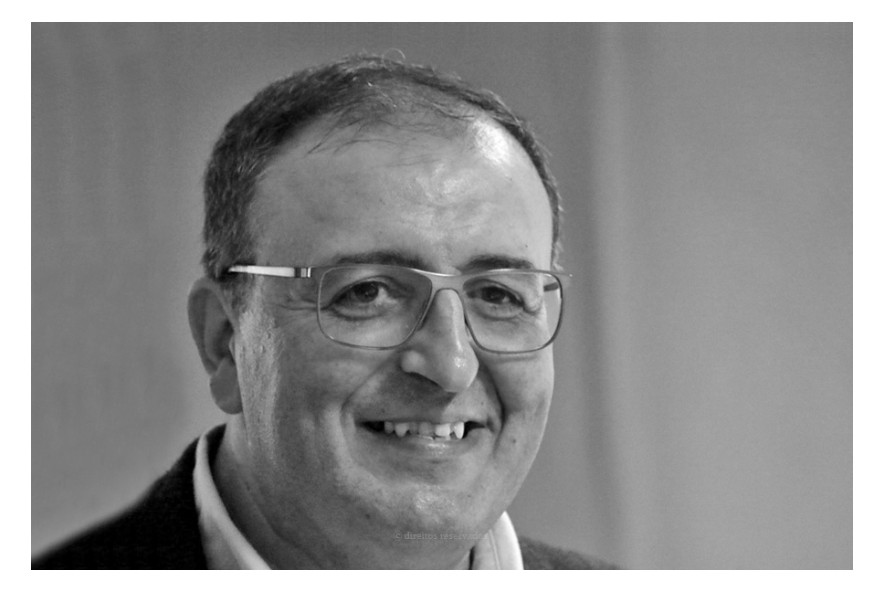
El loco de Dios en el fin del mundo, by Javier Cercas, stands as a singular testimony—an взгляд from the outside—on the Church of today and the challenges that press upon it. Indeed, the Church, too, must learn from the world and relinquish the self-referential posture in which it sometimes cloaks itself. By self-referentiality, I mean the attitude of one who is always right and no longer needs to learn. One might recall, as examples, the Protestant Reformation, the Galileo affair, or even the Modernism crisis. In each of these moments, the Church, feeling threatened, condemned—and above all refused—a lesson, a learning, a path toward self-renewal. In a word, self-referentiality is the Church’s refusal to enter into dialogue with the world. All this changed—at least in appearance—with Second Vatican Council.
Cercas offers a weighty judgment on the Church: “The history of the Church is, in some way, the history of the perversion of Christianity.” Why does he say this? Because power has corrupted the Church. He is not alone in this view. For him, Jesus was a dangerous dissident. His entire life was a renunciation of power. He walked among the poor, tax collectors, and prostitutes, on the margins of Israel, and His presence—His very life—disturbed the rot of the world in which He lived. For the first three hundred years, the Church lived in profound fidelity to the Gospel. Yet “Constantinianism,” the freedom granted to the Church by Constantine the Great, introduced power into its very structure, where popes came to resemble emperors and bishops princes. And, as Cercas suggests, those who hold power seek to preserve it—and therein lies the root of many of the Church’s greatest evils. With the Second Vatican Council and with synodality, the Church seems to be seeking a return to its origins—but it would require many Pope Francis to make that return real.
From a theological standpoint, Cercas grants us an extraordinary experience. He is the “madman without God” pursuing the “madman of God” to Mongolia, to ask him whether his mother will truly meet his father in heaven when she dies. The godless madman is the madman of Friedrich Nietzsche, who, lantern in hand, leaps into the crowd crying: “God is dead! We have killed Him!” It is the cry of an entire century for freedom and life—a freedom achieved, so it seemed, by breaking every chain that might prevent the self from becoming fully itself: unbounded, unmoored, without above or below, without north or south, without reference points—the mass-produced Übermensch. One of Nietzsche’s most famous claims is that Christianity is a religion of slaves, one that renounces life—full life. But what Nietzsche condemned was a certain, very precise vision of the Church. Cercas understood this almost prophetically: that Christianity, at its core, is a cry of revolt against death. Jesus sent death to hell, never to return, and the Church must return to this truth—that it is the celebration of life in all its beauty and breadth, a life that surpasses death and ultimately overcomes it.
What most impressed Cercas in Mongolia were the missionaries—a few dozen at most. They had not come to impose faith; they did not speak of God, of Jesus, of the Church. They simply served, helped, loved—placing themselves at the disposal of the poorest of the poor in a poor country. And when people, struck by their example, asked why—only then did the time come to speak of Jesus and of Love. Francesca, a young Italian doctor who left everything behind to go to Mongolia to love and to serve, deeply moved him. This Church of the peripheries—geographical or existential—had little to do with the Church of Spain, with the Church of the Inquisition, with the Church shaped by Francoism.
Back in the corridors of the Vatican, Cercas remarked—half in jest, half in earnest—to the many friends he had made there, cardinals among them: “I have a solution to all the Church’s problems: that all Catholics become missionaries.”
José Júlio Rocha is a Catholic Priest on Terceira Island, Azores.
Published in Portuguese on the site Igreja Açores
https://www.igrejaacores.pt/os-loucos-veem-sempre-mais-perto/
 Filamentos (artes e letras)