

There are writers who belong to a place—and there are writers who become that place. Vitorino Nemésio is one of the latter. To read him is not merely to encounter literature; it is to hear the Azores thinking themselves aloud—through wind, basalt, memory, and longing.
As we approach the symbolic convergence of his 125th birthday, on December 19, and the fiftieth anniversary of Azorean Autonomy, we are called not simply to commemorate—but to return. To return to a voice that never abandoned the islands, even when it crossed oceans of language, genre, and thought.
Born in Praia da Vitória, on Terceira Island, Nemésio rose to become one of the most original and prolific figures in twentieth-century Portuguese literature, a man whose work traversed poetry, fiction, criticism, biography, and philology with rare intensity and breadth. But to catalogue his genres is to miss his essence. His true subject—again and again—was the Azores: not as geography alone, but as condition, as sensibility, as destiny.
He gave that condition a name: açorianidade. I prefer to call it—especially for those of us scattered across continents—Azoreanness.
Azoreanness is not nostalgia. It is not folklore. It is a way of inhabiting the world marked by distance, by isolation that becomes reflection, by a constant negotiation between belonging and departure. It is, in Nemésio’s work, the recognition that to be from the islands is to live in dialogue—with the sea, with absence, with the idea of elsewhere.
In Mau Tempo no Canal (1944), his most celebrated novel, Nemésio renders this condition with tragic clarity. The novel is not only a portrait of a society shaped by insularity—it is the dramatization of a psychological landscape where families, desires, and destinies collide under the pressure of a closed world open only to the horizon. The Azores here are both setting and symbol, at once real and metaphysical.
But Nemésio was never confined to narrative. As a poet, he moved restlessly—independent of schools, resistant to doctrine, drawn instead to image, symbol, and the elusive textures of existence. His poetry sought not to explain the world, but to evoke it—to approach what he understood as the irreducible mystery of being through analogy, metaphor, and linguistic daring.
“I dissolve myself in language,” he once confessed. And indeed he did. His writing is a current, continuous, searching, alive.

Yet for all his intellectual range—his engagement with science, philosophy, and European thought—Nemésio never severed himself from his origins. The islands were not a theme he visited; they were the ground from which he spoke. Even as he taught in Lisbon, traveled across Europe, and engaged with the broader currents of modernity, the Azores remained his axis—his interior geography.
This is why his work matters now—perhaps more than ever. Because Azoreanness, as he understood it, is not confined to the nine islands. It extends outward, across diasporic lives—in California, in New England, in Canada, in Brazil—where memory becomes both inheritance and burden. And yet, too often, Nemésio himself risks becoming a monument rather than a presence: cited, revered, but unread.
This must change.
To cultivate Nemésio in the Azorean diaspora is not to enshrine him, but to translate him—literally and figuratively. To bring his voice into English, into classrooms, into community spaces, into the living conversations of those who carry the islands within them but may not yet have encountered the language that first named that condition.
We do not need a Nemésio placed on a pedestal. We need a Nemésio opened, read, argued with, inhabited.
Translation, then, is not a secondary act—it is an act of cultural survival. It is the bridge between Azoreanness as memory and Azoreanness as lived experience.
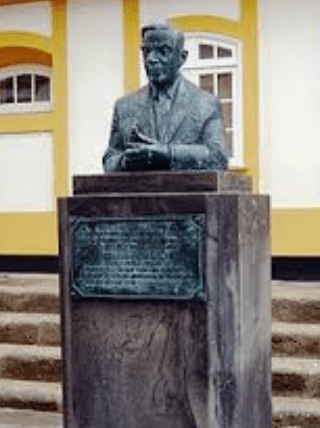
And what better moment than now? Fifty years after autonomy—after the islands claimed a political voice within Portugal—we are invited to consider the deeper autonomy Nemésio always pursued: the autonomy of thought, of identity, of expression. His work reminds us that autonomy is not only institutional; it is cultural, linguistic, and imaginative.
To read Nemésio today is to understand that the Azores are not peripheral—they are central to a way of seeing the world shaped by fragmentation, resilience, and continuity.
His legacy is not behind us. It is waiting—like the islands themselves—on the horizon. And the task before us, especially in the diaspora, is simple and profound: To cross that sea again.
 Filamentos (artes e letras)