The sounds of the revolution return—clear, urgent, and, above all, young. In the voices that recount it, the 25th of April seems newly alive, as if history itself refuses to age.
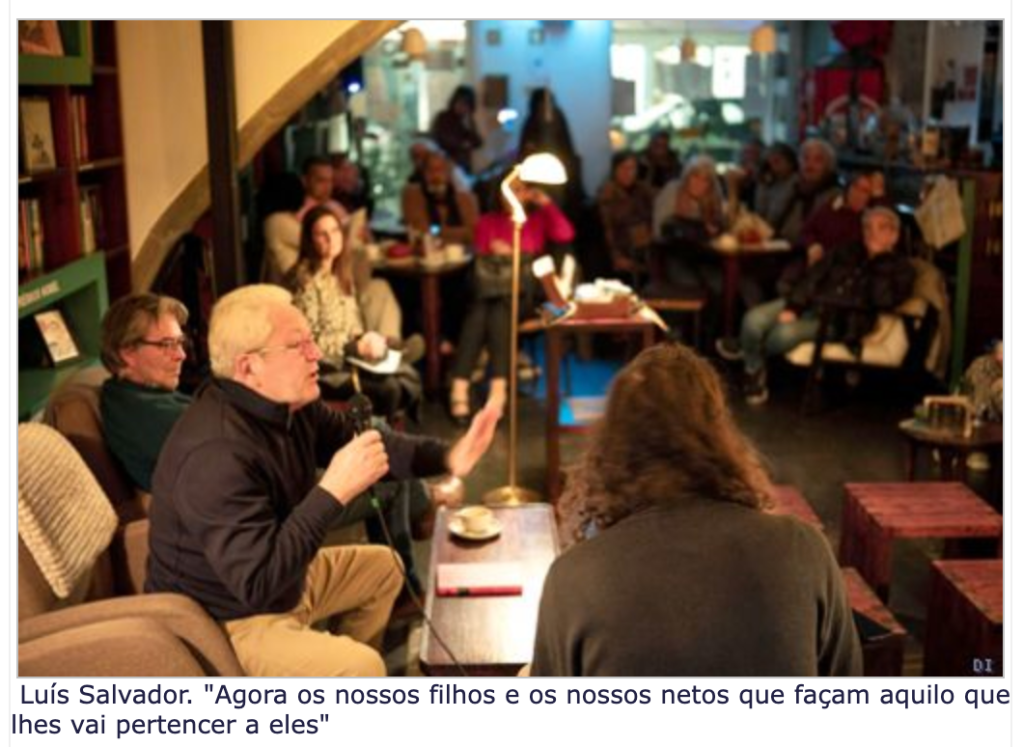
Luís Salvador was just 20 years old when he became one of the soldiers of April. For him, the central issue was not ideology, but survival: the end of the colonial war. “We already knew we were going to war to serve as cannon fodder,” he recalls. He took part in the revolution, and for years afterward, he rarely revisited those days. Only later, as a father and with time’s distance, did reflection deepen. “It was a good thing, because the country was improving. It’s not everything we wanted—but we always want more, don’t we? Compared to what existed 52 years ago, there’s no comparison.”
He speaks late into the night at the bookstore Lar Doce Livro, following the first session of a collective listening event of “E Temos o Povo” (“And We Have the People”), a radio montage built from the reporting of Adelino Gomes, Paulo Coelho, and Pedro Laranjeira for Rádio Renascença. The nearly four-hour recording was divided across two evenings, part of a collaboration between the Commission for the 50th Anniversary of April 25 and the Monte Brasil Festival/Associação Cultural Dois Caminhos.
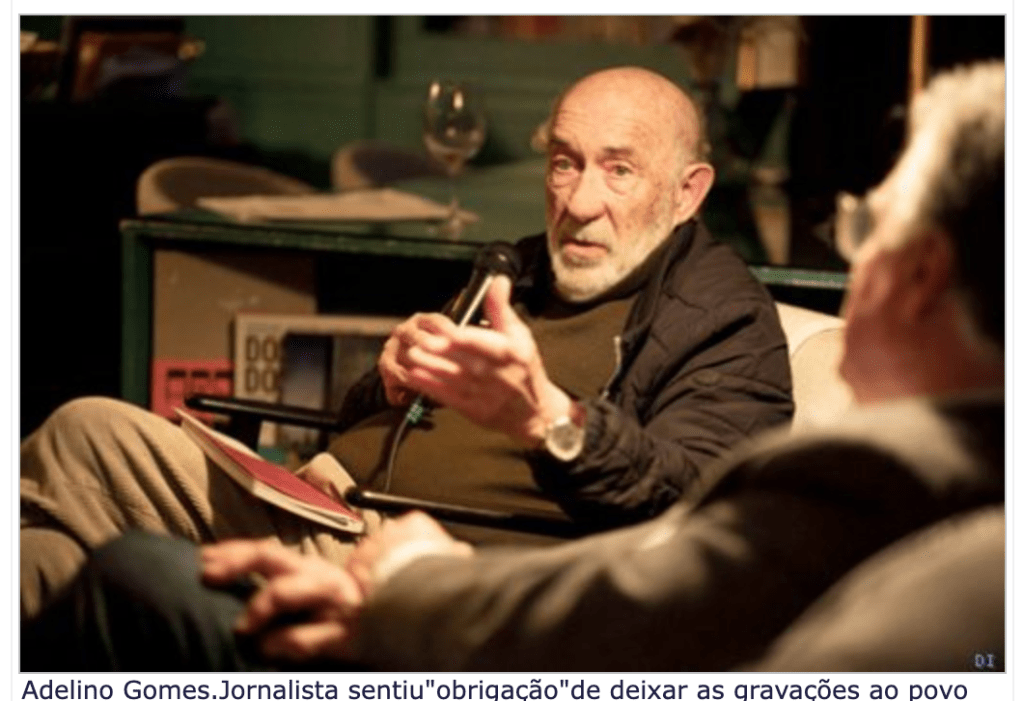
Journalist Adelino Gomes was present—both witness and custodian of memory. He recalled how, years ago, a former radio technician delivered a bag of old recordings to his home. Only later, after the man had died, did Gomes listen to them and grasp their weight. Those tapes, he realized, belonged not to him, but to the people.
“Because the people were the third actor,” he says. “There were those who revolted, and those who resisted them. And then, in the middle of it all, came the people.”
He recounts a defining moment at Lisbon’s Largo do Carmo. As a captain declared that all armored vehicles were under military control, a young officer interrupted: “And we have the people.” In that instant, Gomes explains, the revolution ceased to belong solely to the military—it became something larger, collective, irreversible.
For Gomes, the recordings are not just documents, but portals. He remembers vividly the presence of Salgueiro Maia, the quiet architect of that day. Positioned just meters from the forces loyal to the regime, Maia did something extraordinary: he turned his back on the enemy, lowered his weapon, and faced the press. For nearly fifteen minutes, he answered questions, unarmed, exposed, and resolute. “It was a lesson,” Gomes says—an image as cinematic as it was real.
Their connection was personal. Gomes and Maia had been schoolmates in Leiria. When the journalist—then barred from working in Portuguese radio—managed to reach him, he asked a simple question: “Which side are you on?” Maia’s answer was equally direct: “Didn’t you leave the country because of things you said on the radio? We are doing this so that no one ever has to leave again for what they think or say.”
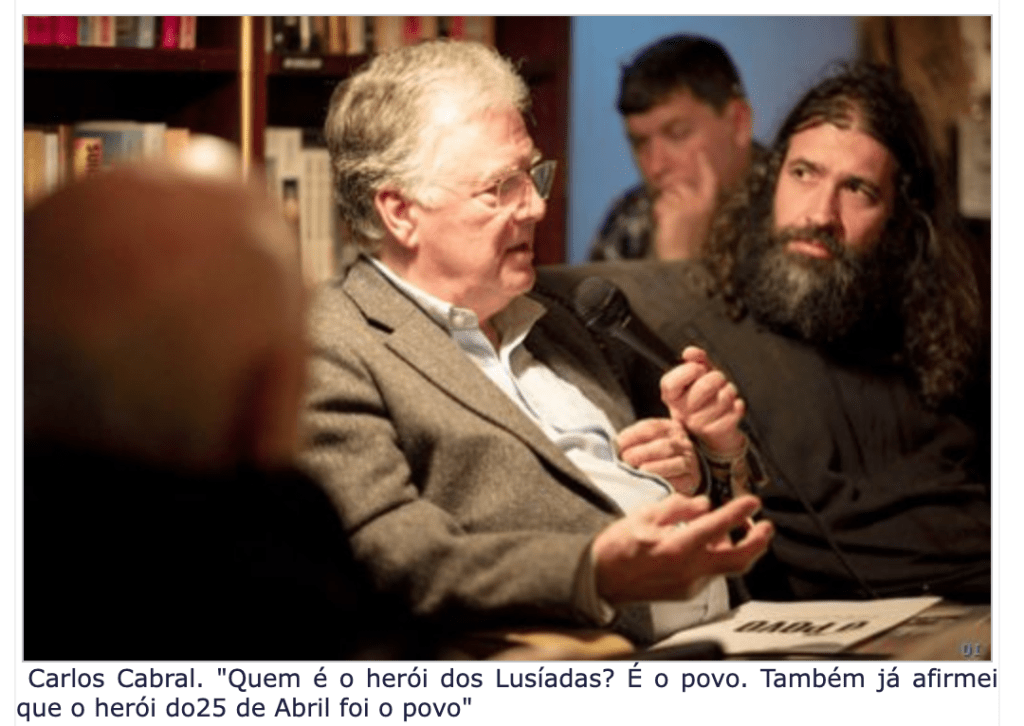
Others carry the memory differently, but no less vividly. Carlos Cabral, then a young sergeant, marks his life in dates—many of them falling on the 25th. But none as transformative as April 25, 1974. A native of Terceira, raised in quiet restraint and warned by his mother to avoid politics, he found himself suddenly at the center of history.
From Santarém, he advanced in a military vehicle through Lisbon—Terreiro do Paço, Largo do Carmo—witnessing both triumph and tragedy. Near the headquarters of the political police, he saw the wounded carried past him, including João Arruda, a young man from São Miguel who would later die from his injuries.
Even now, decades later, the details remain sharp. He recalls being summoned to a meeting—unaware it concerned the revolution—while watching a Sporting match. He asked for five more minutes before going. “A journalist once told me I delayed the revolution by five minutes,” he says, with a quiet smile.
But what followed was no delay. Signals were broadcast—first “E Depois do Adeus,” then “Grândola, Vila Morena”—and the machinery of change began to move. At one in the morning, soldiers were awakened and told: we are going to make a revolution. Cabral insists that moment would not have been possible without the militia—the ordinary men who recognized themselves in one another.
And always, the people. “The hero of The Lusiads is the people,” he says. “And the hero of April 25 was also the people. Without them, everything would have been different.”
One memory, above all, remains with him: riding through Rua Augusta amid the growing tide of celebration, when a man turned and said, “I was born under fascism. I never thought I would die in democracy, in freedom.”
Today, the revolution’s ideals face a more uncertain world. Adelino Gomes resists turning these commemorations into political debates, even amid frustration and disappointment with the present. “Despite everything,” he says, “what those men gave us is a challenge. My role is to tell the best of April 25.”
Luís Salvador puts it more simply: “The soldiers, with the people, brought freedom to Portugal. Now it is for our children and grandchildren to do what belongs to them.”
And so the voices continue—young still, carrying forward a revolution that, in memory and meaning, refuses to grow old.
From Diário Insular-José Lourenço, director
 Filamentos (artes e letras)