
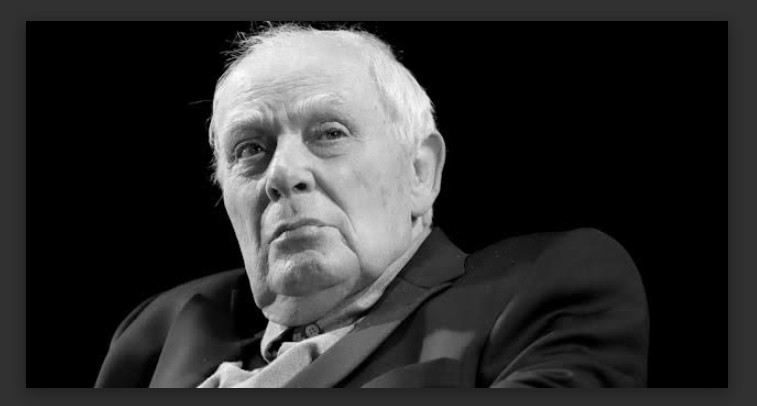
No, I am not here to do a “eulogy of bone” (António Sérgio) on writer António Lobo Antunes. I am not one to practice literary necrophilia. And I am against litanies exalting the dead. I prefer to write about writers while they are alive — and not always to speak well of their books. For example, regarding Lobo Antunes, in 2009 I published a review titled “António Lobo Antunes, or the saturation of his words,” in which I denounced that writer for writing a lot to say nothing.
I met him in person in November 1987 during some literary conference sessions I recall unhappily. It was in Ponta Delgada and I was right there when he, knowing nothing of the Azorean literary tradition and casting a blind eye at Clara Ferreira Alves, muttered, “Dammit, Mau Tempo no Canal is the Bible to you guys!”
We mild-mannered Azorean writers were those “guys” — at the time far younger, less experienced, and slimmer… And he was the acclaimed writer António Lobo Antunes, with several novels already published: Memória de elefante [Elephant’s Memory] (1979), Os cus de Judas [translated twice, as The Land at the End of the World, and as South of Nowhere] (1979), Conhecimento do Inferno [Knowledge of Hell] (1980), Explicação dos Pássaros [An Explanation of the Birds] (1981), Fado Alexandrino (1983), and Auto dos Danados [Act of the Damned] (1985) — books I had read with interest.
Author and narrator are distinct entities, as we know. António Lobo Antunes had disappointed me as a person, but I continued to appreciate his books, especially since the above conferences had taken place under the sign of lies, misunderstandings and other bitterness. Onésimo Teotónio Almeida, who excelled as host, grew displeased with the continental writers and journalists — and, among many other things, felt compelled to denounce in writing the blasé pose and ennui that António Lobo Antunes had assumed during the event, as well as the clash of egos between him (Lobo Antunes) and José Martins Garcia, and between the latter and Clara Ferreira Alves.
Nonetheless, I savored the six novels that Lobo Antunes wrote after the aforementioned ones. But from Exortação aos Crocodilos [Warning to the Crocodiles] (1999) onwards, I wearied of so much narrative without sequence or consequence. I grew tired of a stripped-down minimalist, acidic, arid writing style — writing that cuts to the bone, on knife’s edge. Besides, I have always preferred his appealing columns published in Visão to his novels.
The themes António Lobo Antunes brought to his books are not uninteresting: emptiness, loneliness, the agony of reality, irremediable failure to communicate, vacuums, the anguish of daily life, human frailty, the loss of illusion, the frustration of living and not being loved, love or the absence of it, death… But there is such tedium in his monologues, and narrative disarray. The author created dramatic tension with inaction, and made boredom a theme. Investing in opacity, he filled pages and pages with shouted, exasperated, exhausted, vacant words. And he seemed to want to follow that maxim of “the less readable, the better.”
The writer invented obscurities because he did not feel the need to know anything about himself; he had no stories to tell. A nihilist, a man of sardonic asceticism, a writer of the absurd (though not invoking Ionesco here), he sought his literary resources in the absence of meaning and significance.
And what can be said of his characters, beings disconnected from all external contingency? The author dumped them into an endless verbal deficit. They are personages who have nothing naturalistic about them; they are not in service to a describable reality. They are ridiculous figures who move with no perceptible sense of purpose.
Obviously the writer was in vogue, and even hoping for a Nobel Prize in Literature. His books sold very well. But I have always wondered: will those who buy Lobo Antunes read Lobo Antunes in his entirety? And what will become of Lobo Antunes when the inexpressible goes out of fashion?
We shall see.
Originally published in Portuguese as “Evocando António Lobo Antunes e a sua escrita” in AçorianoOriental, Filamentos arte e letrras (PBBI-Fresno State) and on Graciosa Digital.
 Filamentos (artes e letras)