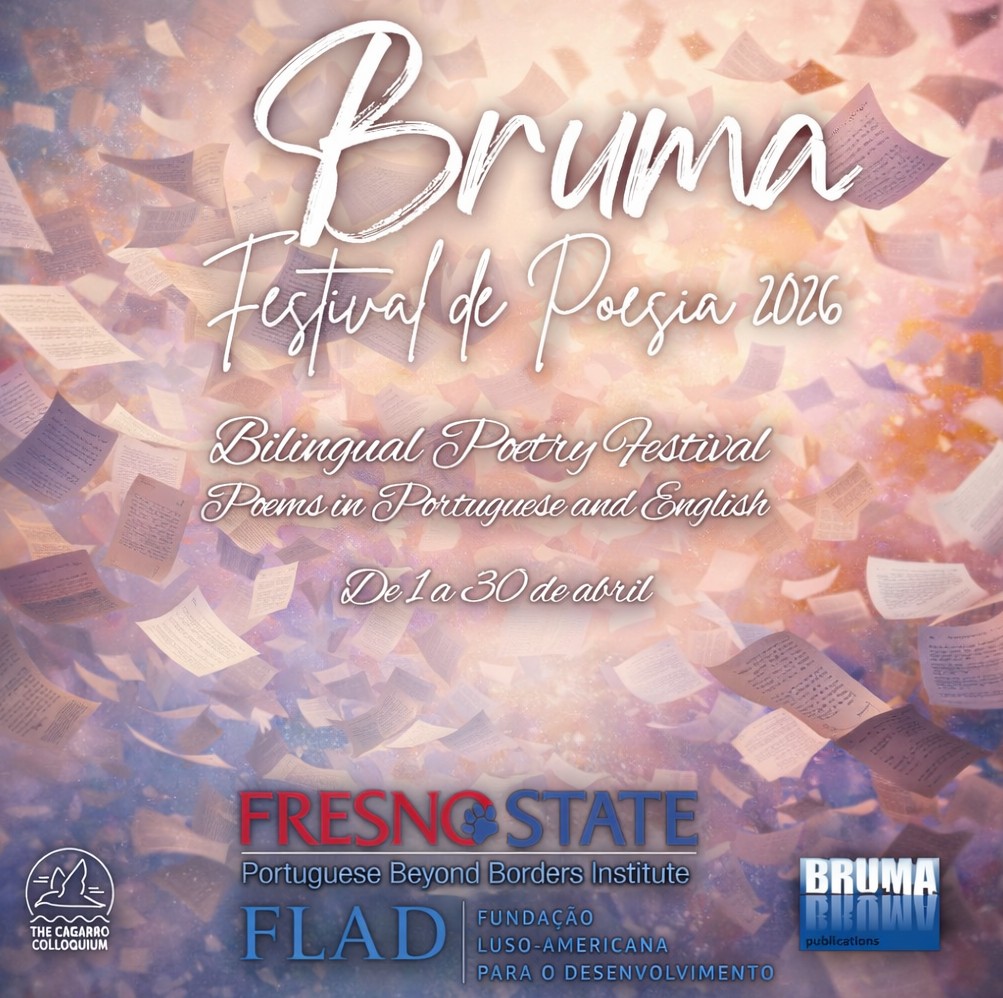
April approaches as a territory of voice—not merely Poetry Month in the United States, but an expanded space where language crosses oceans, returns to the islands, and finds itself again in the diaspora. For the fifth consecutive year, the Bruma Poetry Festival rises as an act of continuity and encounter, a collective crossing in which language—whether in Portuguese or in English—becomes a shared home.
Open to all poets, and to all who love poetry—even those who wish only to read a single poem—the festival affirms itself as a democratic space of the word. Last year, ninety poems resonated across thirty days, a true sonic map of contemporary creation. This year, the ambition remains, but deepens: to reach that same number while adding days devoted to voices that have shaped our poetic imagination, a kind of liturgy of memory.
Bruma has now become more than a gathering: it stands as the largest festival of Portuguese poetry and poetry in the Portuguese language on the North American continent. Not by proclamation, but by the density of voices it convenes, the breadth of geographies it embraces, and its fidelity to a community that refuses to fade into the erosion of time. At its core pulses an unmistakable Azorean dimension. Emerging from California—the largest center of Azorean emigration in any U.S. state, with more than 300,000 people who identify as Azorean or of Azorean descent, a number surpassing the current population of the archipelago itself—the festival becomes a space where Azoreanness is not distant memory, but active presence, a deep breath, a living substance of language. Here, the islands are not merely origin: they are horizon.
The festival opens on April 1 with a tribute to Natália Correia, as part of the Natália Correia Chair at California State University, Fresno. It will be a day devoted not only to her work, but to the voices of women in the diaspora, reaffirming a writing that never accepted silence. “Poetry is meant to be eaten,” she wrote, reminding us that language is not ornament, but necessity—nourishment for both spirit and critical thought.
Each Saturday in April will be dedicated to a distinct voice, forming an affective geography of poetry and culture. On April 4, the festival honors Fernanda Montenegro, whose voice did more than interpret—it elevated language into permanence. “Art exists because life is not enough,” she once said, and within that truth lies the very reason for this festival. On April 11, the focus turns to Azorean poet Álamo Oliveira, whose insular writing teaches us that territory is not merely geography, but condition, memory, and belonging. On April 18, Maria Teresa Horta is celebrated, a poet whose work made of the body and of language a space of resistance, where “the body is the first homeland.” On April 25, a date inseparable from freedom, the tribute belongs to José Carlos Ary dos Santos, poet of revolution, whose words remain a collective song: “The doors that April opened / no one will ever close again.”
The festival concludes on April 30 with a tribute to Marcolino Candeias, ten years after his passing. His deeply humanistic poetry reminds us that language may well be the last place where freedom can still fully exist.
This year, however, Bruma adds a new gesture to its poetic cartography: throughout April, it will include a selection of American poets presented in Portuguese translation, united by a common theme—peace. At a time when the noise of the world insists on fragmentation, this initiative seeks to restore poetry as a space of reconciliation, a language capable of reimagining the human. By bringing into Portuguese the voices of American poets who have written about the urgency of peace, the festival not only expands its literary horizon, but also offers a quiet yet resolute appeal: that peace might once again become not a distant abstraction, but the shared aspiration of all humanity.
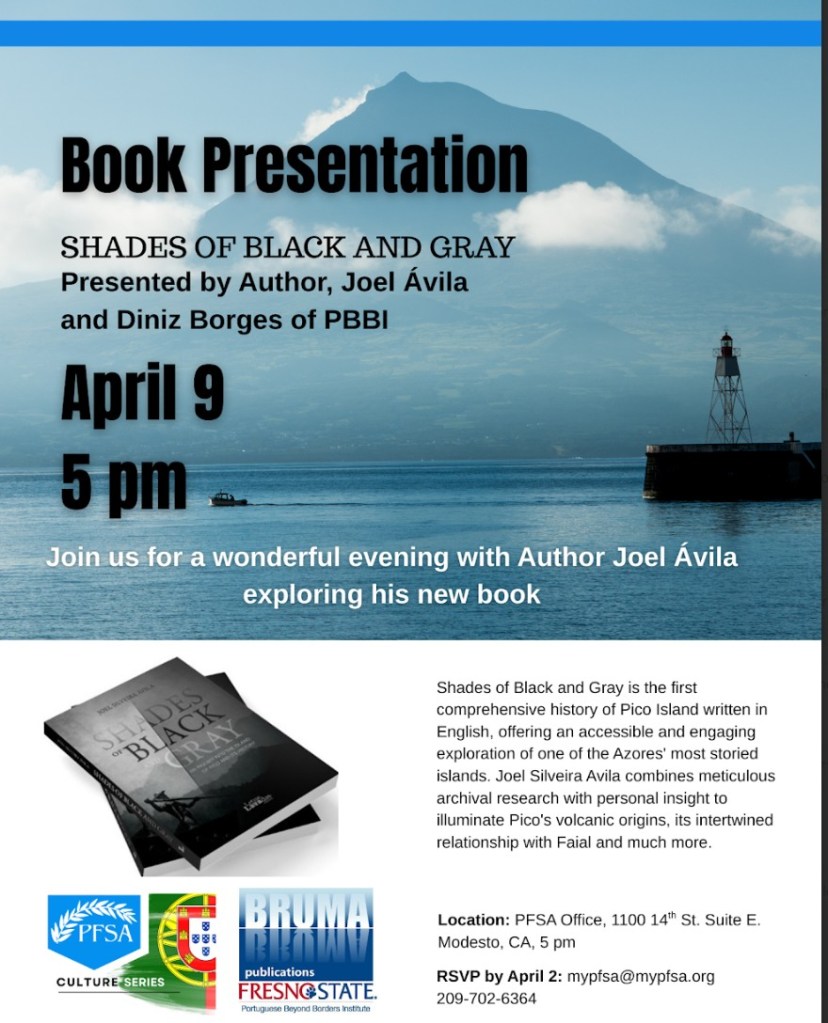
In parallel, April will also feature two in-person events within the PBBI–Fresno State/FLAD series: a session of the Alfred Lewis Bilingual Reading Series and a gathering with poets from Kale Soup for the Soul. On Sundays, the ongoing tribute to poet Alfred Lewis will continue, extending a gesture of recognition across the entire year.
The Bruma Poetry Festival affirms itself as a bilingual event, open to poems in Portuguese or English, according to the language of the reader. Here, translation is not merely a technical act, but an encounter—where linguistic worlds touch and recognize one another. Readings will be shared across social media, with particular emphasis on YouTube, where they will be archived as a living memory of the festival, and also published on the Filamentos – Arts and Letters platform, extending the reach of the word beyond the moment.
As in previous years, voices are expected from Portugal—including the Azores and Madeira—from Portuguese-speaking African countries, from Brazil, from Timor-Leste, and from diaspora communities across the United States, Canada, and beyond. From the Portuguese Beyond Borders Institute at California State University, Fresno, the festival becomes a truly global gathering—an archipelago of voices bound by poetry.
Submissions of poems and recordings—made via phone, computer, or any other medium—are open from March 28 through April 22, with the daily presentation of poems beginning on April 1. More than a festival, Bruma is an open invitation: to read, to share, to exist through language. Because, in the end, poetry remains that rare place where the world becomes, for a fleeting moment, inhabitable for all—and where, between mist and memory, the islands continue to breathe within us.
 Filamentos (artes e letras)