
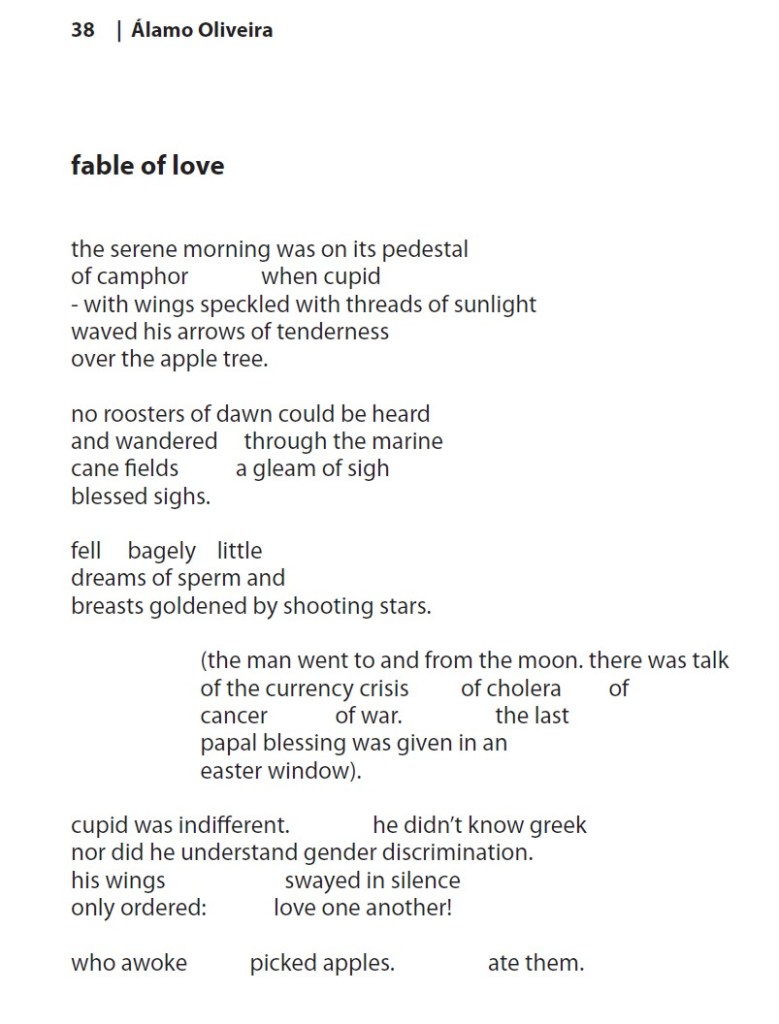
Álamo Oliveira’s “fable of love” unfolds like a quiet allegory suspended between innocence and disquiet. At first, the poem seems to offer a pastoral, almost mythic scene—morning elevated, Cupid drifting lightly through sunlight, tenderness cast like arrows over an apple tree. Yet this serenity is quickly unsettled. The world intrudes: crisis, illness, war, the weight of history and human suffering enter the poem almost casually, as if to remind us that love does not exist outside of reality, but within it—fragile, persistent, and often indifferent to the chaos that surrounds it.
What emerges is a striking paradox. Cupid, stripped of ideology and language, “didn’t know Greek / nor did he understand gender discrimination,” becomes a figure of pure, almost naïve command: love one another. It is both simple and impossibly complex. In the end, the act of waking, of picking apples, of eating—returns us to something elemental, almost biblical, suggesting that love is less an abstraction and more a lived, embodied act. Oliveira’s poem resists moralizing; instead, it leaves us in a space of reflection, where tenderness and contradiction coexist.
On this World Poetry Day, we invite you into this conversation. How do you read this fable? Is love here an escape, a resistance, or a quiet necessity? Share your thoughts with us and join this cultural dialogue around poetry and the enduring work of Álamo Oliveira.
Vision Statement
To create a living bridge between the Azores and its global diaspora through poetry—where translation becomes an act of cultural continuity, and where voices like Álamo Oliveira resonate across languages, generations, and geographies. This World Poetry Day initiative envisions a community that not only reads poetry, but inhabits it: reflecting, remembering, and reimagining identity through the shared cadence of words.
Mission Statement
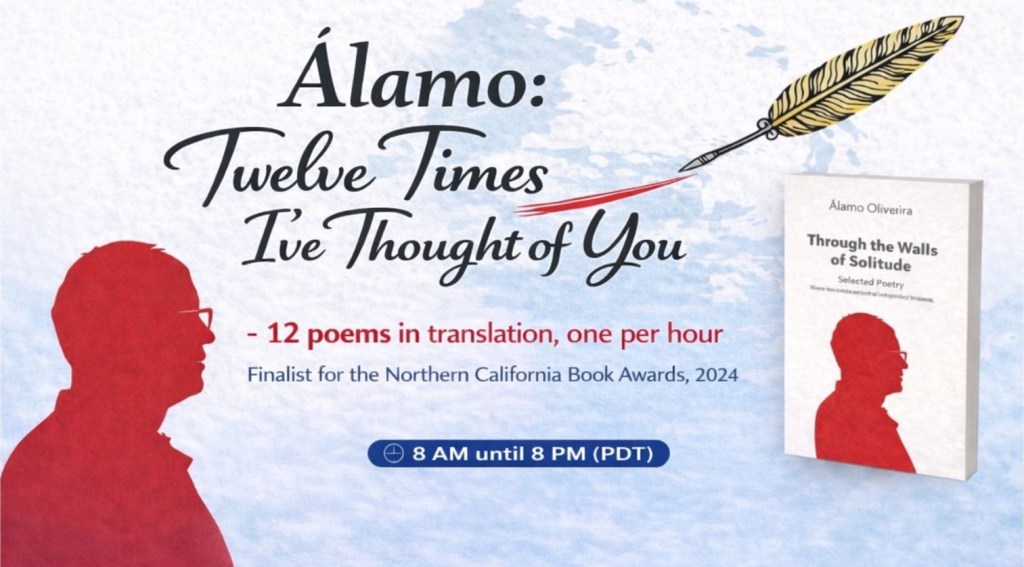
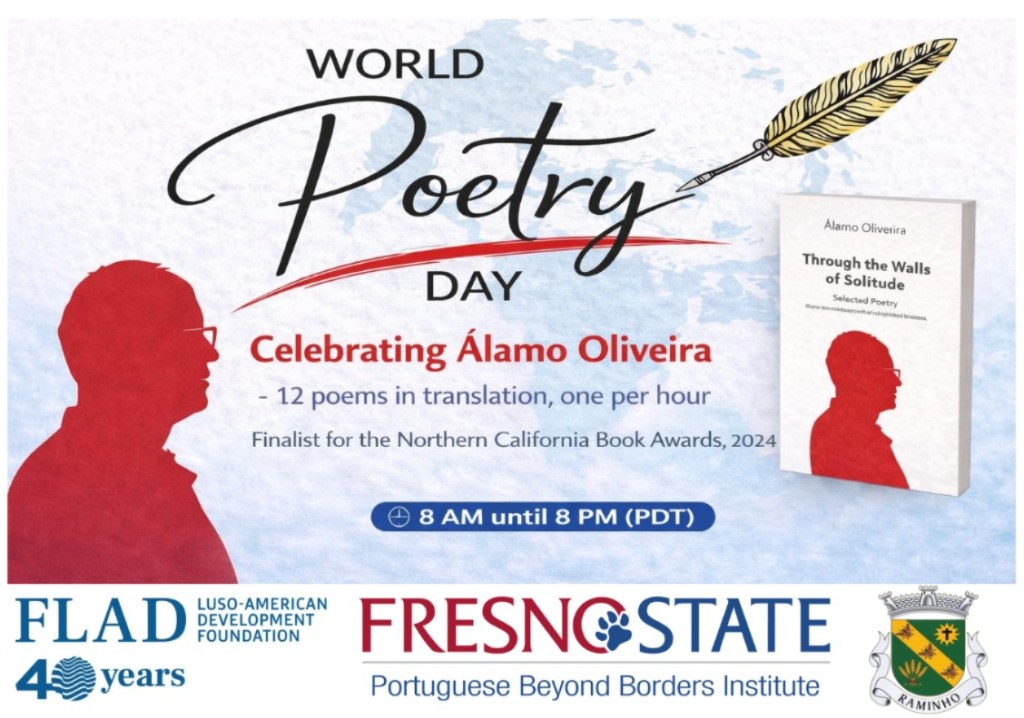
Through Álamo: Twelve Times I’ve Thought of You, we seek to celebrate poetry as a daily, unfolding experience—offering twelve translated poems, one per hour, as moments of pause, reflection, and connection. This project aims to amplify Azorean literary voices in English, foster dialogue within the Portuguese-American community, and engage broader audiences in the beauty and depth of Lusophone expression. By bringing poetry into the rhythm of the day, we invite readers to participate in an ongoing cultural conversation—one that honors memory, embraces translation as a creative act, and affirms the enduring power of language to unite us across oceans.
 Filamentos (artes e letras)