
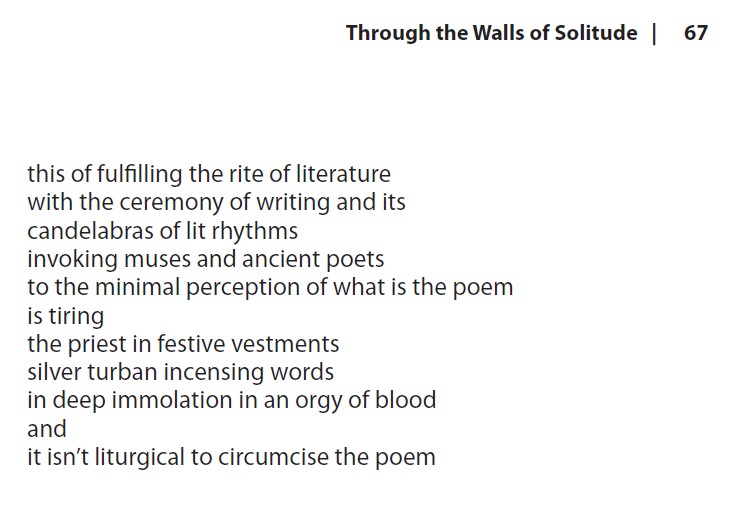
Álamo Oliveira’s poem reads like a meditation on poetry itself—its rituals, its illusions, and its dangers. Framed in the language of ceremony, the act of writing becomes almost sacred: “candelabras of lit rhythms,” “muses and ancient poets,” a priestly figure tending to the text as if it were an altar. Yet this reverence is not without tension. Oliveira exposes the theatricality embedded in literary tradition, suggesting that poetry can become overburdened by its own rituals, its inherited gestures, its desire to sanctify what may, at its core, resist such formalization.
At the same time, the poem pushes against this excess. The striking final line—“it isn’t liturgical to circumcise the poem”—feels like both a provocation and a liberation. It suggests that poetry cannot be reduced, purified, or disciplined into a single meaning or form. Instead, it must remain open, raw, and perhaps even unruly. Oliveira invites us to reconsider what a poem is—not as a perfected object, but as an ongoing act, one that lives between tradition and rupture, between invocation and resistance.
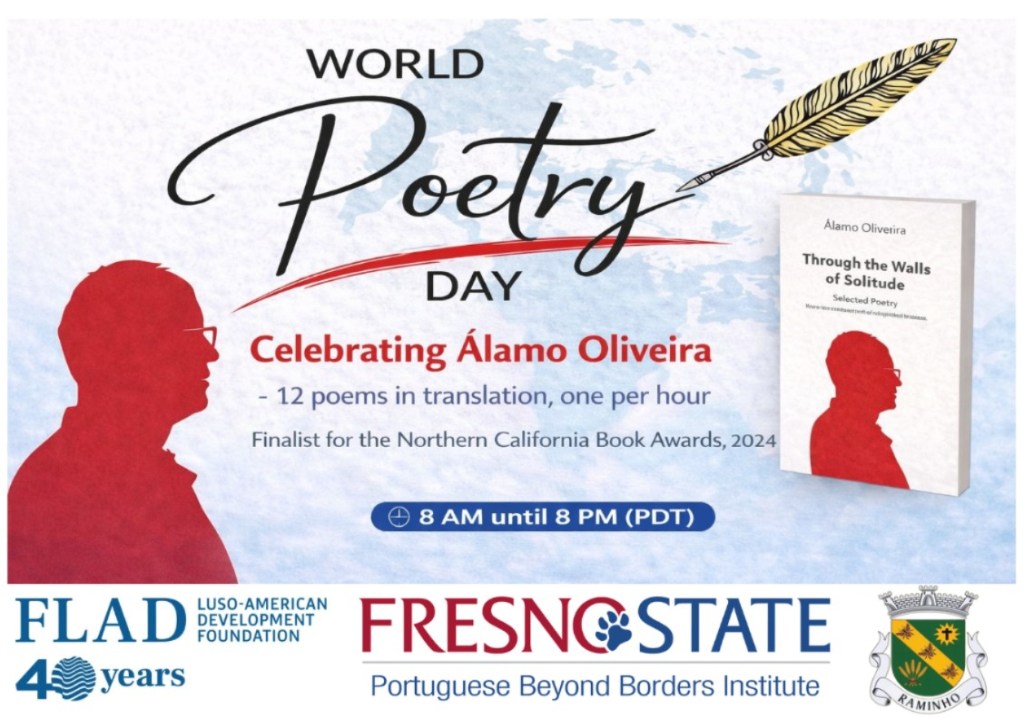
On this World Poetry Day, we invite you into this reflection. How do you read this vision of poetry and its rituals? Do you see poetry as ceremony, rebellion, or something in between? Share your thoughts with us and join this cultural dialogue around poetry and the enduring work of Álamo Oliveira.
Vision Statement
To create a living bridge between the Azores and its global diaspora through poetry—where translation becomes an act of cultural continuity, and where voices like Álamo Oliveira resonate across languages, generations, and geographies. This World Poetry Day initiative envisions a community that not only reads poetry, but inhabits it: reflecting, remembering, and reimagining identity through the shared cadence of words.
Mission Statement
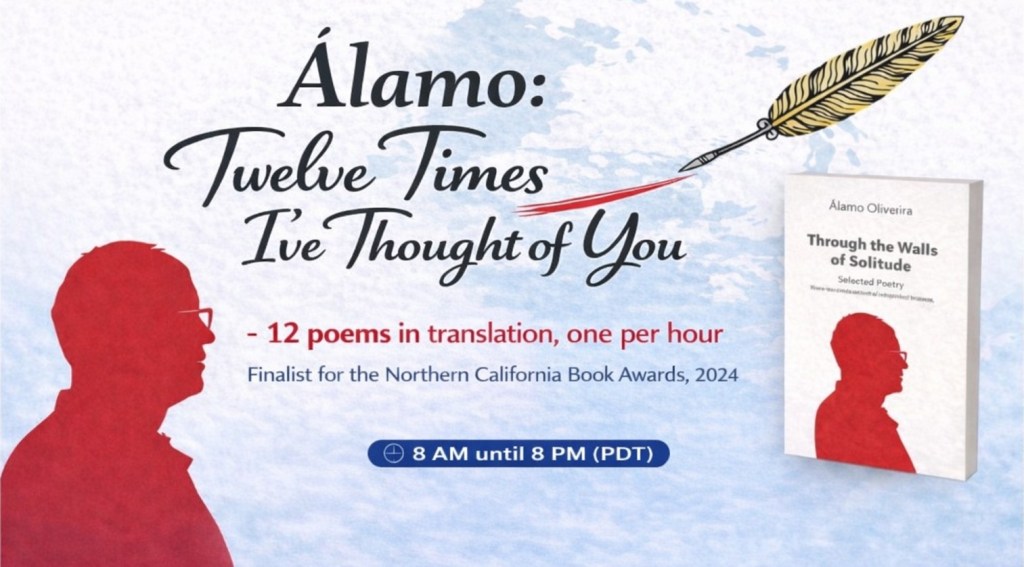
Through Álamo: Twelve Times I’ve Thought of You, we seek to celebrate poetry as a daily, unfolding experience—offering twelve translated poems, one per hour, as moments of pause, reflection, and connection. This project aims to amplify Azorean literary voices in English, foster dialogue within the Portuguese-American community, and engage broader audiences in the beauty and depth of Lusophone expression. By bringing poetry into the rhythm of the day, we invite readers to participate in an ongoing cultural conversation—one that honors memory, embraces translation as a creative act, and affirms the enduring power of language to unite us across oceans.
 Filamentos (artes e letras)