
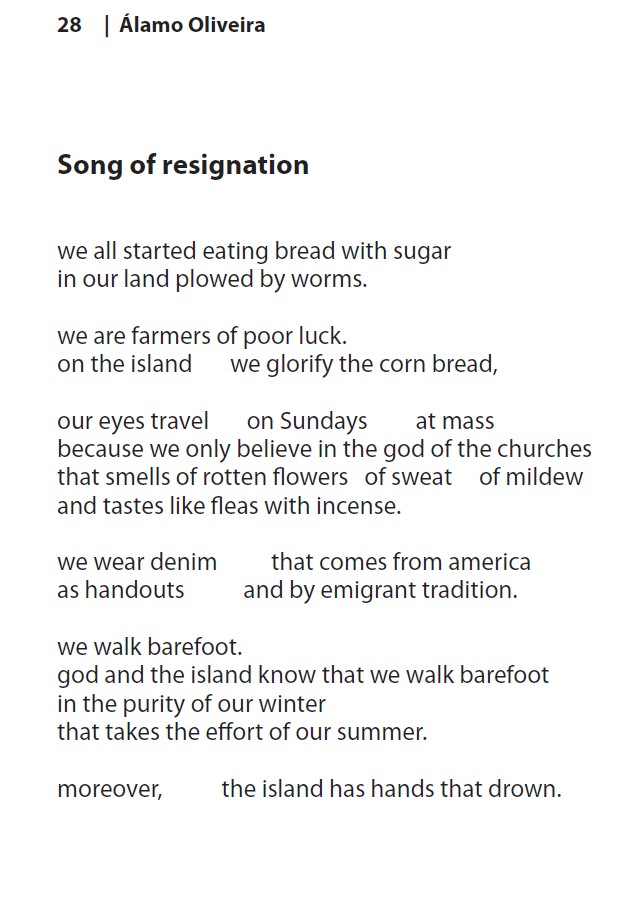
Álamo Oliveira’s “Song of resignation” offers a stark and unflinching portrait of insular life shaped by hardship, faith, and endurance. The poem moves through images of scarcity and dignity—bread “with sugar,” land “plowed by worms,” and a people who name themselves “farmers of poor luck.” There is no romanticization here. Instead, Oliveira captures the weight of survival, where tradition and belief persist even when they are tinged with decay, where the sacred and the worn coexist in uneasy proximity. The island becomes not only a place, but a condition—one that shapes bodies, gestures, and even the imagination.
Yet within this resignation there is also a quiet strength, a kind of grounded truth. The barefoot walk, the seasonal labor, the memory of emigration—all suggest a people deeply connected to land and history, even as they navigate loss and limitation. The closing image—“the island has hands that drown”—lingers as both metaphor and warning, evoking the pull of geography, fate, and perhaps the sea itself. Oliveira’s poem does not offer escape, but it does offer recognition: a voice that speaks from within the lived reality of the Azores, and beyond it.
On this World Poetry Day, we invite you into this reflection. How do you read this “song”? Is it resignation, resistance, or something more complex? Share your thoughts with us and join this cultural dialogue around poetry and the enduring work of Álamo Oliveira.
Vision Statement
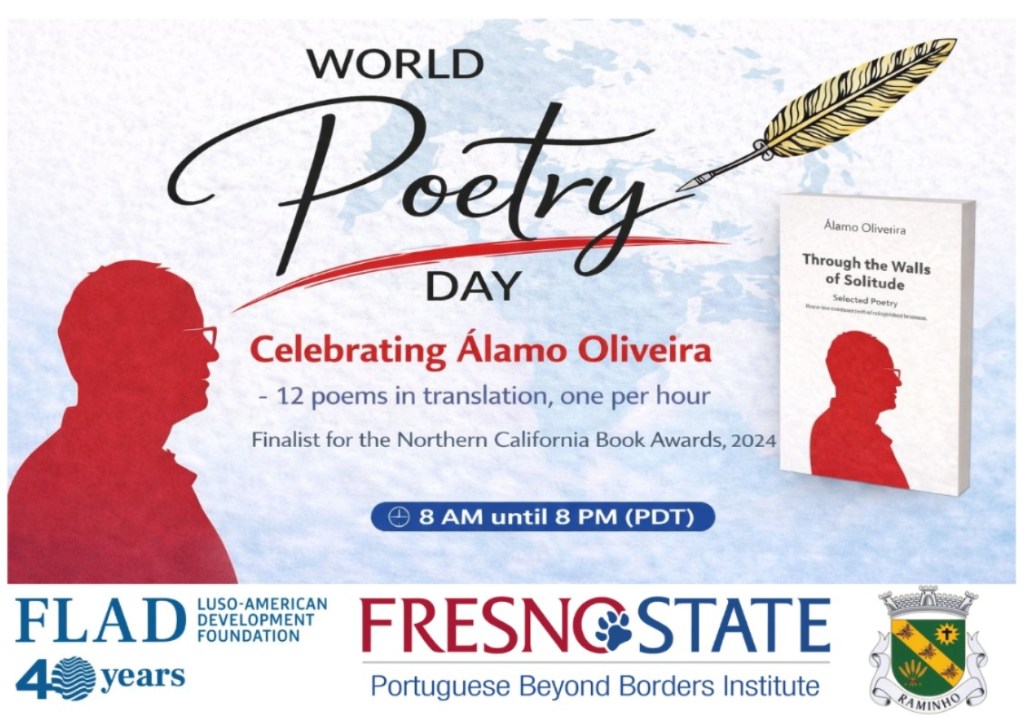
To create a living bridge between the Azores and its global diaspora through poetry—where translation becomes an act of cultural continuity, and where voices like Álamo Oliveira resonate across languages, generations, and geographies. This World Poetry Day initiative envisions a community that not only reads poetry, but inhabits it: reflecting, remembering, and reimagining identity through the shared cadence of words.
Mission Statement
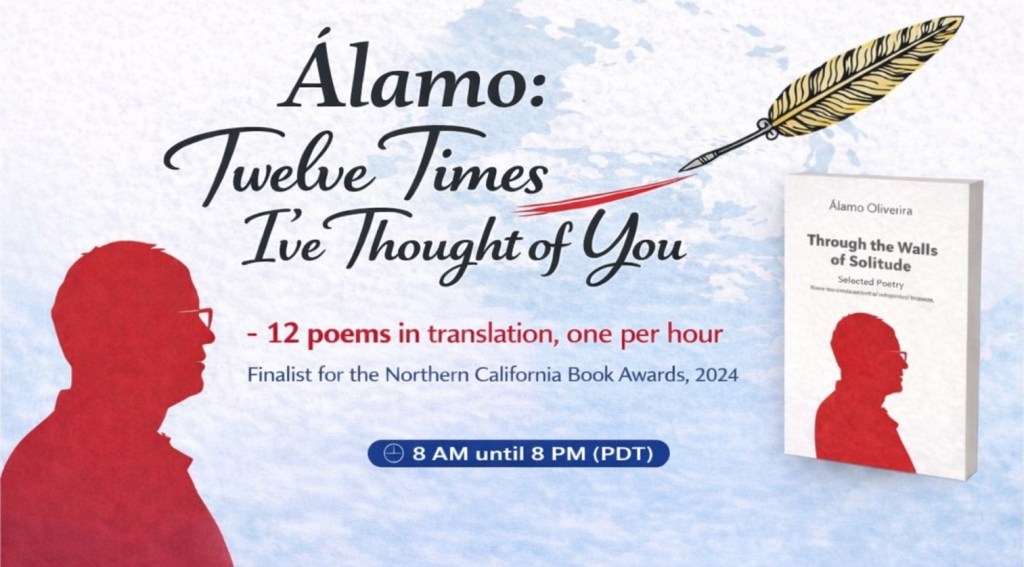
Through Álamo: Twelve Times I’ve Thought of You, we seek to celebrate poetry as a daily, unfolding experience—offering twelve translated poems, one per hour, as moments of pause, reflection, and connection. This project aims to amplify Azorean literary voices in English, foster dialogue within the Portuguese-American community, and engage broader audiences in the beauty and depth of Lusophone expression. By bringing poetry into the rhythm of the day, we invite readers to participate in an ongoing cultural conversation—one that honors memory, embraces translation as a creative act, and affirms the enduring power of language to unite us across oceans.
 Filamentos (artes e letras)