
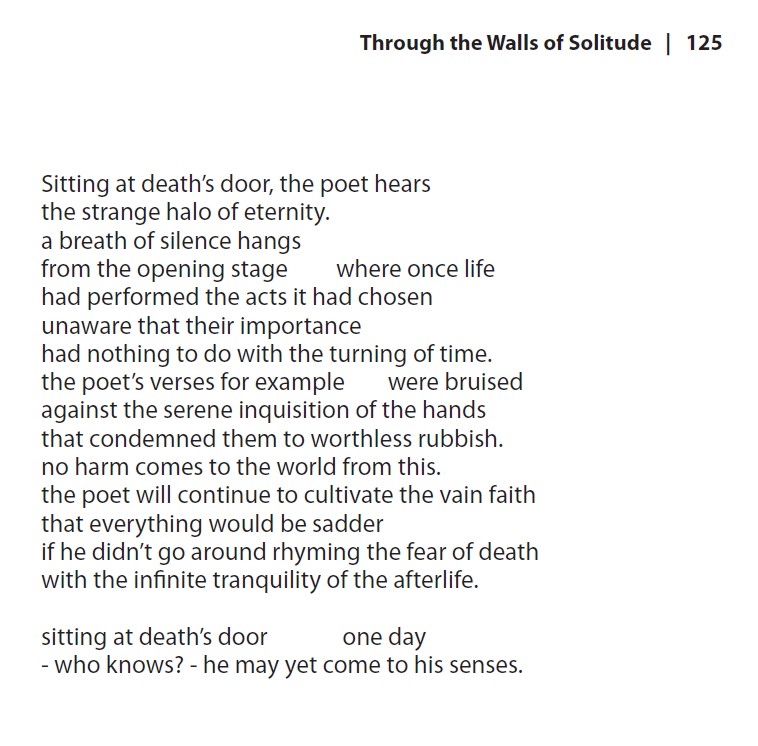
Álamo Oliveira’s poem situates the poet at a threshold—“sitting at death’s door”—where time, meaning, and creation are called into question. The imagery is theatrical and philosophical: life as a stage, past actions as performances whose significance fades against the vastness of time. Even poetry itself is not spared. The poet’s verses are dismissed, bruised, reduced to “worthless rubbish,” suggesting a deep skepticism about the lasting value of art in the face of mortality. And yet, the poem does not collapse into despair; rather, it lingers in a space of lucid awareness, where illusion and truth coexist.
What emerges is a paradoxical affirmation of poetry’s necessity. Despite doubt, despite the apparent futility, the poet continues—“rhyming the fear of death / with the infinite tranquility of the afterlife.” Poetry becomes an act of defiance, or perhaps of faith: a way of shaping fear into language, of giving form to what cannot be resolved. The closing line, quietly ironic, leaves us suspended between resignation and awakening—uncertain whether clarity will come, or whether the act of writing itself is already that clarity.
On this World Poetry Day, we invite you into this reflection. How do you read this encounter between poetry and mortality? Is it doubt, persistence, or a form of quiet belief? Share your thoughts with us and join this cultural dialogue around poetry and the enduring work of Álamo Oliveira.
Vision Statement
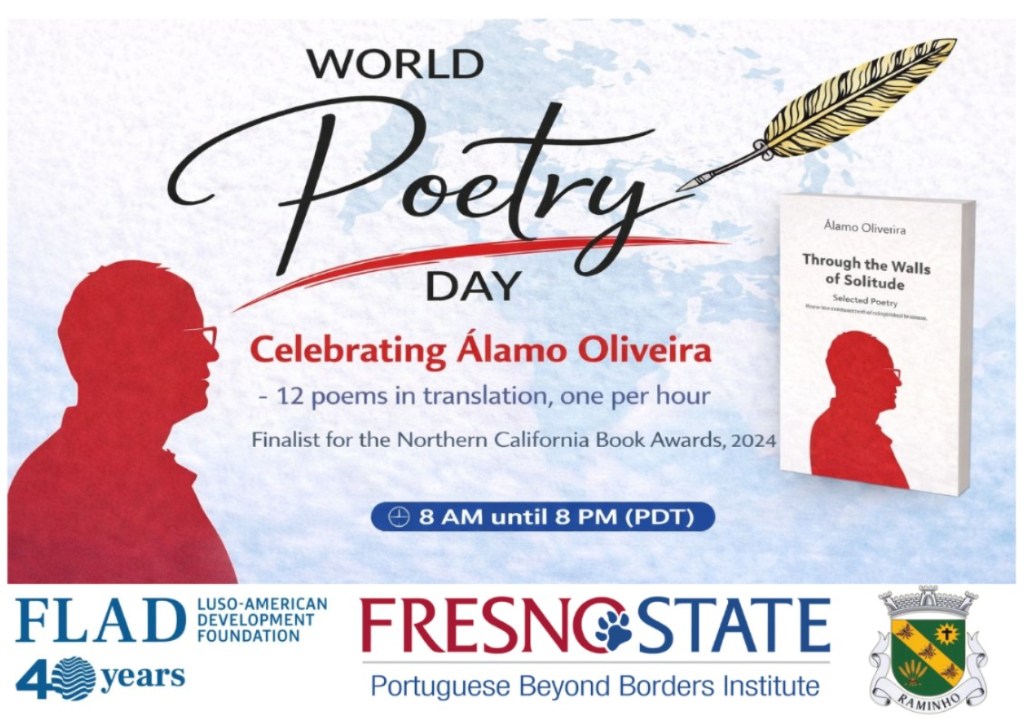
To create a living bridge between the Azores and its global diaspora through poetry—where translation becomes an act of cultural continuity, and where voices like Álamo Oliveira resonate across languages, generations, and geographies. This World Poetry Day initiative envisions a community that not only reads poetry, but inhabits it: reflecting, remembering, and reimagining identity through the shared cadence of words.
Mission Statement
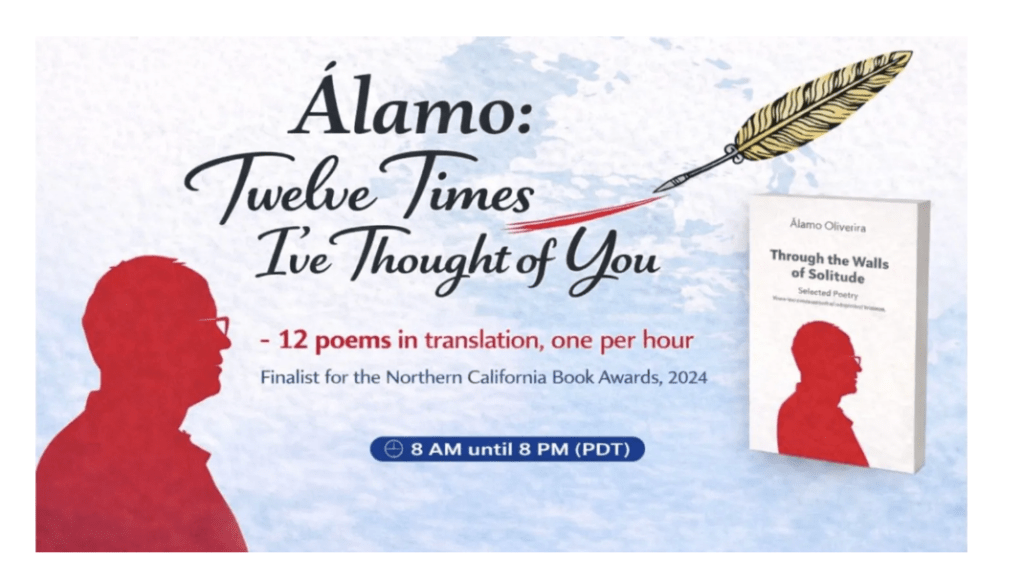
Through Álamo: Twelve Times I’ve Thought of You, we seek to celebrate poetry as a daily, unfolding experience—offering twelve translated poems, one per hour, as moments of pause, reflection, and connection. This project aims to amplify Azorean literary voices in English, foster dialogue within the Portuguese-American community, and engage broader audiences in the beauty and depth of Lusophone expression. By bringing poetry into the rhythm of the day, we invite readers to participate in an ongoing cultural conversation—one that honors memory, embraces translation as a creative act, and affirms the enduring power of language to unite us across oceans.
 Filamentos (artes e letras)