
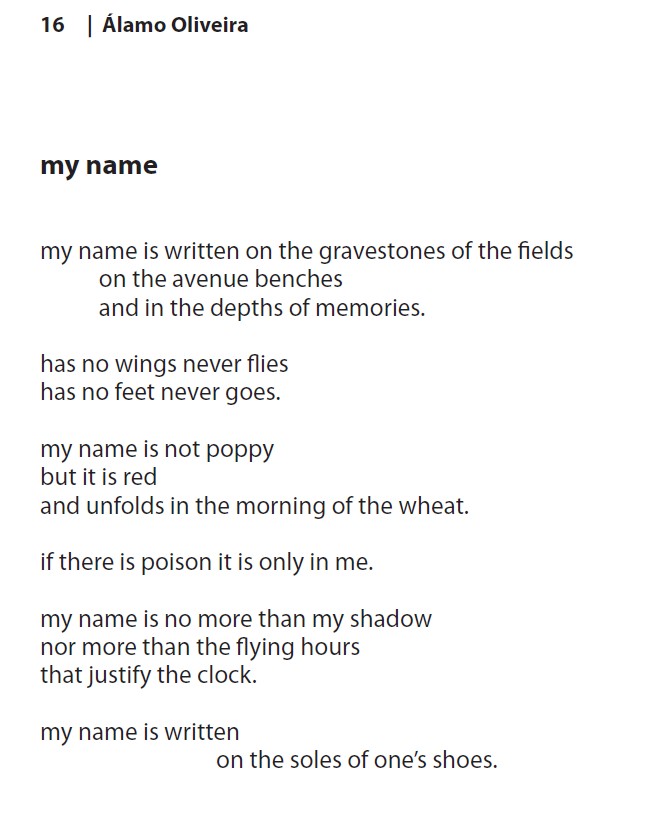
Álamo Oliveira’s “my name” unfolds as a quiet meditation on identity—not as something fixed or declarative, but as something dispersed, almost fugitive, written across landscapes, memory, and time itself. The poem resists definition. A name, here, is not anchored to the body (“has no wings…has no feet”), but instead drifts through absence and presence, through wheat fields and gravestones, through shadow and the measured passing of hours. There is something deeply Azorean—and at the same time universal—in this sense of self: shaped by place, marked by history, yet never entirely contained by either.
What lingers most is the tension between presence and erasure. The name exists, yet it is always slipping away—reduced to shadow, carried unknowingly, worn into “the soles of one’s shoes.” Oliveira invites us to reflect not only on who we are, but on how we are remembered, how we inhabit time, and how language both reveals and conceals us. It is a poem of humility and quiet intensity, one that asks us to listen closely to what cannot be easily said.
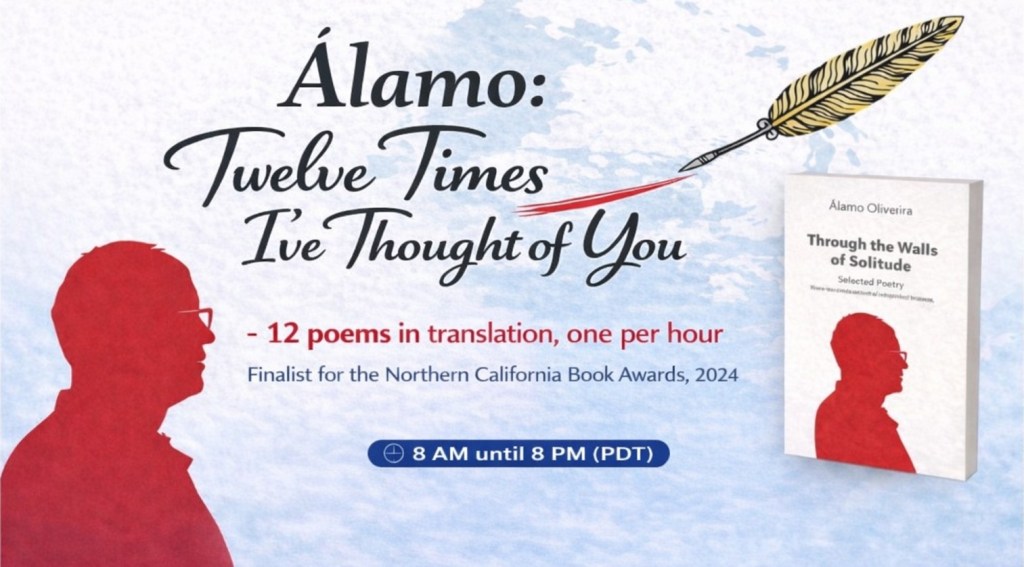
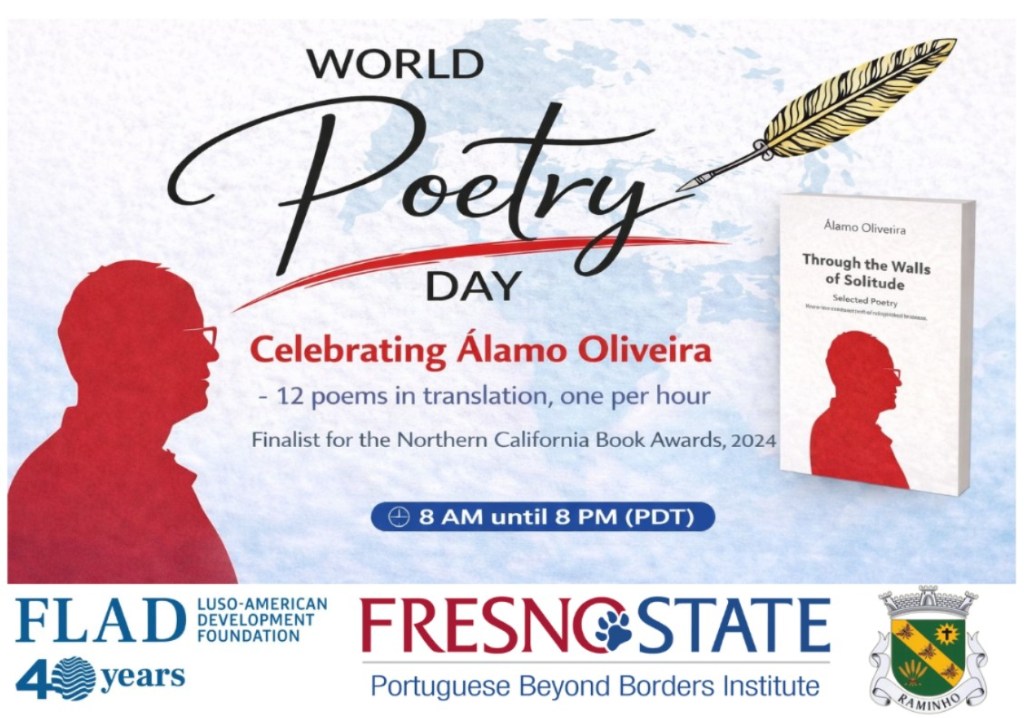
On this World Poetry Day, as we celebrate the work of Álamo Oliveira, we invite you into this moment of reflection. What does this poem awaken in you? Where do you find your own “name” written—in memory, in place, in time? Share your thoughts with us and join this ongoing cultural dialogue around poetry, language, and the enduring voice of the Azores.
Vision Statement
To create a living bridge between the Azores and its global diaspora through poetry—where translation becomes an act of cultural continuity, and where voices like Álamo Oliveira resonate across languages, generations, and geographies. This World Poetry Day initiative envisions a community that not only reads poetry, but inhabits it: reflecting, remembering, and reimagining identity through the shared cadence of words.
Mission Statement
Through Álamo: Twelve Times I’ve Thought of You, we seek to celebrate poetry as a daily, unfolding experience—offering twelve translated poems, one per hour, as moments of pause, reflection, and connection. This project aims to amplify Azorean literary voices in English, foster dialogue within the Portuguese-American community, and engage broader audiences in the beauty and depth of Lusophone expression. By bringing poetry into the rhythm of the day, we invite readers to participate in an ongoing cultural conversation—one that honors memory, embraces translation as a creative act, and affirms the enduring power of language to unite us across oceans.
 Filamentos (artes e letras)