
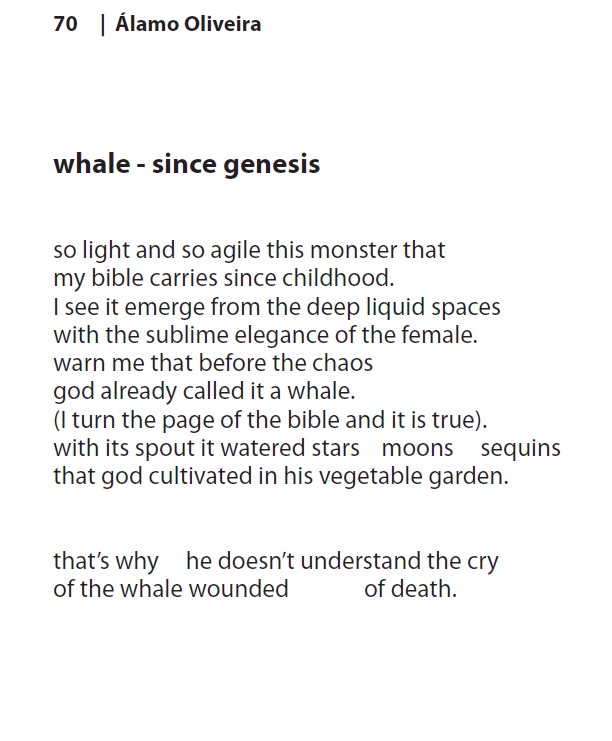
Álamo Oliveira’s “whale – since genesis” draws us into a primordial vision where myth, memory, and the natural world converge. The whale emerges not merely as a creature, but as an ancient presence—“light and agile,” yet bearing the weight of creation itself. By invoking the Bible and the language of genesis, Oliveira situates the whale at the very origins of being, before order, before naming fully settles the chaos. There is something deeply oceanic and Azorean in this gesture: the sea as both cradle and enigma, a space where the sacred and the elemental coexist.
Yet the poem turns, quietly but decisively, toward a profound dissonance. The same divine act that names and creates seems unable—or unwilling—to hear the “cry / of the whale wounded / of death.” In this contrast, Oliveira raises an unsettling question about creation and responsibility, about beauty and suffering existing within the same breath. The whale, once sublime and almost celestial, becomes a figure of vulnerability, its voice echoing into a silence that feels both cosmic and human.
On this World Poetry Day, we invite you into this reflection. What does this poem awaken in you? Do you read it as a meditation on creation, on loss, or on the fragile relationship between humanity and the natural world? Share your thoughts with us and join this cultural dialogue around poetry and the enduring work of Álamo Oliveira.
Vision Statement
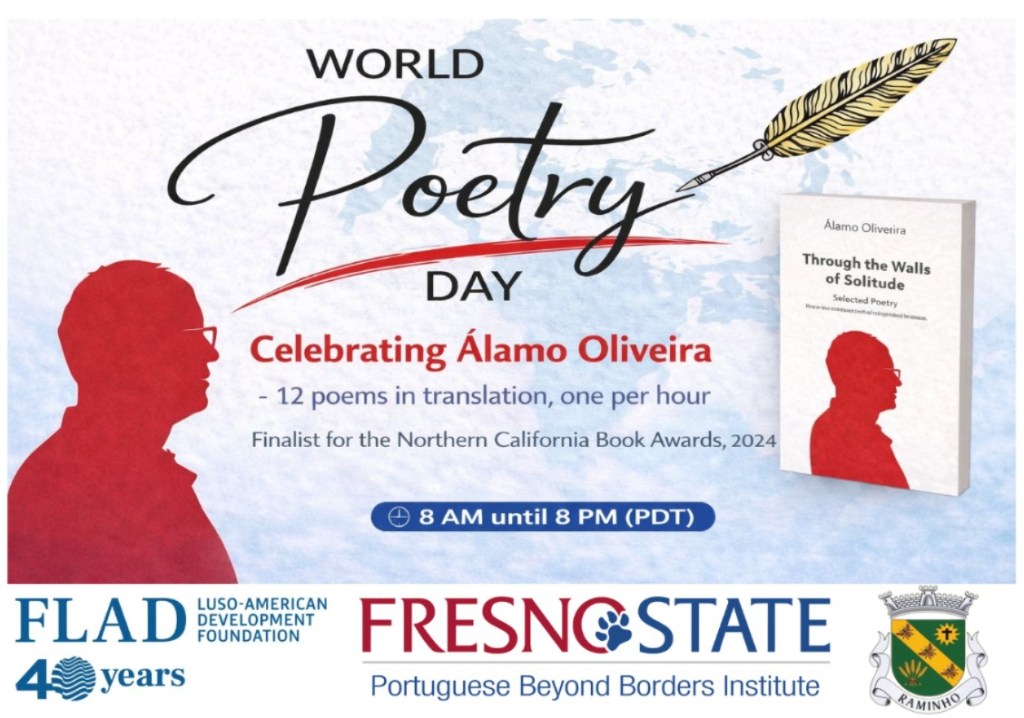
To create a living bridge between the Azores and its global diaspora through poetry—where translation becomes an act of cultural continuity, and where voices like Álamo Oliveira resonate across languages, generations, and geographies. This World Poetry Day initiative envisions a community that not only reads poetry, but inhabits it: reflecting, remembering, and reimagining identity through the shared cadence of words.
Mission Statement
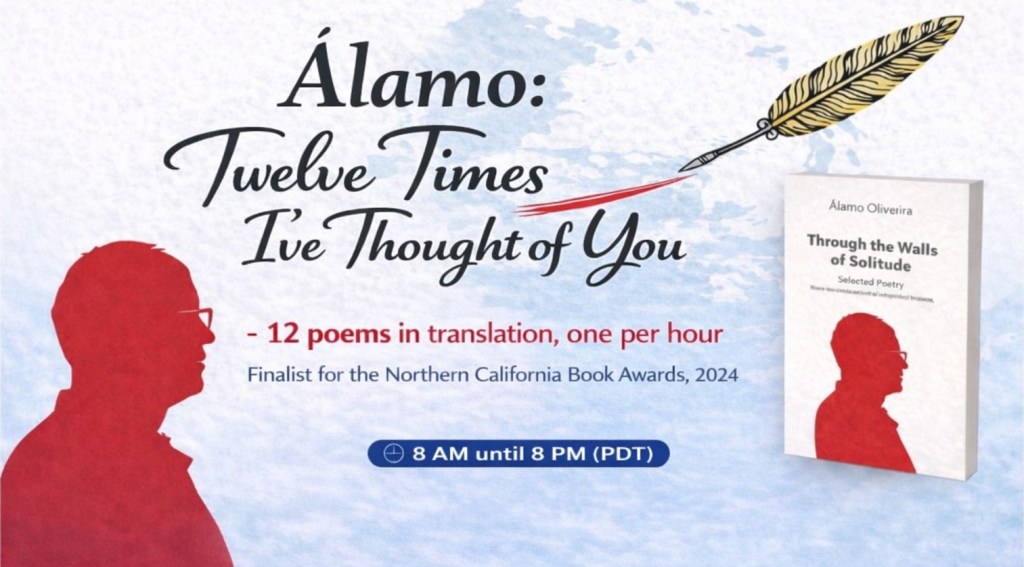
Through Álamo: Twelve Times I’ve Thought of You, we seek to celebrate poetry as a daily, unfolding experience—offering twelve translated poems, one per hour, as moments of pause, reflection, and connection. This project aims to amplify Azorean literary voices in English, foster dialogue within the Portuguese-American community, and engage broader audiences in the beauty and depth of Lusophone expression. By bringing poetry into the rhythm of the day, we invite readers to participate in an ongoing cultural conversation—one that honors memory, embraces translation as a creative act, and affirms the enduring power of language to unite us across oceans.
 Filamentos (artes e letras)