
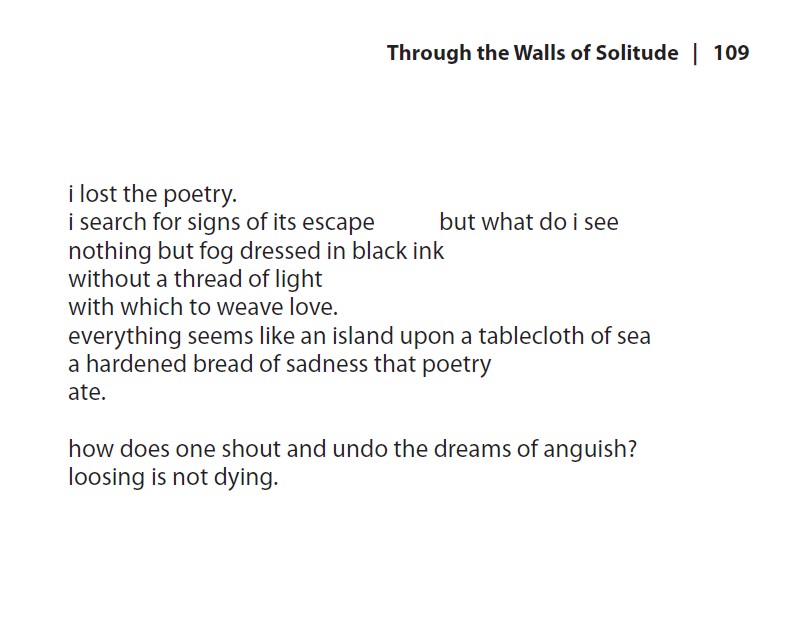
Álamo Oliveira’s poem begins with a striking admission—“i lost the poetry”—and from that moment unfolds as a meditation on absence, fragmentation, and the fragile act of creation. What follows is not a recovery, but a search through obscurity: fog, ink, and a world deprived of “a thread of light.” Poetry, once a source of weaving—of meaning, of love—now appears as something consumed, hardened, distant. The imagery of the island “upon a tablecloth of sea” suggests both isolation and artifice, as if the very landscapes of imagination have become staged, emptied of their former vitality.
Yet within this sense of loss, Oliveira offers a quiet, almost defiant reflection. The closing lines—“how does one shout and undo the dreams of anguish? / loosing is not dying”—gesture toward endurance. Even when poetry seems lost, the impulse to question, to speak, to reach beyond despair remains. The poem becomes, paradoxically, an act of poetry itself: a testament to the persistence of language, even in moments of doubt and depletion.
On this World Poetry Day, we invite you into this reflection. Have you ever felt that poetry—or meaning—had slipped away? How do you read this tension between loss and endurance? Share your thoughts with us and join this cultural dialogue around poetry and the enduring work of Álamo Oliveira.
Vision Statement
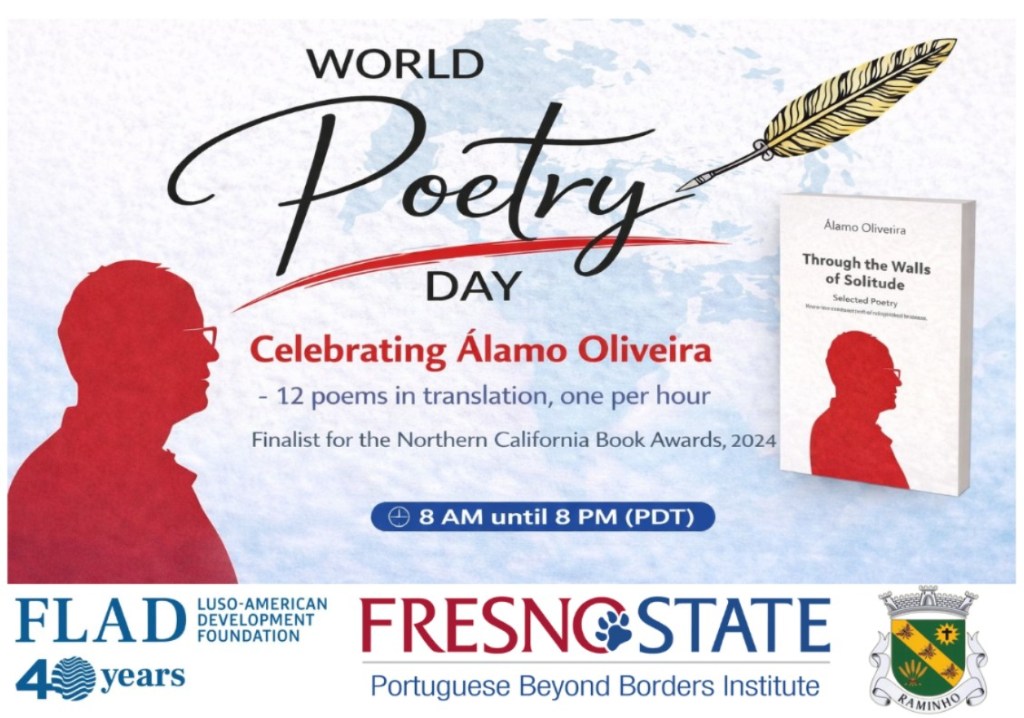
To create a living bridge between the Azores and its global diaspora through poetry—where translation becomes an act of cultural continuity, and where voices like Álamo Oliveira resonate across languages, generations, and geographies. This World Poetry Day initiative envisions a community that not only reads poetry, but inhabits it: reflecting, remembering, and reimagining identity through the shared cadence of words.
Mission Statement
Through Álamo: Twelve Times I’ve Thought of You, we seek to celebrate poetry as a daily, unfolding experience—offering twelve translated poems, one per hour, as moments of pause, reflection, and connection. This project aims to amplify Azorean literary voices in English, foster dialogue within the Portuguese-American community, and engage broader audiences in the beauty and depth of Lusophone expression. By bringing poetry into the rhythm of the day, we invite readers to participate in an ongoing cultural conversation—one that honors memory, embraces translation as a creative act, and affirms the enduring power of language to unite us across oceans.
 Filamentos (artes e letras)