
March is Multiple Sclerosis Awareness Month
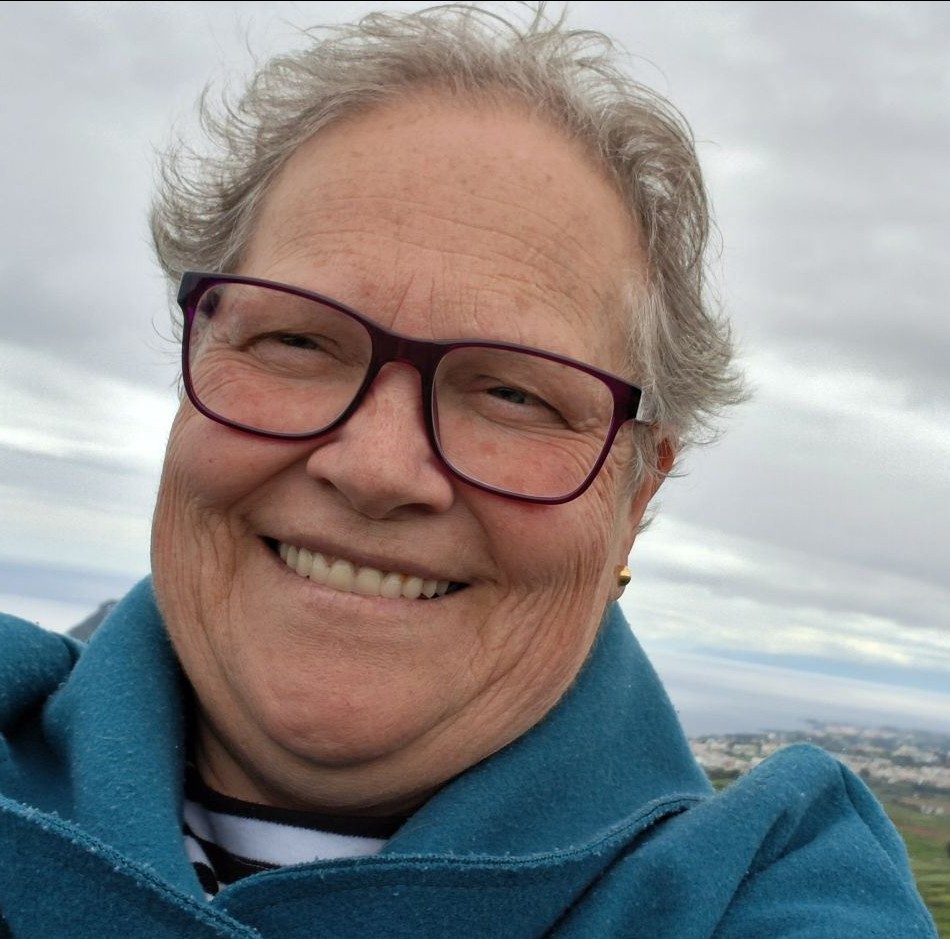
Translator’s note: This is a true story based on personal knowledge, by Terceiran poet and cantoria ao desafio (improvisational poetry) singer Rosa Maria Silva, originally written to commemorate Portugal’s National Day for people with multiple sclerosis, 4 December 2018. At the time Rosa posted it on her blog, it received two moving reader comments.
Multiple sclerosis was the disease that took my mother to the point of no response. For thirty-nine years everything was falling asleep… I understood what she said: “It’s a tingling, an anthill that’s taking over my whole body.” She was dependent on another person (her youngest daughter) for basic and essential care. She had lost almost all of her senses, including vision. Palpation would produce only the usual routine. She’d cradle her morning mug of coffee and milk, the spoon would go askew en route to her mouth, chewing or swallowing a necessary sacrifice, a poor procession of her hand to her leg with no strength to place her foot on the wheelchair’s footrest. In her final years (in her sixties), the chair was almost always replaced by her bed. The bed was the site of all the actions of her human body, a “dead” weight amid tears and prayers repeated mentally with the images of saints adorning the room. She believed devoutly in prayer, and in visiting Serreta’s Patron Mother the second week of every September, no matter what. Her highest priority was to hear and see the festa mass, with the Holy Mother on her platform, while seated very close to Her. My mother’s smile shone for that hour. The perfume of the season’s ornamental flowers inside the church made her face young and happy. I would admire the scene and withdrew into my silence. When would the time come that I could no longer view that scenario of instant happiness? During Serreta’s festa in September 2003, it was impossible even to think about taking her to the best representation of motherhood in the universe. The next month, on the 28th, she lost all movement. She had only her lips closed on an assistive device in order to access her machine-adapted meal, eyes closed to her ephemeral world, total pallor, a “sleep” that was hard to watch, and our prayer that God would hear it and grant her the peace she deserved.
Ever since, I’ve never liked hearing that expression “having multiple sclerosis” – it’s like remembering my sister, the best caregiver my mother could have had, in the sense that she had become accustomed to that scourge. How many, many times had the ambulance not been the surest and quickest way to take her patient (and mine) to the old Angra do Heroísmo hospital? How many, many times had the physical therapist helped her and taught her the best way to withstand falling when moving How many, many times had I wept inwardly over coping however I could, when a more aggressive treatment was deemed inappropriate because she was too sensitive to pain, wounds, and the sapping of the parts of her body that had given me (us) life.
To this day I think that it was my mother, Matilde Correia, whose suffering inspired my creativity in writing when I never had any before (I was a student not by choice, but out of duty). After her death I became a lover of words to the point of turning into an avid improviser. I leave proof in a book I have edited for future reference about our Patroness Mother, our village and my ailing mother, who always harbored an unshakable faith. That faith did not cure her, but it elevated her and healed me.
Comment from a reader I know who asked me not to identify him:
“Your mother’s life was for several years truly one of an authentic martyr, always watered with faith, that invisible force, which certainly helped her bear her tremendous cross. Your sister didn’t have an easy task either, and that, in order to deal with this type of illness, requires a total availability, and you, who were more on the periphery, were suffering in your silence. After your mother’s death, I believe that her spirit, at peace, was decisive in your intellectual transformation. Probably what you did from there was something she in life had always wanted to do, but could not, due to two limitations: literary knowledge, and illness.”
Comment from a communications professional I know who asked me not to identify her:
“A deep, moving text that mirrors the suffering of someone who has had the joy of being enveloped by love to the end.
“In its form, Rosa’s writing is visual and intense, where the almost imperceptible recourse to metaphors makes us witness to the episode and carries us to the reality of her emotions.
“For me, the spreading of these texts goes beyond their literary aspect.
“Your mother’s life experience of being a bearer of ‘multiple sclerosis’ must be discussed, because it is in sharing situations like this that concern for the problem is spread.”
For additional information, visit:
Northern California: https://www.nationalmssociety.org/Chapters/CAN
Oregon: https://www.nationalmssociety.org/Chapters/ORC
* * * * *
“Esclerose Múltipla na primeira linha”, de Rosa Maria Silva, 29 Novembro 2018
https://silvarosamaria.blogs.sapo.pt/esclerose-multipla-na-primeira-linha-1351274
(um texto verdadeiro por conhecimento familiar para o dia nacional a 4 de dezembro)
Esclerose Múltipla foi a enfermidade que levou a minha mãe ao ponto de não reação. Tudo foi adormecendo ao longo de trinta e nove anos… o que ela dizia eu compreendia: “é uma dormência, um formigueiro que me toma o corpo todo”. Ficou dependente de outrem (a filha mais nova) para os cuidados mínimos e essenciais. Perdera quase todos os sentidos incluindo a visão. A palpação surtia apenas no que era formato habitual. Moldava a caneca do café com leite matinal, a colher ia torta ao caminho da boca, mastigar ou engolir um sacrifício necessário, um cortejo deficiente da mão para a perna sem força para pousar o pé na cadeira de rodas. Em idade mais avançada (pós sessenta anos) a cadeira foi substituída pela cama quase sempre. A cama era o estado de todas as ações do corpo humano, um peso “morto” entre lágrimas e orações repetidas mentalmente com as imagens de Santos feitas ornamento do móvel do quarto. Ela era uma preciosa crente na oração e na “visita” à Mãe Padroeira, por ocasião da segunda semana de setembro, desse por onde desse. A prioridade era ouvir e “ver” a missa de Festa com a Mãe no andor, mesmo sentada muito perto d’Ela. O sorriso resplandecia nessa hora. O perfume das flores ornamentais da época, no interior da igreja, fazia-lhe o rosto novo e feliz. Eu admirava aquela cena e entristecida recolhia-me ao silêncio. Quando seria o tempo de já não ver aquele cenário de “felicidade” instantânea?! Foi na Festa de setembro do ano de 2003 que não foi possível sequer pensar em levá-la para junto da melhor representante das mães do universo. No mês seguinte, a vinte e oito, perdia todos os movimentos. Apenas os lábios cerrados com uma sonda para a refeição adaptada a máquinas, olhos fechados para o mundo efémero, palidez total, um “sono” feio de ver, e a nossa oração para que Deus a recebesse e lhe desse a paz merecida.
Nunca mais gostei de ouvir essa expressão “ter esclerose múltipla”… é como que relembrar a minha irmã, a melhor cuidadora que minha mãe podia ter, no sentido de que acostumara-se àquele flagelo caseiro. Quantas e quantas vezes não fora a ambulância o meio certeiro e diligente para levar a sua doente (e minha) ao velho Hospital de Angra do Heroísmo?! Quantas e quantas vezes a fisioterapeuta lhe acudira e ensinara a melhor forma de suportar a queda dos movimentos?! Quantas e quantas vezes chorava eu, interiormente, ao tratar do que podia porque outro maior tratamento não me era considerado adequado por ser demasiado sensível à dor, às feridas, e ao consumir das peças de um corpo que me (nos) dera à luz.
Ainda hoje penso que foi ela, Matilde Correia, a minha mãe, a sofredora a inspirar a minha criatividade de escrita que jamais fizera antes (Não fui aluna por gosto, mas por obrigação). Depois do seu falecimento tornei-me amante de palavras ao ponto de ser uma repentista assídua. Deixo provas num livro que editei para memória futura sobre a Padroeira, a freguesia e a mãe enferma, mas sempre com uma fé inabalável. Essa fé não a curou, elevou-a e curou-me.
Comentário de leitor conhecido e que não identifico por opção:
“Efetivamente, a vida da tua mãe, durante vários anos, foi a de uma autêntica mártir, sempre regada com fé, essa força invisível que, certamente, a ajudou a suportar a tremenda cruz. A tua irmã, também, não teve tarefa fácil pois, lidar com esse tipo de doença, exige uma disponibilidade total. Quanto a ti, que estavas mais na periferia, ias sofrendo no teu silêncio. Depois da sua morte, creio que o espírito dela, em paz, foi decisivo na tua transformação intelectual. Provavelmente, o que tu fizeste a partir daí foi algo que, ela, em vida, sempre quis fazer, mas não o conseguiu por duas limitações: conhecimentos literários, doença.”
Comentário de uma profissional da comunicação conhecida e que não identifico por opção:
“Um texto profundo, comovente, que espelha o sofrimento de alguém que teve a felicidade de estar envolvida pelo amor até ao fim.
Na forma, a escrita da Rosa é visual e intensa, onde o recurso às metáforas quase impercetível, nos fazem testemunhas do episódio e nos transportam para a realidade das emoções.
A divulgação destes textos, quanto a mim, vão além do aspeto literário.
A experiência de vida da sua mãe, de ser portadora da “esclerose múltipla”, deve ser divulgada, porque é na partilha de situações como esta que o interesse pela problemática se difunde”.
 Filamentos (artes e letras)