It was in the charged aftermath of revolution that the Portuguese Constituent Assembly gave institutional form to a long-imagined horizon: the Autonomous Regime of the Azores, first articulated through the Provisional Statute of the Autonomous Region. On June 27, 1976, the first elections to the Regional Parliament unfolded—not merely as an administrative exercise, but as the inaugural democratic gesture of a people who, across centuries, had dreamed of governing themselves from within the rhythms of their own land and sea.
Half a century has now passed.
Autonomy—at once promise and paradox—has yielded undeniable gains for the Azorean people, even as it has stirred reservations and misunderstandings within the higher echelons of the Portuguese state. Its fiftieth anniversary invites not only commemoration, but a more demanding act: reflection. For the journey of an insular people is never complete. It is a continuous negotiation between inheritance and aspiration, between what has been secured and what remains to be imagined.
What distinguishes the Azorean path is precisely this: a mode of development inseparable from identity. Cultural and social difference here is not ornament but foundation. Only those willing to enter into the texture of Azorean values—its sense of place, its communal ethics, its Atlantic consciousness—can truly grasp the long arc of its claims, its insistence on recognition, its enduring dialogue with the organs of sovereignty.
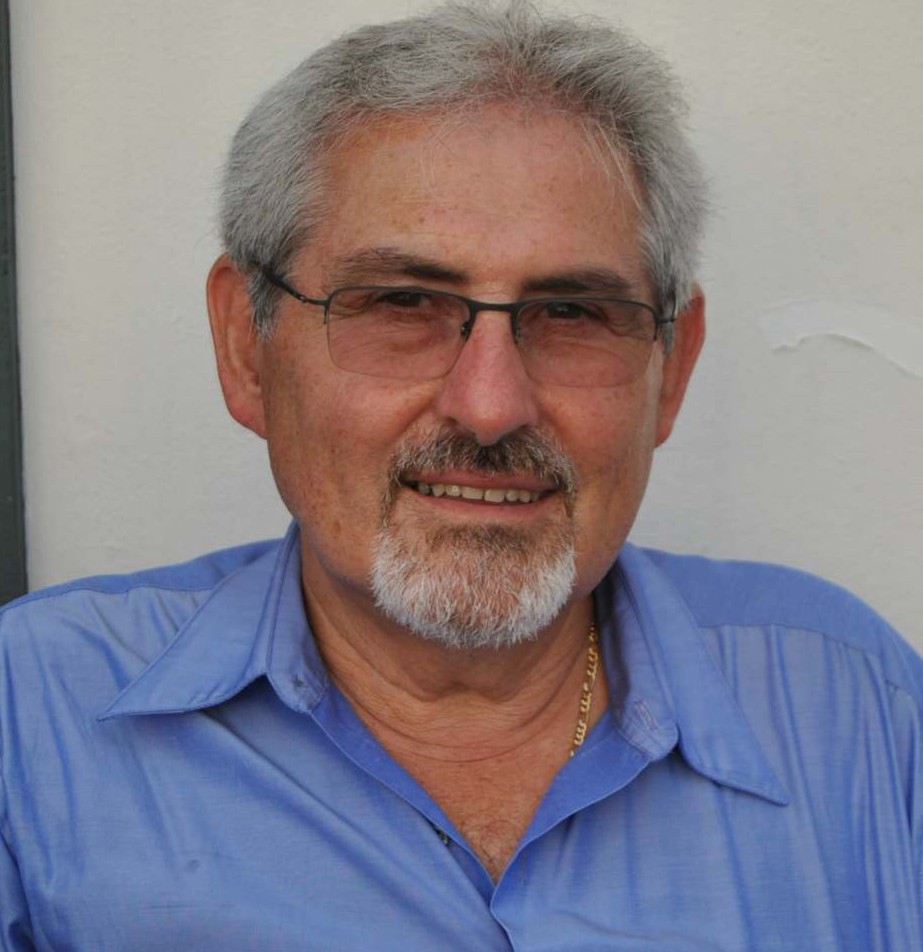
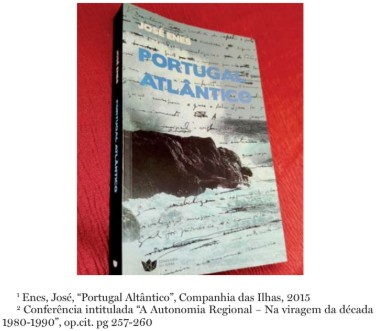
Few have thought more deeply about this condition than José Enes. In Portugal Atlântico, that remarkable work by the Pico-born philosopher, Enes confronts the autonomy model with both lucidity and rigor. He acknowledges its virtues, yet does not shy away from its structural limitations. The Statute, he argues, reproduced too faithfully the architecture of the central state, neglecting both earlier experiments in local autonomy and the historical resistance of municipalities against imposed authority. “A true autonomy,” he writes, “one capable of reorganizing society and rooting itself in its foundational structures, was an opportunity lost” (Enes, 2015:270).
Enes knew the Azores not as abstraction, but as lived reality. In the 1960s, he was the animating force behind the Semanas de Estudo dos Açores, gatherings that combined intellectual inquiry with civic urgency. Across four editions, they mapped the archipelago’s socio-economic condition and ultimately gave rise to the Regional Planning Commission—the first of its kind in Portugal, established in 1969. That period, as he would later recall, was one of “intense activity, both in letters and in the economy” (Enes, 2015:239), where culture and policy briefly moved in concert.
From that same ferment emerged the idea of a university.
For Enes, University and Autonomy are inseparable terms. The founding of the University of the Azores—on January 9, 1976, with Enes as its first rector—was not merely an educational milestone but a structural necessity. Universities, he reminds us, bear the institutional responsibility of developing the political science and philosophy through which states refine themselves. In a region like the Azores, this responsibility is heightened. Autonomy without thought risks stagnation; thought without institutional grounding risks irrelevance.
Looking ahead from his own time, Enes called for a decade of rigorous self-examination—a reflective pause in which the autonomous system might study itself, correct its errors, and reorient its trajectory. Without such introspection, he warned, the promise of a prosperous insular society could not be guaranteed (Enes, 2015:259). His words resonate today with renewed urgency.
There is, too, in Enes a striking prescience. Writing before the full arrival of the digital age, he foresaw the transformative potential of emerging technologies for small island economies. The “new era of information,” he argued, would open unprecedented pathways for restructuring and innovation—even for remote oceanic territories like the Azores. But such opportunities would not reveal themselves spontaneously. They would require education—ambitiously so. He proposed increasing university-level attainment to fifty percent and urged the creation of interdisciplinary research teams capable of designing medium-term development strategies rooted in technological application.
Equally urgent, in his view, was the creation of a foundation dedicated to integrated development—an institution capable of synthesizing past experiences while transcending their limitations (Enes, 2015:271). It is difficult not to read this today as both blueprint and unfinished task.
To revisit José Enes’s thought alongside the evolution of autonomy is to encounter a kind of intellectual dyad—a sustained meditation on what the Azores are, and what they might yet become. His vantage point, shaped by both pre- and post-democratic experience, allowed him to perceive autonomy not as an endpoint but as a living system—fragile, contested, and full of unrealized possibility.
Central to his vision is the idea of Portuguese Atlanticity: a triadic formation linking mainland Portugal, the Azores, and Madeira. Yet Enes was clear-eyed about the limits of national preparedness for such a project. The Atlantic territorial configuration, he argued, possesses two dimensions whose significance the Portuguese state has struggled to comprehend: the Exclusive Economic Zone and the geostrategic position of the archipelagos. Together, they constitute not merely assets, but latent futures (Enes, 2015:113).
And yet, he laments, state action has too often revealed a kind of blindness—an “obscuring of the consciousness of Atlantic territoriality,” accompanied by a persistent failure to capitalize on its potential (Enes, 2015:114). What emerges is a dialectic: between what he calls “Atlantic dilution” and “Atlantic empowerment,” a tension enacted in the ongoing relationship between the Republic and the Autonomous Regions.
In recent discourse, echoes of Enes’s concerns resurface. The President of the Regional Government has emphasized the Atlantic dimension of the Azores as a counterweight to lingering centralism—though such arguments often meet resistance within the structures of the state. And yet, there are signs—subtle but significant—of a shifting awareness.
The decision by the President of the Republic to celebrate the Day of Portugal, Camões, and the Portuguese Communities on Terceira Island gestures in that direction. It is, perhaps, more than symbolic. It suggests a growing recognition—however tentative—of the value and potential embedded in the Atlantic vision that Enes so forcefully articulated.
If nothing else, it may serve as a reminder that the Azores are not a periphery to be administered, but a center of meaning within a wider Atlantic world—one whose currents carry both memory and possibility, and whose future depends, as ever, on the clarity with which it is imagined.
In Diário dos Açores
 Filamentos (artes e letras)