
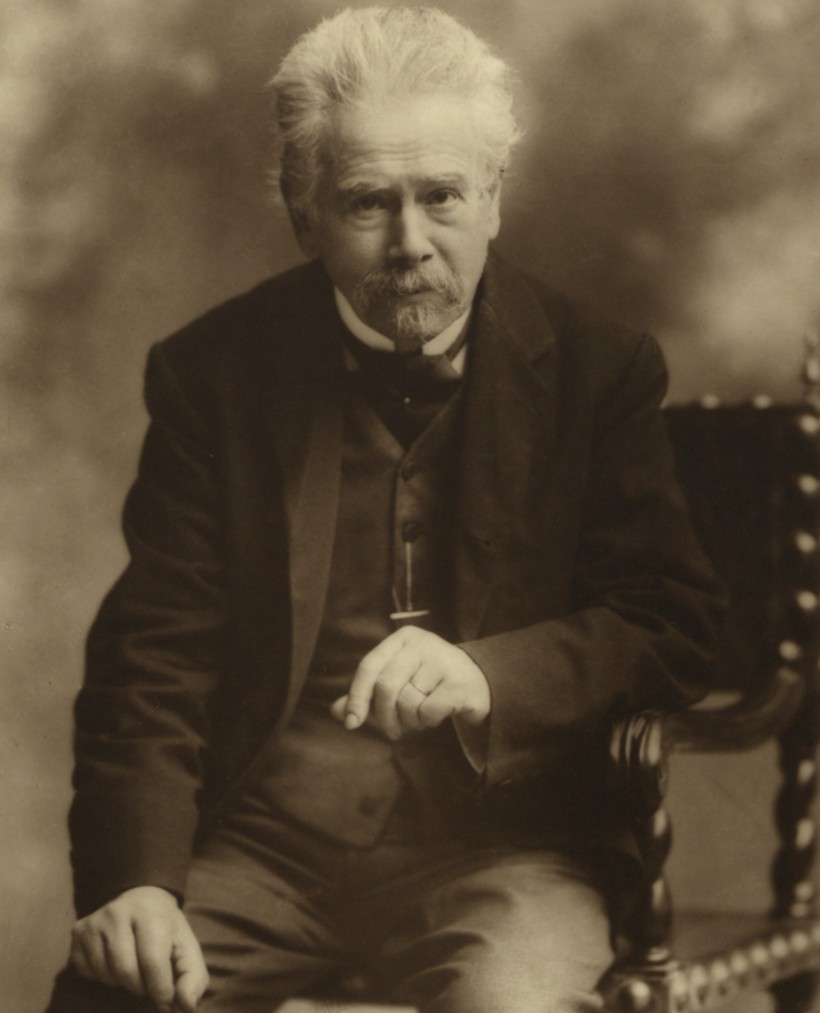
Braga, Teófilo
(Joaquim T. Fernandes B.) [Born in Ponta Delgada, February 24, 1843 – died in Lisbon, January 28, 1924]
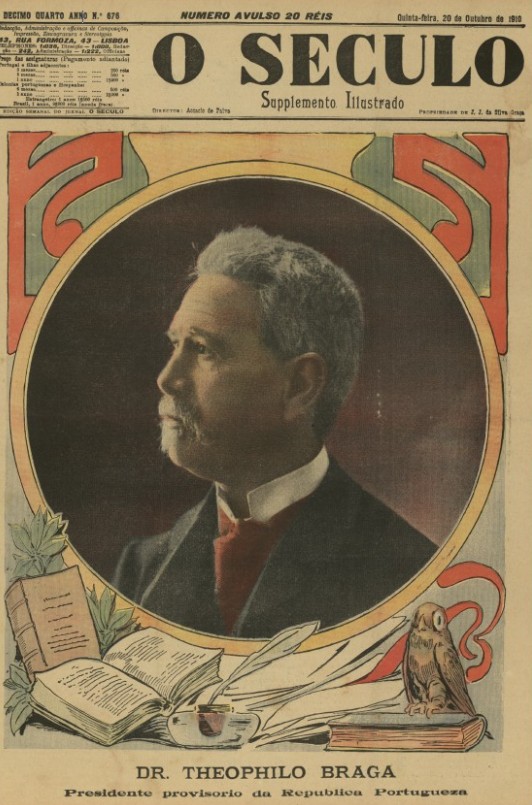
Writer, thinker, professor, and politician. The son of Joaquim Manuel Fernandes Braga and Maria José da Câmara Albuquerque, he attended the secondary school in Ponta Delgada and later, in Coimbra, where he went in 1861, completed the studies that gave him access to higher education. Enrolled in Law at the University of Coimbra (1862), he finished the degree in 1867, earning his doctorate on July 26, 1868, with the dissertation História do Direito Português: I: Os Forais. He competed for the chair of Commercial Law at the Polytechnic School of Porto (1868) and for a position at the Faculty of Law in Coimbra (1871), but was passed over in both cases. He later entered the Curso Superior de Letras (Lisbon) in 1872 as professor of Modern Literatures, winning the competition over Pinheiro Chagas and Luciano Cordeiro. With the fall of the Monarchy in 1910, he presided over the Provisional Government until the election of Manuel de Arriaga. As a result of the latter’s resignation, he rose to the Presidency of the Republic (May 29–October 5, 1915). In his time he was a remarkable intellectual figure, with European repercussions, and a controversial personality, praised by some and undervalued by others. Although his republican, socializing, and anti-clerical orientation was marked by a character overly prone to partisan opinion, no one truly contested the depth of his patriotism. Throughout his life he gave proof of exceptional devotion to national causes, investing in them the best of his intellectual energy as a theorist of the Republic, as may be seen in História das Ideias Republicanas em Portugal (1880) and Soluções Positivas da Política Portuguesa (1912). His História da Universidade de Coimbra (1892–1902) is still considered highly valuable today. He became known as the introducer of positivism in Portugal, a doctrine he embraced and, above all, disseminated in the Curso Superior de Letras, creating disciples, many of whom, such as Teixeira Bastos, showed impressive fidelity to the master’s doctrines. His vast body of work as a polymath spans poetry and fiction, philosophy, cultural history, and critical literary historiography. He left his intellectual autobiography and public self-portrait in Quarenta Anos de Vida Literária (1903) and Mocidade de Teófilo (1920), the latter published under the name of his great friend Francisco Maria Supico.
PHILOSOPHY
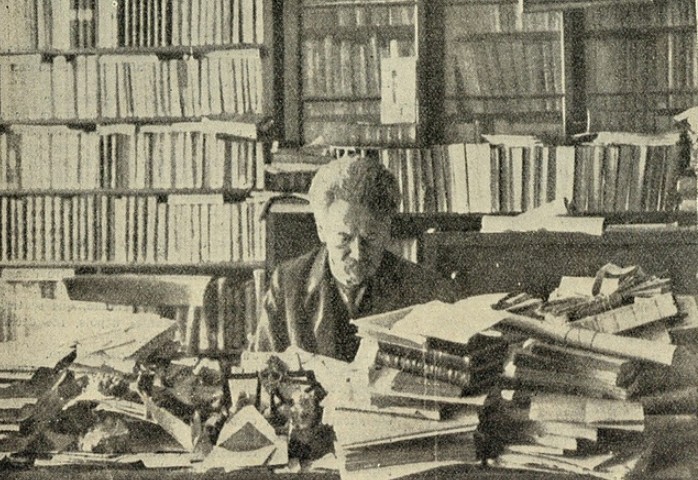
The first phase of Teófilo Braga’s philosophical path was marked by his speculative engagement with the idealism of Vico and Hegel, which he embraced during the turbulent years of student life in Coimbra and retained as a matrix of reference until the end of the 1860s. Vico’s presence is evident in Poesia do Direito (1865), a work devoted to the study of the phases of decline of juridical symbols and in which he extols La Scienza Nuova in encomiastic terms. He came to know Hegel through the work of Auguste Vera and studied Aesthetics in the French translation by Charles Bernard. This first formation of his mind was also shaped by the French thinkers Michelet, Quinet, and Vacherot, and by the Germans Herder, Creuzer, and Grimm.
The year 1872 marks the beginning of the second phase, a kind of mental revolution to which he subjected himself by adopting the materialist, scientistic, and anti-metaphysical ideology of positivism. His deepening engagement with Comte took place when he was called to teach Philosophy at the Curso Superior de Letras (1874–1878), which resulted in the lectures that he used to compose Traços Gerais de Filosofia Positiva (1877), a work whose later recasting would produce Sistema de Sociologia (1908). His activity in disseminating positivism reached its height between 1877 and the end of the 1880s. He founded and contributed to the journals O Positivismo (1878–1882), Era Nova (1880–1881), and Revista de Estudos Livres (1883–1885). From Comte he accepted the classification of the sciences, the law of the three states, and the primacy of sociology, within whose frameworks he situated all his work. In fact, his literary activity, historical and ethnological research, and his vision of culture, religious beliefs, customs, and traditions are all determined by the foundations and mental frameworks of positive philosophy.
The clearest example of the way positivism revolutionized Braga’s early thinking is given by the long epic poem Visão dos Tempos, whose first version, from 1864, still remains, from a philosophical point of view, indebted to the idealism of Vico and Hegel. The poem’s maturation up to the 1894–95 edition was accompanied by the thinker’s mental revolution. The poetic idealization of History as the struggle of freedom against fatality reveals Vico’s influence in its interest in the symbolic language of myths, fables, and legends, and Hegel’s influence especially in the idealist law of evolution. Yet from neither, already in his positivist phase, could Braga accept that the determination of things and the development of history had their source in Vico’s eternal order or in Hegel’s dynamics of Spirit, idealist perspectives that he now sought to correct by the scientistic criterion of the historical law of the states, evident in the division of the epic into the cycles of fatality, struggle, and freedom.
Hegel’s law of evolution came to be seen, both in the poem and in the philosophical texts, in a sense visibly opposed to idealist metaphysics, now grounded instead in a materialist and dynamic ontology whose principal feature lies in the idea of an identity of the laws of matter and motion, that is, in mechanical causality and in the analogy between the laws of the spirit and those of nature and history.
Braga’s project did not remain at the level of an uncritical diffusion of Comte, as some have claimed. He embodied the goal of reestablishing positivism in a new light, in accordance with the developments of science from 1842 to 1877, in the period between the writing of Comte’s work (1830–1842) and the appearance of Traços Gerais de Filosofia Positiva. The most singular aspect of this revision lies above all in his acceptance of experimental psychology against Gall’s phrenological psychology, the only one Comte admitted. With this new psychology, he sought to determine the cognitive laws on which he based the objective laws of the theological, metaphysical, and positive states of Humanity, establishing for that purpose the correspondence of the latter with the subjective states of the syncretic, discretic, and concretic. For this undertaking he drew on the works of physiological psychology by Pierre Cabanis (1757–1808), François Magendie (1783–1855), and above all Bernard Luys (1828–1897), in which, in his opinion, lay the bases that made possible the constitution of a positive psychology.
He maintained his intellectual independence in relation to Comte, opposing to him ideas derived from his readings of Darwin, Huxley, Mill, and Spencer. He entirely rejected the Religion of Humanity of Comte’s later phase and its subsequent development by Pierre Lafitte, remaining closer to Émile Littré, though disagreeing with Littré’s proposed modification of the law of the three states. In this sense, he was an autonomous thinker in relation to positivist orthodoxy, not hesitating to present his own vision of positivism, classifiable as materialist and evolutionist monism.
Manuel Cândido Pimentel (June 1998)
Principal Works
(1865), Poesia do Direito. Porto, Casa da Viúva Moré? Ed.
(1868), Theses ex Universo Jure seletae quas praside clarissimo ac sapientissimo D. D. Adriano Pereira Forjaz de Sampaio [?] pro laurea doctorali obtinenda in Conimbricensi Archigymnasio propugnandas Joachimus Theophilus Braga, Conimbricae, Typis Academicis, 21 pp. [Teses Escolhidas de Direito, as quais sob a presidência do ilustríssimo e excelentíssimo senhor Doutor Adriano Pereira Forjaz de Sampaio [?] se propõe sustentar no seu acto de conclusões magnas Joaquim Teófilo Braga, Coimbra, Tipografia Académica].
(1868), Teses sobre os Diversos Ramos de Direito as quais na Universidade de Coimbra em 1868 defenderá Joaquim Teófilo Braga. Coimbra, Imp. da Universidade: 37 [1] pp.
(1877), Traços Gerais de Filosofia Positiva Comprovados pelas Descobertas Científicas Modernas. Lisbon, Nova Livraria Internacional.
(1878–1882), História Universal: Esboço de Sociologia Descritiva. Lisbon, Nova Livraria Internacional.
(1880), História das Ideias Republicanas em Portugal. Lisbon, Nova Livraria Internacional.
(1892–1902), História da Universidade de Coimbra nas suas Relações com a Instrução Pública Portuguesa. Lisbon, Tip. da Academia Real das Ciências, 4 vols.
(1894–95), Visão dos Tempos. Porto, Liv. Internacional de Ernesto Chardron, 4 vols.
(1903), Quarenta Anos de Vida Literária: 1860–1900. Lisbon, Tip. Lusitana / Ed. Artur Brandão.
(1908), Sistema de Sociologia. Porto, Liv. Chardron.
(1912), Soluções Positivas da Política Portuguesa. Porto, Liv. Chardron, 2 vols.
Bibliography
Bastos, T. (1892), Teófilo Braga e a sua Obra: Estudo Complementar das Modernas Ideias na Literatura Portuguesa. Porto, Liv. Internacional de Ernesto Chardron.
Supico, F. M. (1920), Mocidade de Teófilo. Lisbon, Instituto Teofiliano.
Ferrão, A. (1935), Teófilo Braga e o Positivismo em Portugal: Com um Núcleo de Correspondência de Júlio de Matos para Teófilo Braga. Lisbon, Academia das Ciências.
Ribeiro, A. (1951), Os Positivistas. Lisbon, Liv. Popular de Francisco Franco.
Carreiro, J. B. (1955), Vida de Teófilo Braga. Ponta Delgada, Instituto Cultural de Ponta Delgada.
Pimentel, M. C. (1996), A Crítica do Positivismo Comtiano em Teófilo Braga e Sílvio Romero in Odisseias do Espírito. Lisbon, Imp. Nacional – Casa da Moeda: 61–96.
LITERATURE
His memories of childhood and of his island were not the happiest, since, as he himself recounts, he spent “a tormented childhood from the age of four to eighteen under the hostile pressure of a stepmother” (1902: v). Like many Azoreans facing hardship, he dreamed of going to America, but his father proposed that he go instead to Coimbra.
He did not leave, however, before having his first lyrical experiences as an adolescent; at the age of seventeen he saw Folhas Verdes published (in 1859), with a preface by his protector, the journalist Francisco Maria Supico (who had come to the island of São Miguel a few years earlier).
In April 1861, he finally arrived in Coimbra, which, although it appeared to him as a turbulent milieu of some two thousand students, an “atmosphere of medieval dogmatic doctors who maintained scientific respectability through authoritarian terror,” nonetheless opened the doors to life and work: free at last, “free from an obsession of fourteen years!” (ibid.). Such, then, was the mark of the insular experience of childhood and adolescence, one that would leave lifelong scars.
Teófilo Braga, a contemporary of Antero de Quental—whom both temperament and social origin opposed, since Braga’s resentful nature and refuge in work contrasted with Antero’s disposition—fell into the “legendary and fantastic Coimbra,” yet benefited more from reading and scholarly work than from the intellectual bohemia so often evoked by Eça.
The Generation of ’70 had, however, made great discoveries: science and philosophy from beyond the Pyrenees (brought by the railway), Proudhonian socialism, French and German poetry, and above all the cult of Humanity. Personal and ultra-Romantic lyricism gave way to the poetry of history and the philosophy of civilization and progress. For Teófilo, the great revelations came through André Chénier, Alfred de Vigny (Poèmes Antiques), Victor Hugo (especially La Légende des Siècles), Hegel (and what Teófilo himself called an exaggerated Germanism), and J. B. Vico (Scienza Nuova), who gave him the poetic revelation of the symbols through which Humanity expressed its aspirations: allegories, myths, legends, and images as a language of feeling corresponding to a philosophical synthesis of Man. Comte, positivism, and the Republic would later become the guiding thread of his work and his political-philosophical activity.
Meanwhile, swept away by the new poetry of the History of Humanity, he attempted in Visão dos Tempos (1864) an epic-historical poetry, developing a trilogy of the ideal phases of the “poetry of humanity” (“A Bacante,” “A Harpa de Israel,” “A Rosa Mística,” that is, finally, the poetry of Christianity, the passage toward the ideal). In Tempestades Sonoras, from the same year, he turned to Roman Antiquity, constructing a tableau of the martyrdom of a Christian woman as a consequence of scorned love (the theme ultimately recalls Les Martyrs by Chateaubriand). A Ondina do Lago (1865) is medieval and Romantic. Torrentes (1869), but above all Miragens Seculares (1884), are “the thought of a cyclical Epic of Humanity”—the “cycle of Fatality,” the “Cycle of Struggle,” when History is born, and the “cycle of Freedom,” when Philosophy is born and the great cries of Liberty arise. In 1865 there also appeared the volume Contos Fantásticos, reflecting the influence of Hoffmann and Edgar Allan Poe, though unable to escape a tendency toward theorizing (its prologue addresses the history of the short story).
In literary ideas and polemics, Teófilo intervened in the Bom senso e Bom gosto or Questão Coimbrã controversy (1865/66) with Teocracias Literárias (1865), defending the new generation. In As Modernas Ideias na Literatura Portuguesa, an important work in nineteenth-century literary judgments of value, Teófilo holds that this controversy revealed the new generation that brought about the dissolution of Romanticism and the advent of Realism. Ultra-Romanticism had been a period without any “philosophical idea” to guide it, a period of mere “sentimental rhetorical conditioning” (1892: vi). What had existed, after all, was the lack of a positive conception of the world.
It is, indeed, Auguste Comte who gives Teófilo a universal key to knowledge and to social and political life: “positive Philosophy [is that] which gives to the human Epic its social destiny and the supreme importance of the aesthetic function” (1902: xiv). Kant and Schopenhauer, according to Teófilo, exhausted themselves in metaphysics, seeking to explain the universe through “subjective and dialectical deductions.” Quite different was the new synthesis—the Sciences—“through the new synthesis, into which all predictions enter, will constitute the beautiful dream of those who will live in the future the subjective immortality of the individual as a consequence of human solidarity” (1902: xxv). The positivist utopia proclaimed as the “religion of the future” the Religion of the “benefactors of Humanity,” whose immortality is only subjective and residual in civic memory.
At the core of Teófilo Braga’s work are Revolution (republican and anti-clerical) and Positivism (Comtean), for which he also made a systematic apology in the journal Positivismo (Porto, 1878–1882, 4 vols.), which he directed with the young physician Júlio de Matos. The very solution to social and political problems, for him, passed inexorably through positive science and through the “scientification” of political life itself, a “function destined in countries of their own vigor to be secondary, a simple inspector of the exercise and coexistence of all initiatives” (Soluções Positivas da Política Portuguesa, 1879, ed. 1912: 3). Teófilo Braga gave lectures and courses (1891–1892 and 1899–1901) to disseminate positivism.
It was a sincere patriotic feeling that led him to write A Pátria Portuguesa, which, despite some errors or imprecisions, appealed against “the anarchy of public powers” to the need to “revivify the feeling of the Fatherland, because only it can call forth noble characters and organizing capacities” (1894: xi). In the same spirit, “whoever has a consciousness of duty should guide his efforts by the feeling of the Fatherland,” and in 1903 he wrote the epic-historical novella Viriatho, with an introduction on the characteristics of the “Portuguese soul,” of which that Lusitanian leader is both precursor and symbol.
A great conveyor of scholarly information, Braga became an indispensable reference and remains still worth consulting today for his História da Literatura Portuguesa (1870). In it, in Part V, when dealing with Romanticism, he immediately traced its relations and parallels with the French Revolution and its transformative character, which led into another school that introduced into literary idealization “the real interests of modern life” (1870, 1985 ed.: 15), but which had not yet been capable of reaching the “philosophical aim or deductive process” (ibid.)—that is, the objective of Comtean positivism, of which Teófilo Braga speaks systematically in his critical and philosophical work. He was also the author of a História da Universidade de Coimbra (1892), implying that History is an active process in which each country collaborates, even without knowing it, and is—or ought to be—a process of knowledge leading to Progress integrated within Order.
Interested from early on in popular poetry, one should note the volume Cantos Populares do Arquipélago Açoriano (1869). Teófilo Braga was above all compiler and annotator, since the collection had been gathered (and entrusted to Teófilo) by Dr. João Teixeira Soares de Sousa (a native of the island of São Jorge, to which almost all the materials collected refer). Inocêncio Francisco da Silva, the well-known bibliophile, even said that the book should have been titled Cantos Populares da Ilha de S. Jorge, coleccionados por João Teixeira de Sousa e anotados por Teófilo Braga (Silva, 1858–59: 368). Teófilo was also the author of a Romanceiro Geral and a Cancioneiro Popular (1867).
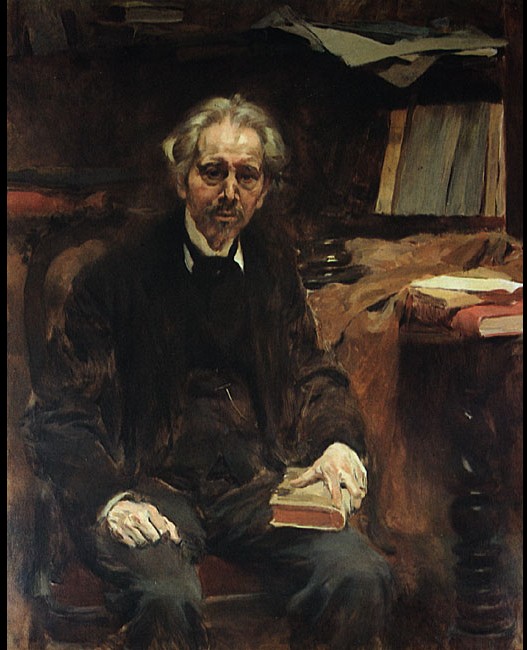
Despite the great merit of this tireless worker, Teófilo Braga’s work shows the effects of an overly systematic and positivist spirit, making him much more an erudite critic than a literary creator (which he aspired to be). Ramalho Ortigão thought that the original poetic intention of Visão dos Tempos “foundered in the vastness of its own plan (…), for scientific methods (…) proportionally narrowed the zone of its imaginative, evocative, and picturesque power” (Ortigão, 1926: XXIX). Even so, and remembering especially Visão dos Tempos, Moniz Barreto acknowledged in him poetic sensibility and even “a singular instinct for perceiving the epic side of historical events” (1870, 1985 ed., critical note by M. Barreto: 401).
Despite the emotional “contentiousness” of childhood on his native island, the Azores owe Teófilo a remarkable body of collected materials and an approach to historical and literary themes that make him one of the principal erudites of the second half of the nineteenth century and the early twentieth century. His patriotism and republican political proselytism also earned recognition of his suitability for the Presidency of the Republic, immediately after the Revolution of October 5, 1910. Teófilo Braga and Antero de Quental, despite their differences in temperament, are two first-rank Azoreans in national culture, situated within the generational, ideological, and aesthetic frameworks of the so-called Generation of ’70.
António Machado Pires (December 1999)
Principal Works
(1864), Visão dos Tempos.
(1864), Tempestades Sonoras.
(1865), A Ondina do Lago.
(1865), Contos Fantásticos.
(1865), Teocracias Literárias: relance sobre o estado actual da literatura portuguesa.
(1867), Cancioneiro e Romanceiro Geral portuguez: confecção e estudos.
(1869), Contos Populares do Arquipélago Açoriano.
(1869), Folhas Verdes.
(1869), Torrentes.
(1879), Soluções Positivas da Política Portuguesa [1912 ed., Porto, I].
(1884), Miragens Seculares.
(1892), As Modernas Ideias na Literatura Portuguesa.
(1892–1902), História da Universidade de Coimbra.
(1894), A Pátria Portuguesa.
(1902), Quarenta Anos de Vida Literária.
(1904), Alma Portuguesa: Viriatho. Porto, Lello.
(1870), História da Literatura Portuguesa [Critical notes by M. Barreto in the 1985 ed., Mem-Martins, Pub. Europa-América, V].
Bibliography
Carvalho, J. (1948), Perspectivas da Literatura Portuguesa do Século XIX. Lisbon, II.
Coelho, A. P. (1922), Teófilo Braga. Lisbon.
Ortigão, R. (1926), Farpas. 5th ed., Lisbon, Empresa Litográfica Fluminense, V.
Soares, M. (1950), As Ideias Políticas e Sociais de Teófilo Braga. Lisbon, Centro Bibliográfico.
Silva, I. F. (1858–59), Dicionário Bibliográfico Português [“Dicionário de Morais”]. Lisbon, Imp. Nacional, X.
POLITICAL THOUGHT
Teófilo Braga’s political thought shows remarkable consistency. The defining path of his social project was fixed once and for all from the moment he supported the broad aesthetic and political renewal defended by Antero de Quental during the Questão Coimbrã (1865–1866). By 1872, on the occasion of his resounding competition for a teaching post at the Curso Superior de Letras, his thinking was already shaped by the central themes of Comtean positivism. Thus, the longing to contribute to the vast project of social reorganization “without God or King” prefigures the systematic materialist and uncompromising republican he would become. Within Portuguese republicanism he would occupy its most radical wing, exercising an unquestioned theoretical pontificate among the federalist sensibility. The central themes of this federalism—apologetic of decentralization, the imperative mandate, and a certain capitalist deconcentration—would accompany him forever.
Having been one of the organizers of the celebrations of the third centenary of Camões (1880), a high point in the articulation of the Republican Party, he would join the Directory that denied solidarity with the Porto revolt of January 31, 1891. From then on he withdrew into a more discreet revolutionary protagonism, acting above all through books, lectures, and newspaper articles. The prestige he had meanwhile attained propelled him to the presidency of the Provisional Government of the Republic after the Revolution of October 5, 1910. After the revolution of May 14, 1915, he replaced Manuel de Arriaga on an interim basis in the office of President of the Republic. The choices of his youth thus received their most expressive consecration at the close of Teófilo Braga’s laborious life.
Amadeu Carvalho Homem (June 1998)
From Enciclopédia Açoriana–Translated by PBBI, Fresno State. Al images are public domain
 Filamentos (artes e letras)