

In the early 16th century, the cannons of the Portuguese fortress of Hormuz and the caravels patrolling its waters dominated the entrance to the Persian Gulf. Five centuries later, that same narrow passage remains one of the most strategically charged chokepoints in the world.
The Strait of Hormuz is one of the most critical corridors in global geopolitics. For centuries, control of this passage has shaped the economic and strategic balance between the Middle East and the wider world.
Roughly one-fifth of the world’s seaborne oil passes through this maritime corridor each day. Tankers from Saudi Arabia, Iraq, Kuwait, Qatar, Bahrain, the United Arab Emirates, and Iran carry energy vital to the economies of Asia, Europe, and beyond. Any disruption in this route sends immediate shockwaves through global energy markets.
It is no surprise, then, that the strait has once again become a focal point of international tension. Confrontation involving Iran, the United States, and Israel has unsettled navigation in this strategic corridor, underscoring once more that the stability of the Persian Gulf remains central to the global economic order.
Certain places carry outsized geopolitical weight. Narrow maritime passages—where global trade converges and where naval and air power can influence entire shipping routes—are among them. Hormuz belongs to this category, where geography directly shapes international politics.
Long before the arrival of Europeans, the port of Hormuz was already one of the wealthiest commercial hubs in the Indian Ocean. Some European chroniclers even described it as among the most prosperous ports in the world. Merchants from Persia, India, Arabia, and Central Asia converged there to trade spices, horses, textiles, and precious metals. To control Hormuz was to influence one of the great crossroads of the Eastern world.
When Portugal entered the Indian Ocean, it quickly recognized that control of the Persian Gulf was essential to dominating Asian trade routes. At the time, Portugal was a leading naval power with clear technological superiority at sea. Its large ocean-going vessels carried heavy artillery capable of overpowering smaller ships.
The conquest of Hormuz by Afonso de Albuquerque in 1515 marked one of the defining moments of Portuguese expansion in the East. From the fortress of Hormuz, the Portuguese installed artillery that allowed them to monitor maritime traffic and levy duties on vessels passing through the strait.
The Portuguese garrison at Hormuz rarely exceeded a few hundred men. Yet the position was not isolated. Portugal established a network of strategic outposts across the Persian Gulf, enabling it to monitor and influence navigation throughout the region.
This presence was linked to other key bases in Portugal’s Indian Ocean empire. Parts of present-day Oman remained under Portuguese control for more than a century. Muscat became a major naval base, and Bahrain was conquered in 1521 and incorporated into this network.
The Portuguese empire in the Indian Ocean functioned as a chain of strategic nodes along major maritime routes. Goa, Malacca, Hormuz, and other bases operated as interconnected hubs designed to control trade, collect duties, and enforce navigation permits—known as cartazes—on ships operating in the region. With relatively few ships and modest garrisons, Portugal managed for decades to exert influence over trade routes stretching from Japan to the Red Sea.
Interestingly, China reached Hormuz a century before the Portuguese. In 1414, during the great voyages of Admiral Zheng He, the Ming dynasty’s fleet visited the port and established diplomatic relations with local rulers. Unlike the European powers that followed, Beijing did not seek military control of the strait or the construction of permanent bases. Its presence was primarily diplomatic and commercial, and it soon withdrew by its own choice.
Six centuries later, the circumstances are vastly different. China’s economy depends heavily on oil from the Persian Gulf, much of which passes through the Strait of Hormuz. Yet China’s strategic posture remains notably cautious. Beijing continues to rely on economic and diplomatic tools while avoiding direct military involvement in securing the route.
There is a certain paradox in the fact that the world’s largest energy importer depends on a rival power—the United States—to guarantee the openness of this vital corridor.
Historically, China has often favored indirect influence and commercial engagement over direct military control of distant routes and territories—a pattern that continues today.
The Portuguese fortress at Hormuz ultimately fell in the early 17th century, following a combined land offensive by the Persian Empire under Shah Abbas I and a naval assault by the English East India Company.
Today, the Strait of Hormuz remains as strategically vital as ever—arguably even more so than in earlier centuries.
Over six centuries, Hormuz has been visited by Chinese fleets, controlled by Portuguese naval power, and patrolled by American warships. Few places better illustrate how geography shapes global power.
The Strait has not moved. Across the centuries, only the powers seeking to control it have changed. Portugal is no longer among them—but the geopolitical logic that governs Hormuz remains essentially the same.
Paulo Estevão, a historian, is a current member of the Regional Government of the Azores, where he is the Secretary of Parliamentary Affairs and the Diaspora.
This essay was first published in Portuguese in two editions of the newspaper Diário Insular, José Lourenço Director
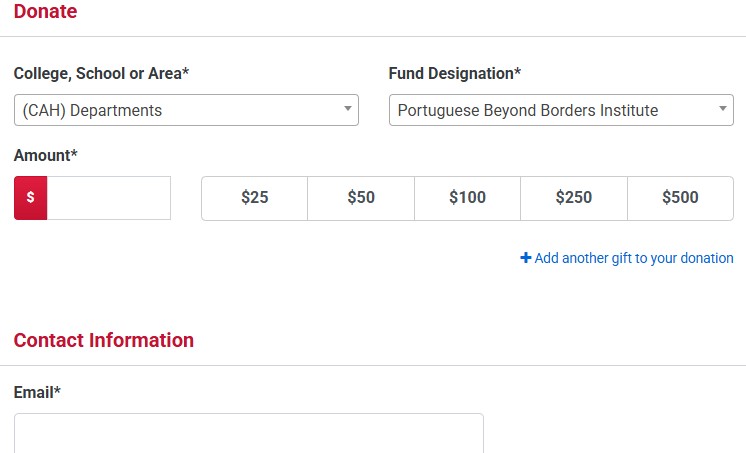
Today, March 18th, is the DAY OF GIVING at Fresno State. Your support is very important to us. Here is the link. Please designate the Portuguese Beyond Borders Institute as the recipient of your generous donation.
https://dayofgiving.fresnostate.edu/giving-day/115061/donate?dept=115082
 Filamentos (artes e letras)