
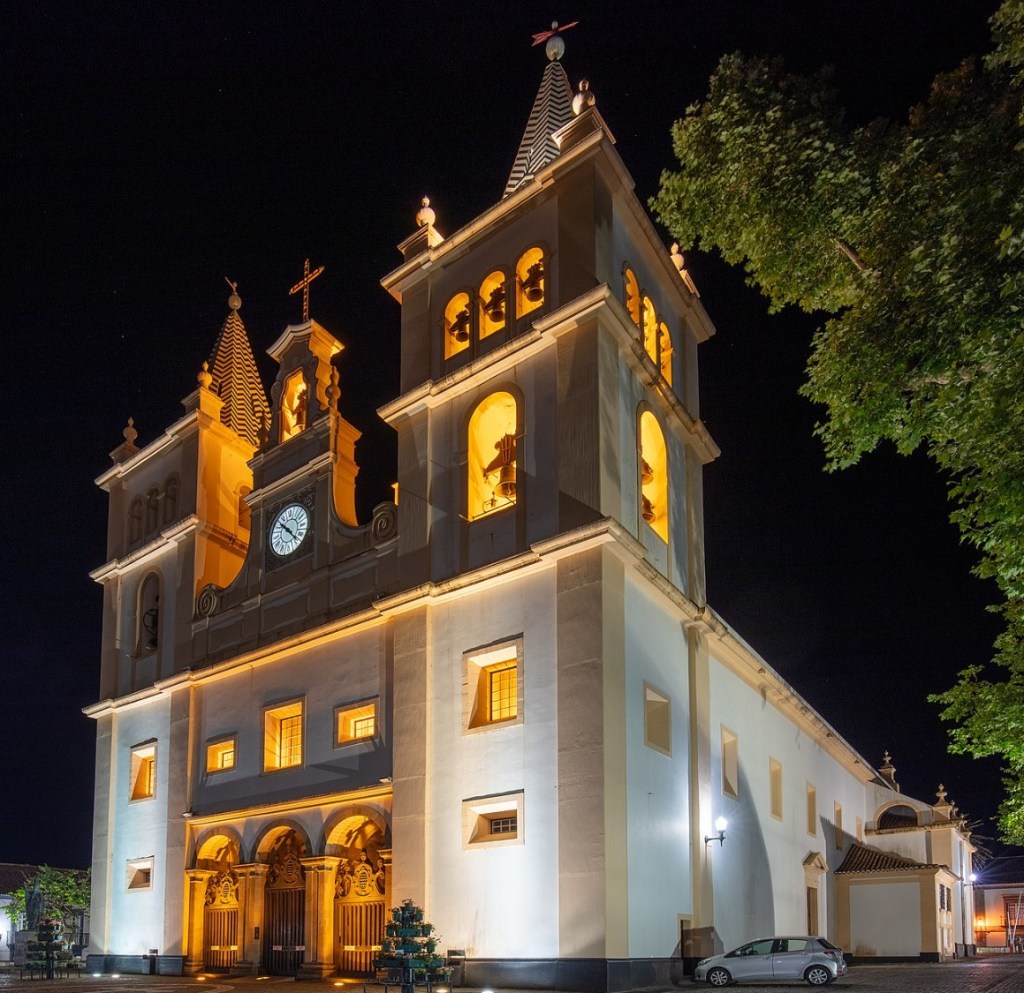
On a quiet Lenten evening in Angra do Heroísmo, the past was not merely preserved—it was opened, examined, and shared. Inside the city’s cathedral, a new catalog of the Treasury and Museum of the Sé was formally presented, offering both scholars and the faithful a renewed encounter with the island’s religious heritage.
The event, held at the Sé Cathedral of Angra do Heroísmo, formed part of the Lenten initiative “C’a fé na Sé” (“With Faith at the Sé”), a modest yet thoughtful series designed to bring people together—not only in devotion, but in conversation. Alongside the presentation, attendees were invited to take part in a guided visit to the cathedral’s treasury, led by the Diocesan Service for Cultural Heritage, where centuries of sacred art and memory were given new voice through careful interpretation.
But this was more than a cultural unveiling. It was, as Canon Hélder Miranda Alexandre explained, an invitation to dialogue. Conceived as a space for formation and encounter, the series unfolds in the Episcopal Sacristy in an atmosphere intentionally simple and intimate—participants gathered not in formality, but around conversation, often with nothing more than a cup of coffee or tea in hand.
The presentation of the cathedral’s new catalogs—both of the Sé itself and its treasury—served as a reminder that heritage is not static. It requires care, interpretation, and above all, engagement. By highlighting the cathedral’s religious patrimony, the initiative seeks to reconnect a community with the deeper layers of its identity, where faith, history, and place converge.
The series will conclude on March 27 with an address by Armando Esteves Domingues, who will reflect on “The Church in the City”—a theme that, like the initiative itself, gestures toward a broader question of presence: how faith inhabits contemporary life, and how it speaks within the rhythms of a modern community.
Open to all, the gatherings are anchored by a simple but searching question posed across the diocese: “Christian, what do you say about yourself?”
In Angra, at least for these evenings, the answer is being shaped not in proclamations, but in conversation—where memory, belief, and reflection meet in the shared space between people.
In Diário dos Açores-Paulo Viveiros, director.
 Filamentos (artes e letras)