
March 15, 1961: When the United States Turned Against Portugal’s Colonial War
Exactly sixty years ago—on March 15, 1961—the United States approved a resolution in the United Nations Security Council condemning the colonial policy of Portugal’s dictatorship. It was the first time the United States had voted against Portugal.
With the arrival of the Kennedy administration in Washington, European colonial policy began to face increasingly sharp criticism. The United States sought to present itself as a champion of anti-colonialism, hoping to expand its influence across Africa at a moment when the Soviet Union was strengthening its presence on the continent by supporting independence movements. While other European powers gradually accepted the necessity of granting independence to their African colonies—a process that had begun soon after the end of the Second World War—António de Oliveira Salazar refused to alter Portugal’s African policy. For the Portuguese ruler, Portugal existed only in conjunction with its empire. Without it, the nation would lose its historical meaning. This inflexible stance soon brought Portugal into growing conflict with the United Nations and with international diplomacy more broadly.
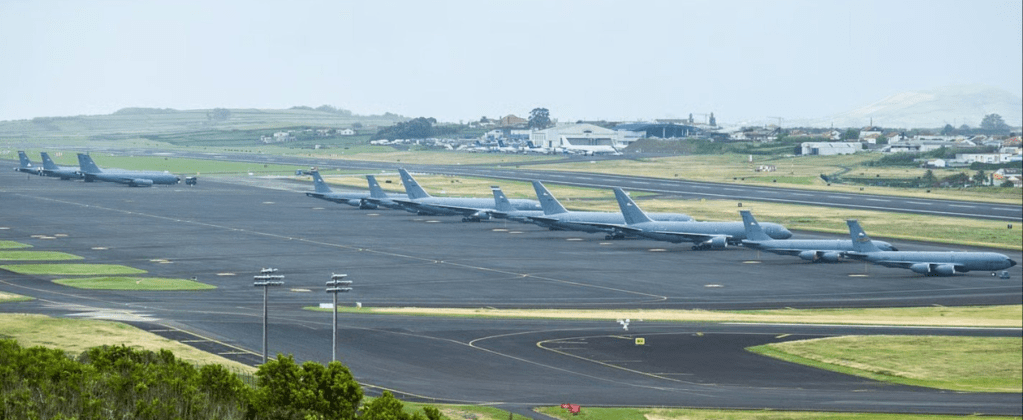
In 1961, Salazar reacted with indignation to the American decision to vote against a long-standing ally. Portugal had granted the United States important military facilities in the Azores and had supported American efforts to defend the Western world against Soviet expansion. Since the 1944 agreement granting the United States access to the Lajes Air Base on Terceira Island, relations between the two countries had entered a period of closer cooperation, reinforced by renewals of the agreement in 1948, 1951, and 1957. Lisbon therefore received news of the U.S. vote with deep consternation.
Throughout 1961 and into 1962, the United States repeatedly voted in the United Nations against Portuguese colonialism. Meanwhile, the 1957 agreement—extending American access to the Azores until the end of 1962—was approaching its expiration. Washington would soon need to renegotiate the arrangement, and Salazar understood that the Lajes base was indispensable to American defense strategy. He believed he possessed a powerful bargaining chip. By leveraging Lajes, he hoped to halt the Kennedy administration’s anti-colonial policy toward Portuguese Africa.
On January 11, 1962—ironically the seventy-second anniversary of another moment of foreign pressure on Portugal, the British Ultimatum of 1890—Salazar prohibited American aircraft flying to the Congo on United Nations missions from using Lajes as a refueling stop. The Portuguese reaction alarmed Washington, which quickly realized that Lisbon intended to demonstrate its displeasure. This occurred despite the fact that only weeks earlier, in December 1961, the United States had supported Portugal at the United Nations by condemning India’s invasion of Goa, Damão, and Diu. Nevertheless, anti-American sentiment was beginning to grow among Portugal’s political and military elites. Thus, when the United States requested negotiations in mid-1962 to renew the 1957 agreement, Salazar refused to open talks while still allowing the Americans to remain at Lajes under increasingly precarious conditions—a calculated ambiguity meant to underline Portugal’s dissatisfaction.
American officials soon understood that Salazar’s intransigence was genuine and that Washington faced a serious strategic dilemma. With the Berlin Crisis and the Cuban Missile Crisis intensifying Cold War tensions, global conflict seemed closer than ever. At the same time, the Soviet Union was gaining ground in Africa and Asia, making the Azores strategically vital as a gateway linking the United States to European, African, and Asian theaters. The Kennedy administration concluded that it needed to reconsider its position at the United Nations regarding Portuguese foreign policy. A moment of recalibration had arrived.
Salazar was fully aware that American anti-colonial sentiment remained powerful and influential. The Portuguese prime minister therefore drew up a lengthy list of demands that the United States would have to satisfy before any new agreement could be signed. By doing so, he kept the two countries in a state of prolonged negotiation, ensuring that Washington would hesitate before again altering its policy toward Portugal.
In the end, the agreement would not be renewed until 1971, by which time Marcelo Caetano had replaced Salazar as head of government and Portugal’s colonial system faced mounting international condemnation at the United Nations. Years earlier, in 1965, Salazar had defended the doctrine of “orgulhosamente sós”—“proudly alone”—arguing that Portugal must continue its colonial war in Africa regardless of international pressure. Later, when Pope Paul VI received African independence leaders at the Vatican on July 1, 1970, Caetano responded by encouraging the Nixon–Pompidou summit to take place in the Azores between December 12 and 14, 1971. Once again, the Lajes base was used by the Estado Novo regime as a diplomatic instrument—reminding Washington of the strategic importance of the Azores and reinforcing the regime’s own geopolitical relevance.
— Francisco Miguel Nogueira, Historian (in Jornal da Praia)
 Filamentos (artes e letras)