
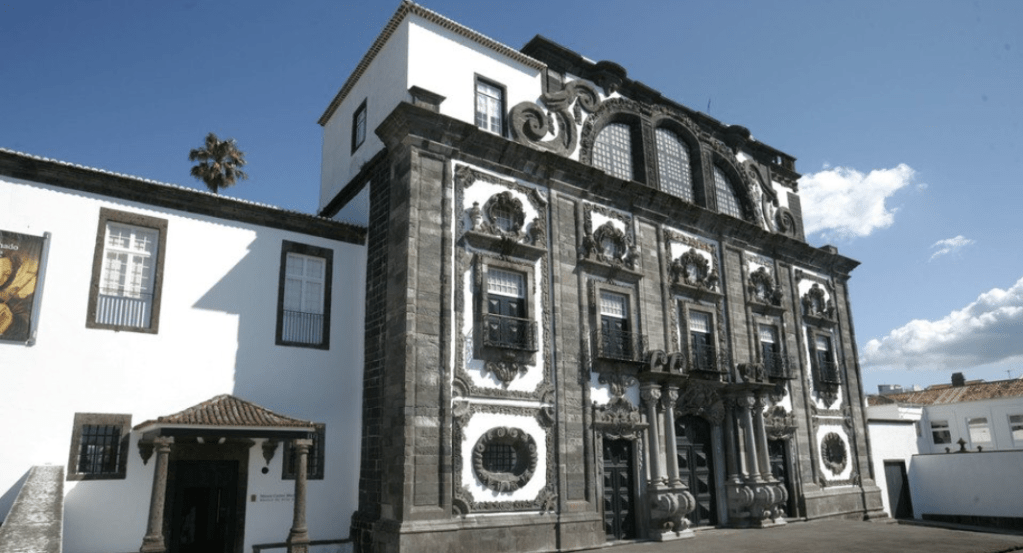
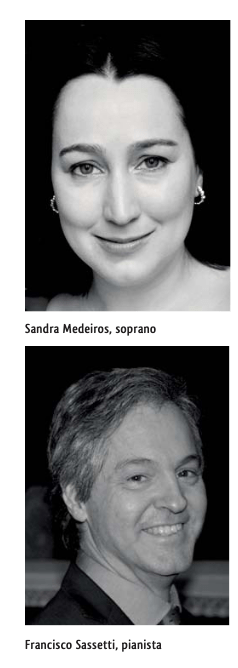
As part of Ponta Delgada – Portuguese Capital of Culture 2026, soprano Sandra Medeiros and pianist Francisco Sassetti will present the recital Cantares da Alma Portuguesa (Songs of the Portuguese Soul) this Sunday at 5:00 p.m. at the Igreja do Colégio in Ponta Delgada.
The program brings together a carefully curated selection of art songs by some of the most significant Portuguese classical composers of the twentieth century, including Croner de Vasconcelos, Frederico de Freitas, Luís de Freitas Branco, Ivo Cruz, Lopes Graça, Joly Braga Santos, Viana da Motta, Francisco de Lacerda, and Eurico Carrapatoso. These works draw inspiration from the Portuguese folk song tradition and from the words of celebrated poets and writers such as Luís de Camões, António Nobre, Afonso Lopes Vieira, Fernando Pessoa, Rodrigues Lobo, Florbela Espanca, João de Deus, Almeida Garrett, and Guerra Junqueiro.
In a conversation about the project, Sandra Medeiros describes the recital as both an artistic exploration and a celebration of the Portuguese language.
The Origins of the Project
Correio dos Açores: How did the project Songs of the Portuguese Soul come about?
Sandra Medeiros:
Songs of the Portuguese Soul, the title given to this recital program for voice and piano, grew out of the interest and desire that Francisco Sassetti and I share—as a duo—to promote and bring greater visibility to chamber songs written by Portuguese composers and performed in the Portuguese language.
The program features a selection of works by some of the most representative composers of twentieth-century Portuguese classical music, including Croner de Vasconcelos, Frederico de Freitas, Luís de Freitas Branco, Ivo Cruz, Lopes Graça, Viana da Motta, and Francisco de Lacerda, among others. These pieces were inspired by the Portuguese folk song tradition and by the poetry of some of the country’s most renowned writers.
Musical Influences
Which artists or traditions most influence your musical style?
Both of us have a background in classical music. As a voice-and-piano duo, we are interpreters rather than composers. In other words, we perform musical works written for voice and piano by composers from different periods of music history, always respecting the aesthetic movements and musical styles associated with each piece.
Medieval Traditions and Their Echo
What importance do collections such as the Cantigas de Santa Maria have in your work?
In this particular program, they are not especially central. The Cantigas de Santa Maria are a medieval collection of songs dedicated to the Virgin Mary, written in medieval language. They combine music, poetry, and devotion and are considered one of the most important examples of Iberian medieval literature.
Perhaps the closest connection is that our program includes the song “E sabor hei da ribeira,” composed by Frederico de Freitas, whose text belongs to the tradition of the cantiga de amigo—a medieval Galician-Portuguese poetic form. While the Cantigas de Santa Maria are devotional, the cantigas de amigo express longing and love, often voiced by a woman for a man who is far away. Both, however, share roots in the lyrical tradition of medieval Galicia and Portugal.
What the Audience Can Expect
What can the audience expect from this concert?
The audience will experience a unique musical moment—a deeply emotional journey through beautiful and captivating chamber songs written by great Portuguese composers and inspired by folk traditions and the poetry of major Portuguese authors. It is a recital that celebrates both music and the Portuguese language.
Choosing the Repertoire
How do you select your repertoire?
Choosing the repertoire is a creative and personal process. Sometimes we begin with a theme and select pieces that correspond to that idea. At other times, we choose songs that complement one another musically or allow us to explore different emotional atmospheres. Ultimately, we seek to create a program filled with music that moves us deeply and that we believe will have a strong emotional impact on the audience.
Interpreting Historical Texts in Music
Can you explain how historical texts are recreated through music?
It is essentially a process of interpretation and musical translation. Our goal is to respect the essence of the text while creating an atmosphere that enhances and illuminates its meaning.
Interest in Historical Texts Today
Is there still public interest in music based on historical texts?
In the case of this program, I believe there is a genuine interest in revisiting our history and culture through music. It becomes a way of celebrating identity.
Music in the Digital Age
Is it difficult to perform music based on historical texts in an era shaped by digital transformation?
The digital transition has brought both challenges and opportunities. Technology certainly helps, but what matters most is the emotional and artistic connection with the text, the music, and the audience. Everything else is simply a tool.
Looking Ahead
Is there any repertoire you would like to explore in the future?
The chamber repertoire for voice and piano is vast—it spans many centuries of music history and composers from numerous countries. It is truly a world of possibilities. As a duo, we already have more than two dozen recital programs covering different periods, styles, and languages. Yet we are always exploring and eager to discover new repertoire. It is both a privilege and a pleasure to choose from such a rich body of music and to share these musical stories with our audiences.
In Correio dos Açores-Natalino Viverios, director
 Filamentos (artes e letras)