
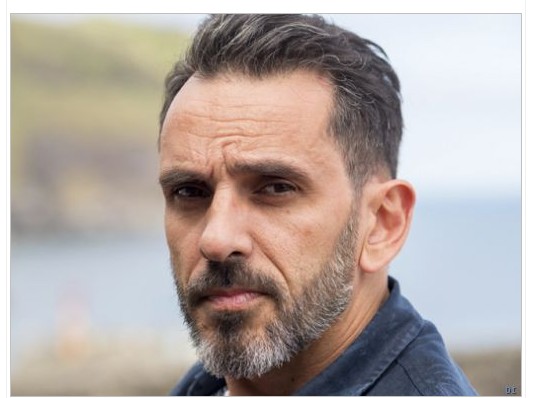
Tonight, at the Cultural and Congress Center of Angra do Heroísmo, the municipality of Angra and the theater collective Pedra-Mó open an exhibition that quietly celebrates one of the most enduring artistic collaborations in the Azores. Titled “Rui Melo — 34 Years of Scenic Design,” the exhibition traces more than three decades of theatrical imagination through sketches, photographs, and working notes rarely seen by the public.
The artist at the center of it all, Rui Melo—visual artist, set designer, and long-time collaborator with Pedra-Mó—speaks about a life spent building worlds for the stage, about the fragile ecology of theater, and about what it means to practice art in a rural community where creativity has taken root against all odds.
The exhibition opening tonight in Angra presents more than three decades of your work in scenography. What will visitors discover in this show?
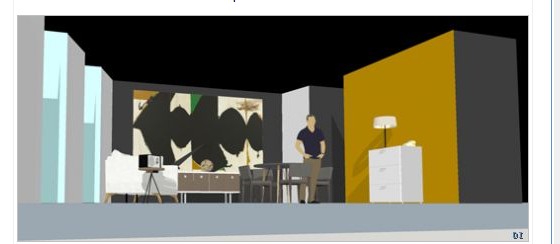
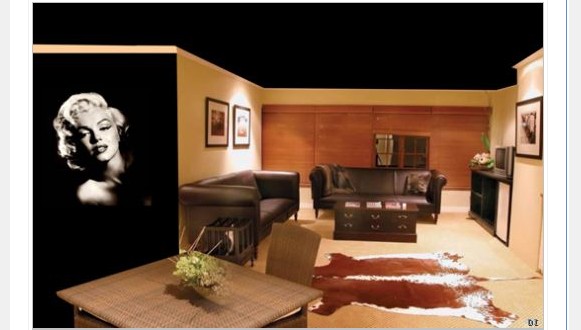
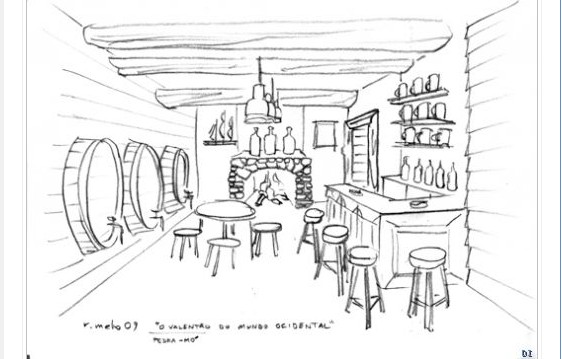
The exhibition brings together photographs, reproductions of drawings, sketches, and notes—materials that normally remain hidden behind the curtain of the creative process. In essence, it reveals part of the design work developed over thirty-four years with the Pedra-Mó theater group, a collaboration carried out in close partnership with Moisés Mendes, who has been a central figure not only in the vast majority of the productions but also as the coordinator and driving force behind this remarkable ensemble.
Pedra-Mó has been active since 1978, working in a rural community on Terceira Island, specifically in the parish of Altares. What the exhibition attempts to show is not only finished stage images but the path that leads to them—the sketches, the ideas, the fragments of thought that gradually become theatrical space.
There is also a certain informality in the way the materials are presented. Some of the drawings are displayed on the very modular panels used to construct the stage sets themselves, allowing the support of the exhibition to echo the material language of the stage.
How did scenography first enter your artistic life?
Scenography emerged naturally from my work in the visual arts. When I began working more regularly in the early 1990s, I was often approached to collaborate on projects that involved designing or building scenic environments.
My first real experiences as a set designer took place at the Angra high school, where I created stage environments for student theater productions. Two teachers were particularly important in that process: Carlos Fragoso, who guided a more traditional theatrical experience, and Isaac Ávila, whose work related more directly to the history of art.
With Ávila we recreated famous paintings for a performance in which students embodied the figures within the artworks—a kind of living gallery on stage. That experience left a deep impression on me.
Soon afterward came other small collaborations, and eventually an invitation from the theater group Alpendre to design the set for Eugène Ionesco’s The Bald Soprano in 1991, directed by Álamo Oliveira. I worked regularly with that group for several years.
Then, in 1993, Moisés Mendes invited me to design the set for Pedra-Mó’s production of Robert Thomas’s Trap for a Lonely Man. At the time, nothing suggested that this collaboration would continue for thirty-four years and more than thirty productions.
Around that same time, the director Ruy de Matos arrived on the island through a cultural partnership between the regional government and Lisbon’s National Theatre D. Maria II. I worked closely with him as well and learned a great deal from that experience.
Looking back, I believe the longevity of this collaboration came from several elements: the group’s regular artistic activity, my own desire to learn, and above all the deep mutual respect between scenography and staging. My drawings and ideas were always treated seriously, and that respect fostered a relationship that endured.
After more than three decades of work with Pedra-Mó, how do you reflect on that journey?
For me it has been an extraordinary experience of creative freedom and learning. I have a great deal to thank Pedra-Mó for, because they gave me the opportunity to explore ideas without restriction and to grow as an artist.
The balance of these years is more than positive. In many ways, this collaboration was decisive for my creative development.
Is there one project among those thirty-four years that stands out most vividly in your memory?
It’s difficult to choose a single production. What I remember most intensely are the moments of deep theatrical learning during the productions I worked on with Moisés Mendes and Ruy de Matos.
In those collaborations, every drawing was discussed in the smallest detail—from the conceptual design of the set to the search for the exact materials capable of bringing those ideas to life. That process was a fascinating school in itself.
Later there were productions whose visual impact perhaps pleased me more, or whose scenic structures worked particularly well as functional elements on stage. But if I had to name a couple that remain especially vivid in my memory, I would mention The Shoemaker’s Prodigious Wife by Federico García Lorca (1998) and The Rogueries of Scapin by Molière (2001). Both offered rich creative experiences.
Theater groups today face increasing financial constraints. How do you see the importance Pedra-Mó continues to give to scenography under these circumstances?
Like all artists and cultural institutions, theater groups inevitably change over time. That change can be positive when it comes from artistic evolution.
What I sincerely hope is that any adjustments Pedra-Mó might make—whether in scenography or in any other scenic element—are motivated by artistic intention rather than financial necessity.
If such changes happen because of a lack of institutional support, then we are witnessing something more troubling. It would not be the end of Pedra-Mó, nor of theater itself, but rather a symptom of the erosion of a humanistic and progressive society—one that recognizes the arts as one of its civilizational pillars.
That said, Pedra-Mó has developed a strong identity over the years, one that has long been associated with the scenographic proposals presented in its productions. It is natural that new ideas may emerge, perhaps even a more minimalist approach to scenic design. But if that happens, it should be the result of a conceptual evolution in the group’s theatrical language, not the consequence of institutional funding constraints.
The reality is that such constraints do exist. They must be confronted—and artists, as always, respond with imagination and creativity.
In Diário Insular, José Lourenço-director
 Filamentos (artes e letras)