
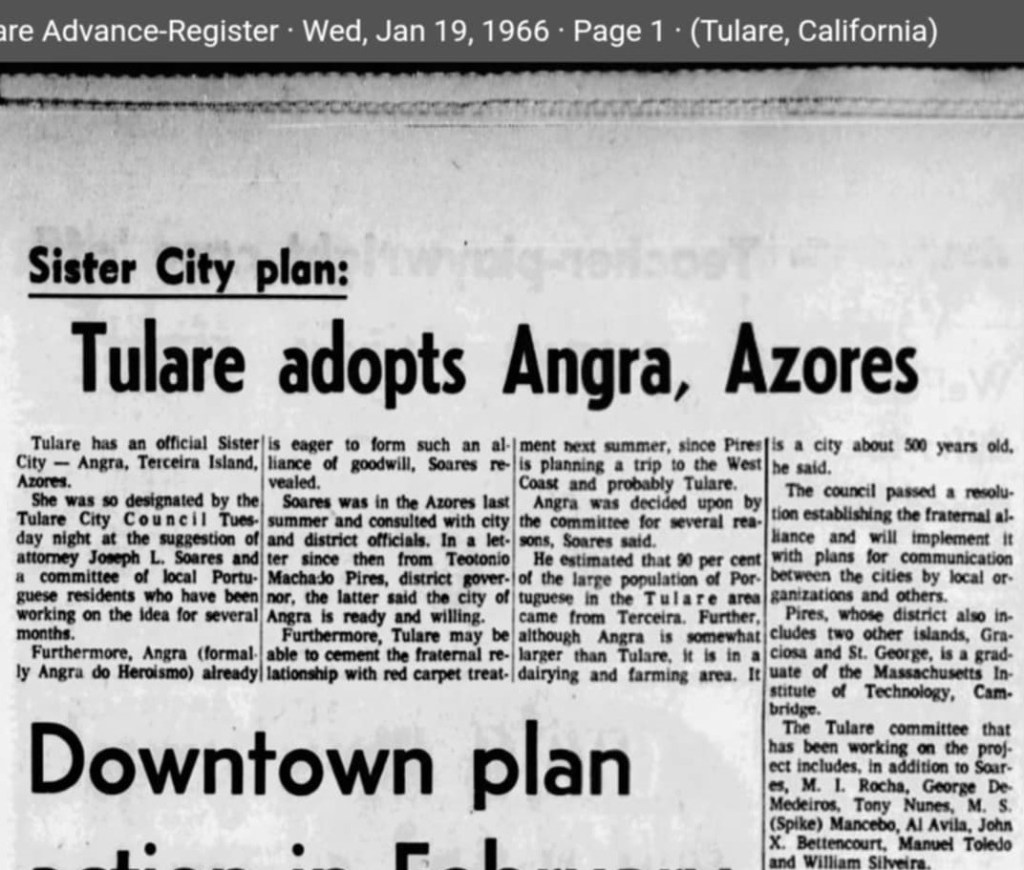
History often records the loud events of nations—wars, revolutions, elections, and treaties signed in distant capitals. Yet beneath these moments runs another history, quieter and no less transformative: the history of communities that choose to recognize themselves in one another across oceans and continents. These are histories built not by governments alone but by people—by migrants, civic leaders, dreamers—who believe that memory and friendship can travel farther than geography.
Sixty years ago today, on March 10, 1966, such a history took formal shape when the Sister City relationship between Tulare, California, and Angra do Heroísmo, on the island of Terceira in the Azores, was ratified in Angra. What was signed that day was more than a municipal agreement. It was the affirmation of a cultural bridge between two communities connected by migration, heritage, and shared human experience.
At the heart of this story stands João Afonso, whose vision and persistence helped bring the idea into reality. For Afonso, the connection between Tulare and Angra was not simply symbolic. It reflected a deeper historical truth: that the Azorean diaspora had woven the islands and California into a shared cultural landscape.
For generations, Azorean immigrants had crossed the Atlantic seeking opportunity in the fertile valleys of California. Many of them settled in the agricultural communities of the San Joaquin Valley, including Tulare and its surrounding towns. They brought with them their language, their traditions, their devotion to the Holy Spirit, and the rhythms of island life shaped by the sea and the land.
Yet migration does not erase memory. Even as immigrants planted new roots in California soil, they continued to carry the Azores within them—in their celebrations, their churches, their stories, and their sense of belonging to two places at once.
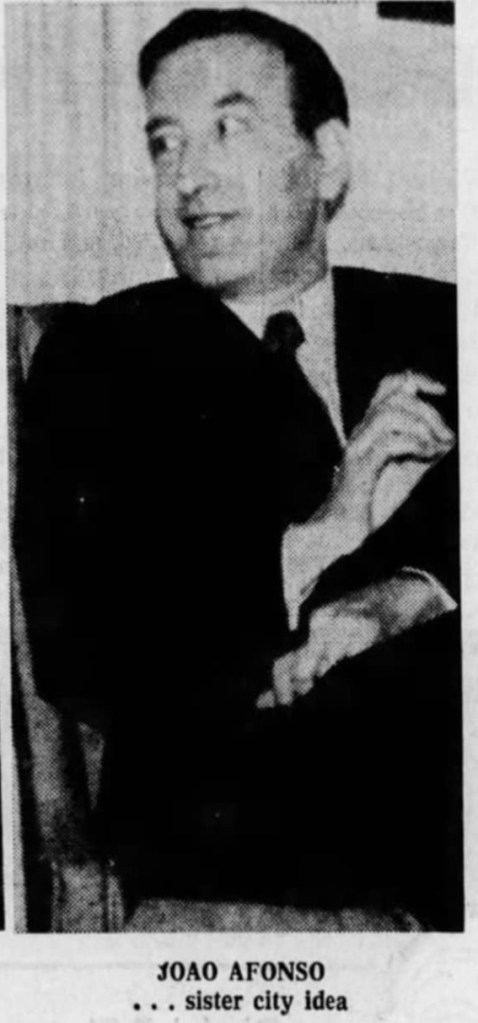
João Afonso understood this dual identity. He saw that the relationship between Tulare and Angra could become something more than nostalgia. It could become a living connection, a civic partnership that honored the past while building new cultural exchanges for the future.
The ratification of the Tulare–Angra Sister City agreement in 1966 was the realization of that dream. It signaled the recognition that the Atlantic Ocean did not separate these communities as much as it connected them. The agreement transformed the invisible ties of migration into a formal expression of friendship.
This idea did not emerge in isolation. In the years following the Second World War, the world searched for ways to prevent future conflicts by encouraging dialogue and understanding between peoples and cultures. In 1956, President Dwight D. Eisenhower launched the People-to-People Program, an initiative rooted in a simple yet powerful belief: that peace could be strengthened when ordinary citizens built relationships across national borders.
Eisenhower argued that governments alone could not sustain international understanding. Instead, he believed that teachers, farmers, students, artists, and community leaders could become ambassadors of goodwill, forming connections that transcended political divisions. The Sister Cities movement grew directly from this vision, encouraging municipalities across the world to establish partnerships based on cultural exchange and mutual respect.
Within this global context, the Tulare–Angra partnership took on a broader meaning. It became not only a celebration of shared heritage but also part of a worldwide movement of citizen diplomacy, where communities reached across oceans to build friendship through cultural dialogue.
But like all great civic ideas, the sister city relationship required more than enthusiasm to endure. It required structure, stewardship, and the commitment of individuals willing to nurture it through the passing decades.
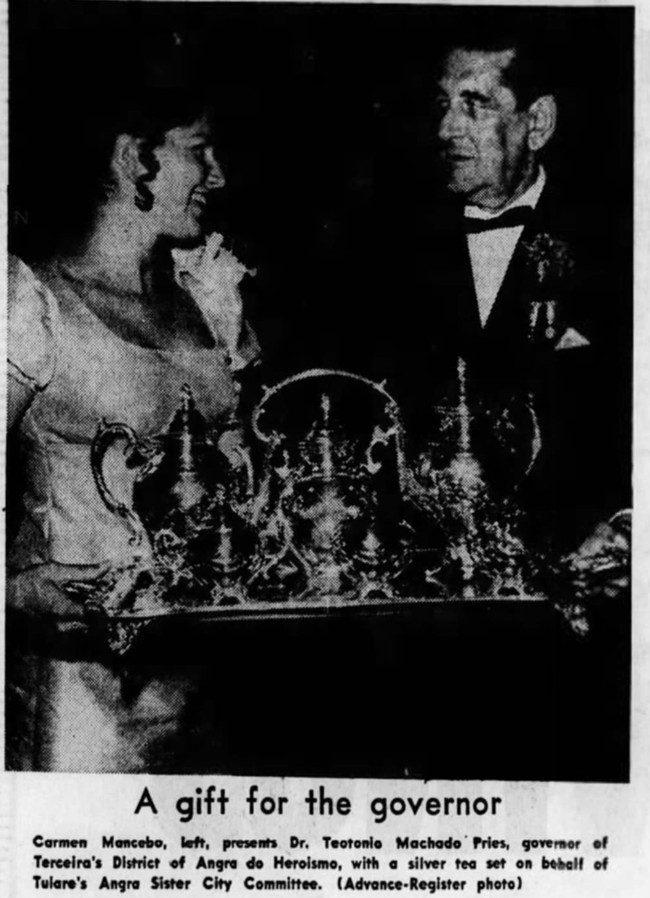
In Tulare, that commitment took form in the creation of the Tulare–Angra Sister City Foundation, an organization that would provide both continuity and direction to the partnership. Through the foundation, the relationship between the two cities moved beyond ceremony and into sustained civic engagement.
Delegations traveled across the Atlantic. Cultural exchanges were organized. Visitors from the Azores were welcomed into homes and community events in Tulare, while residents of California journeyed to Angra do Heroísmo to experience the island that had shaped so many of their families’ histories.
Each visit reinforced the original vision: that the relationship between the two cities was not merely historical but living.
Over the past six decades, countless individuals have contributed to the vitality of this partnership. Their work rarely appeared in headlines, yet it formed the quiet infrastructure that allowed the relationship to flourish.
Among those who helped sustain and strengthen the bond on this side of the Atlantic were individuals whose dedication gave the dream both structure and resilience.
Attorney Joseph Soares, through his commitment to civic engagement and community leadership, helped guide the organizational framework that ensured the partnership would endure beyond the enthusiasm of its founding years. His work reflected a deep belief that cultural ties must be supported by strong institutions if they are to survive across generations.
Manuel “Spike” Mancebo, businessman and community leader, brought energy and pride to the effort. For him, the sister city relationship represented not simply an official program but an affirmation of identity—an acknowledgment that the Portuguese heritage of the community was both meaningful and worthy of celebration.
Alongside them stood many others: members of the Tulare–Angra Sister City Foundation, volunteers, civic leaders, educators, and families who devoted their time to organizing exchanges, hosting visitors, and preserving the spirit of the partnership.
Their work was often quiet, carried out far from public attention, yet it was precisely this steady dedication that allowed the relationship to endure through changing times and generations.
Through festivals, cultural programs, official visits, and friendships renewed year after year, the foundation ensured that the bridge between Tulare and Angra remained active rather than symbolic.
Each exchange became a reaffirmation of a simple but profound truth: that communities separated by oceans can still recognize themselves in one another.
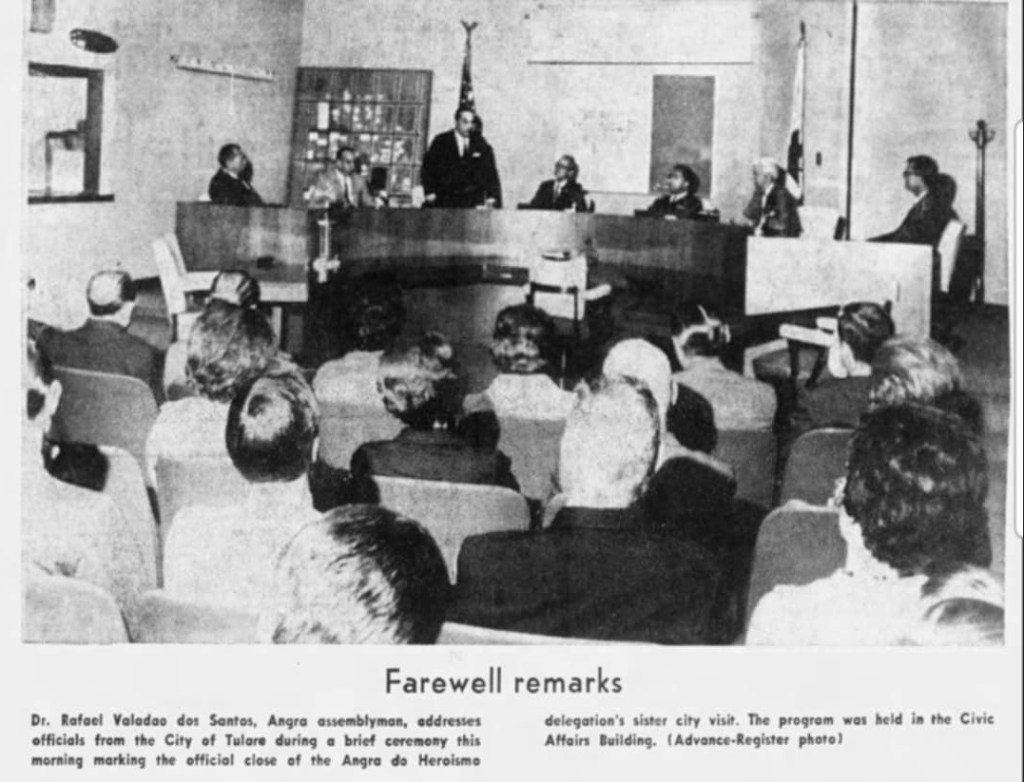
In an age when the world often seems divided by borders and distance, the Tulare–Angra Sister City relationship offers another vision of international connection. It reminds us that diplomacy does not belong solely to governments. It can grow from neighborhoods, from families, from the descendants of migrants who refuse to allow the memory of their origins to fade.
For the Azorean diaspora in California, the sister city partnership became a way of transforming migration into dialogue. It allowed communities in California to remain connected to the islands that shaped their past, while also sharing their own experiences of life in the American West.
The Atlantic Ocean, once crossed by immigrants seeking opportunity, became a pathway of exchange flowing in both directions.
Today, sixty years after the agreement was signed in Angra do Heroísmo, the bridge envisioned by João Afonso remains firmly in place.
The pioneers who helped establish it are no longer with us, yet the spirit that guided them continues through the work of those who followed. Members of the foundation, community leaders, and younger generations now carry forward the responsibility of sustaining this transatlantic friendship.
Their task is not merely ceremonial. It is historical.
For every anniversary celebrated, every delegation welcomed, and every cultural exchange organized is part of a larger narrative—the story of how migration reshapes both the homeland and the adopted land.
The Tulare–Angra partnership stands today as a living testament to that history. It reflects the journey of Azorean immigrants who crossed the Atlantic in search of opportunity yet never severed their ties with the islands they left behind.
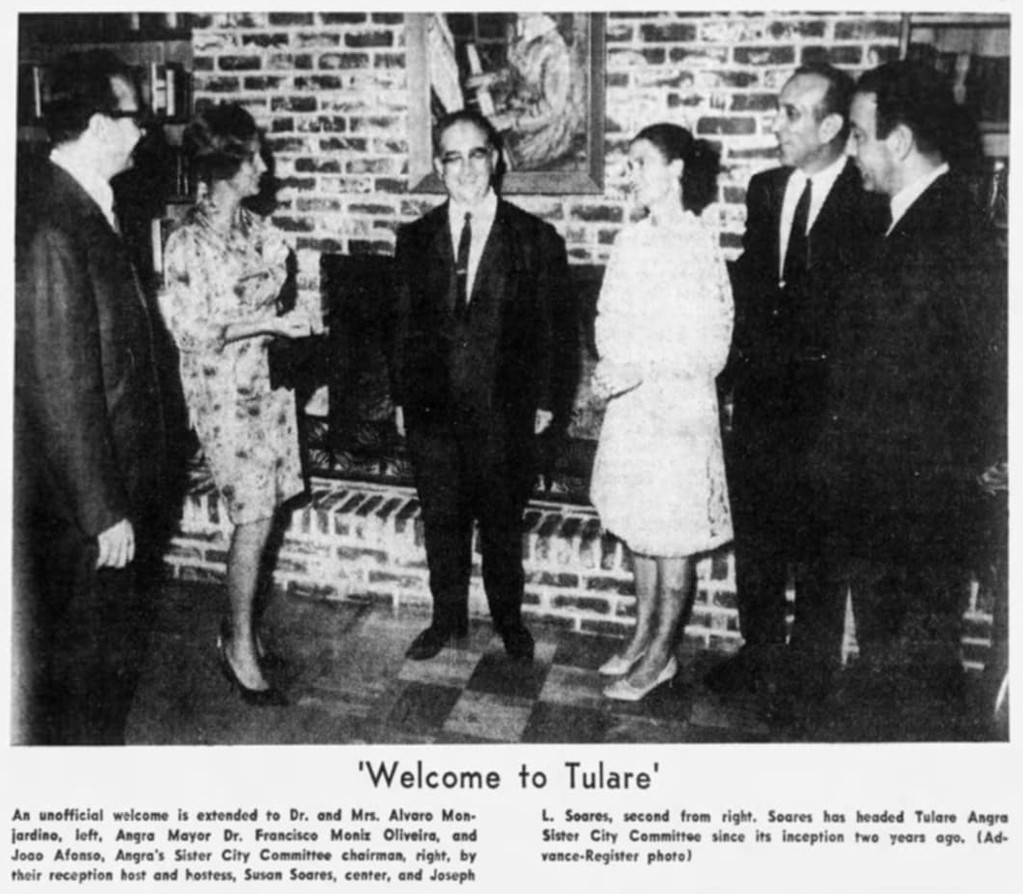
Yet dreams, even the most generous ones, do not endure on vision alone. They require hands willing to carry them forward across the slow passage of years.
On this side of the Atlantic, in the city of Tulare, the dream that João Afonso helped set in motion found guardians and builders who understood that friendship between communities must be cultivated with patience and care.
Through their dedication—through the leadership of individuals like Joseph Soares, Manuel “Spike” Mancebo, and the many members of the Tulare–Angra Sister City Foundation—the original vision gained both organization and strength.
They ensured that the partnership would not remain frozen in the moment of its signing but would continue to evolve, welcoming new generations into the story.
Today the bridge imagined sixty years ago still stretches across the ocean.
It runs from the cobblestone streets of Angra do Heroísmo to the fertile agricultural fields of Tulare, linking communities that share a history shaped by migration, labor, and cultural memory.
And as long as there are people willing to remember why that bridge was built—and willing to cross it again and again—the dream that began on March 10, 1966 will continue to guide both cities into the future.
For some bridges are made of steel.
But the most enduring ones are made of memory.
Diniz Borges

 Filamentos (artes e letras)