

Portugal has lost one of its most formidable literary minds. With the death of António Lobo Antunes on March 5, 2026, at the age of 83, an era in Portuguese letters quietly came to a close. For more than four decades, Lobo Antunes stood as one of the most powerful chroniclers of the Portuguese soul—restless, wounded, and searching—crafting novels that forced the country to confront the deepest layers of its history and memory.
He was widely regarded as one of the greatest writers of the Portuguese language in the late twentieth and early twenty-first centuries. Over a career spanning more than forty years, he published more than thirty novels, works that were translated into dozens of languages and frequently placed him among the perennial contenders for the Nobel Prize in Literature. Yet, like many writers of profound complexity, he remained paradoxically underrecognized in the English-speaking world, even as critics across Europe hailed him as a giant of contemporary fiction.
Born in Lisbon in 1942 into a family of physicians, Lobo Antunes initially followed the expected path. He studied medicine at the University of Lisbon and specialized in psychiatry. But literature had been his secret vocation since childhood. The decisive turning point came during the Portuguese Colonial War, when he served as a military doctor in Angola in the early 1970s. The violence and psychological scars of that experience would mark his imagination permanently.
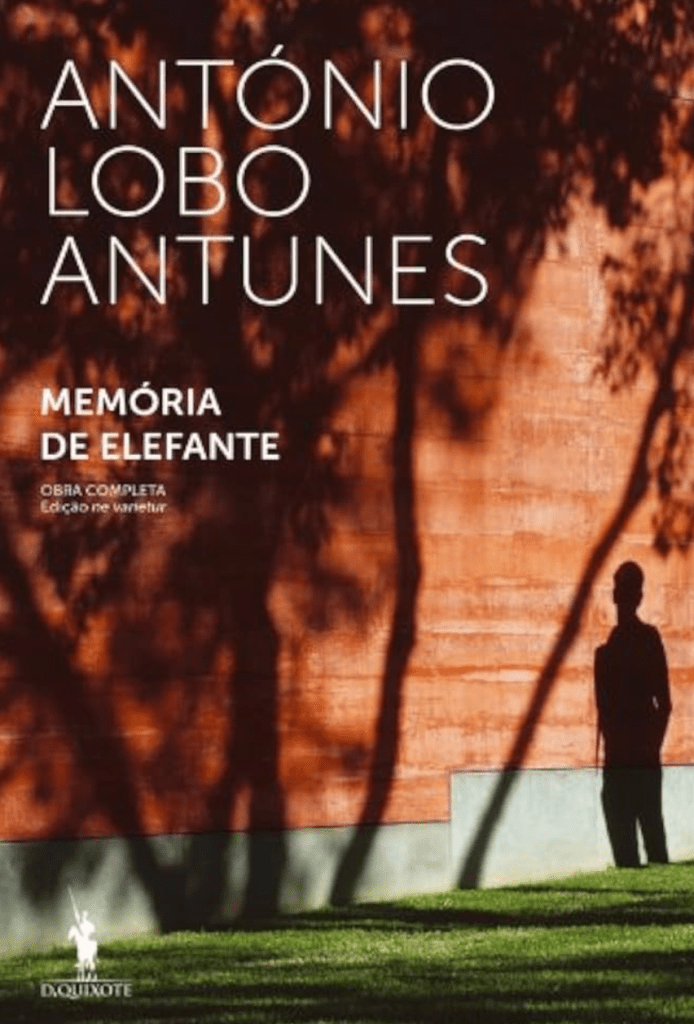
Out of that trauma emerged one of the most distinctive literary voices in modern Europe. His early novels—Memória de Elefante (Elephant’s Memory) and Os Cus de Judas (The Land at the End of the World)—introduced readers to a prose style that was dense, polyphonic, and emotionally raw. Later works such as Fado Alexandrino, As Naus, and O Manual dos Inquisidores expanded his exploration of Portugal’s historical conscience, from colonial war to dictatorship to the uneasy aftermath of revolution.
His novels were famously demanding. Sentences stretched across pages, voices overlapped, time fractured. Critics often compared his style to William Faulkner’s labyrinthine narratives, while others saw echoes of Louis-Ferdinand Céline’s rhythmic intensity. But Lobo Antunes was never merely imitating. His writing possessed an unmistakable cadence—half confession, half exorcism—where memory, guilt, irony, and dark humor collided.
For Lobo Antunes, plot was almost incidental. The true subject of his fiction was consciousness itself: the way trauma reverberates across generations, the way nations remember and forget, the way individuals struggle to live with their past. In that sense, his work can be read as a long meditation on Portugal’s twentieth century—the authoritarian decades of the Estado Novo, the colonial wars that shattered illusions of empire, and the fragile rebirth of democracy after the 1974 Carnation Revolution.
Recognition came gradually but decisively. Among many honors, he received the Camões Prize in 2007, the most prestigious award in Portuguese-language literature. Yet the prizes mattered less than the influence he exerted on younger generations of writers who saw in him a model of fearless literary exploration.
In recent years illness forced him to withdraw from writing, and the once relentless rhythm of his novels slowed to silence. But his work had already reshaped the landscape of Portuguese literature. When news of his death spread, Portugal declared a day of national mourning, a symbolic recognition of how deeply his voice had entered the country’s cultural life.
To read António Lobo Antunes was never easy. His novels demanded patience, attention, and emotional courage. Yet for those willing to enter their labyrinth, the reward was extraordinary: a literature that did not flatter or console, but revealed the human condition in all its fragility and contradiction.
In the end, that may be his most enduring legacy. Lobo Antunes did not simply tell stories about Portugal. He held a mirror to its memory—and insisted that the nation look closely.

 Filamentos (artes e letras)