
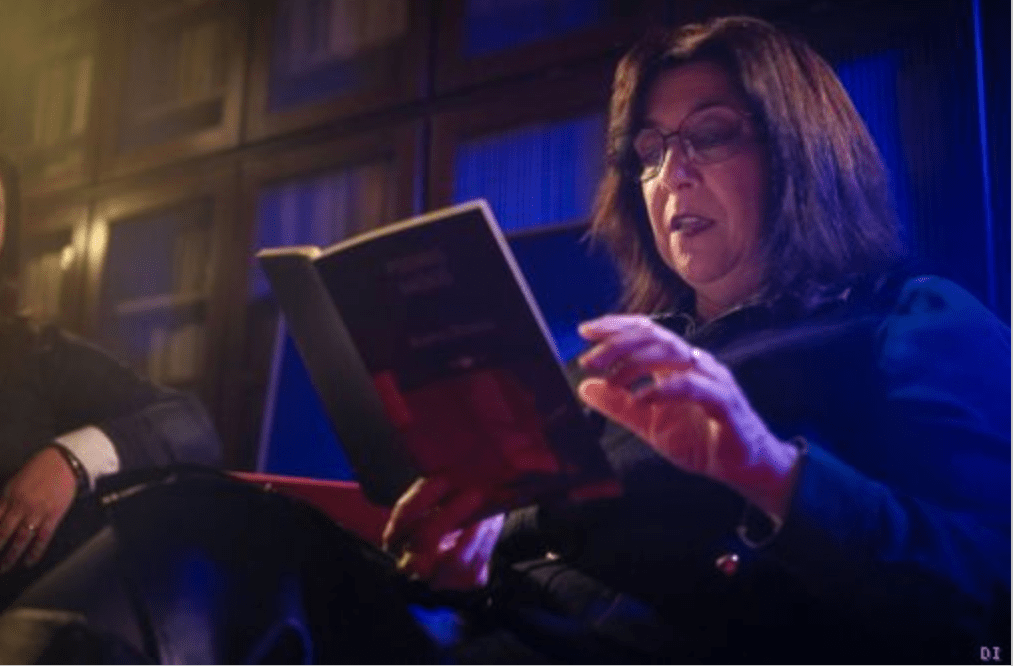
Andreia Fernandes: Ana Bretão, did Álamo Oliveira influence your love for writing and poetry?
Ana Bretão: Completely. Álamo was my first literary love—if such a thing as a first literary love truly exists. I must have been four or five years old. In those days there wasn’t much to do in Raminho, and very few cars passed along the road. So we children would sit on the low stone wall by the street simply to watch people go by. That’s what we called it: watching people pass.
Álamo passed by often—almost until the day he died. And he never passed unnoticed. He greeted everyone, always with a kind word, a gentle remark. He spoke to me frequently and said beautiful things to a child who could barely understand them. I remember thinking, even then: When I grow up, I want to marry a man like this. That’s why I say he was my first literary love.
He was the first person who spoke to me about books. The first person who recited to me a line from Camões—“Estavas, linda Inês, posta em sossego.” I was sitting on the wall when he said it. That moment never left me.
So yes—very much so.
Andreia Fernandes: How did you come to revise Álamo’s books?
Ana Bretão: I probably revised three of them, though it was never easy. Álamo would ask me to read his manuscripts before publication, but most of the time it wasn’t an official revision with formal corrections. The first book I truly revised in that sense was Marta de Jesus.
It was difficult because we had very different ideas about grammar. Álamo was extremely stubborn about commas. He believed, for example, that a comma after the word but created a pause—a breathing space. He would say, “But I want to say buuuut and rest there.” And I would reply, “Then use ellipses.” He would insist: “No, it’s not the same thing.”
In truth, he asked me because he felt the need for it. He wrote with his heart, and his writing followed the rhythm of that heart. In fact, he often said: “My heart is like this.” And his writing was exactly that—his heart on the page.
Writing from the heart is not always technically perfect. But I think Álamo was perfect in that imperfection.
Andreia Fernandes: How would you describe Álamo’s literature?
Ana Bretão: He was what everyone says he was: a multifaceted author. A playwright, a poet, a writer of narrative prose—he could write in every genre.
But at heart, Álamo was above all a poet. And he loved to be called a poet. There was a woman in the parish who always greeted him with, “Good morning, Mr. Poet.” And he loved that. His eyes would light up. He would smile and say, “Yes, that’s exactly what I am—a poet.”
For me, that is the essence of his literature: he was a poet.
Andreia Fernandes: There seems to be poetry in everything he wrote.
Ana Bretão: In everything. Especially in his dramatic work. A play by Álamo is essentially a poem performed on stage.
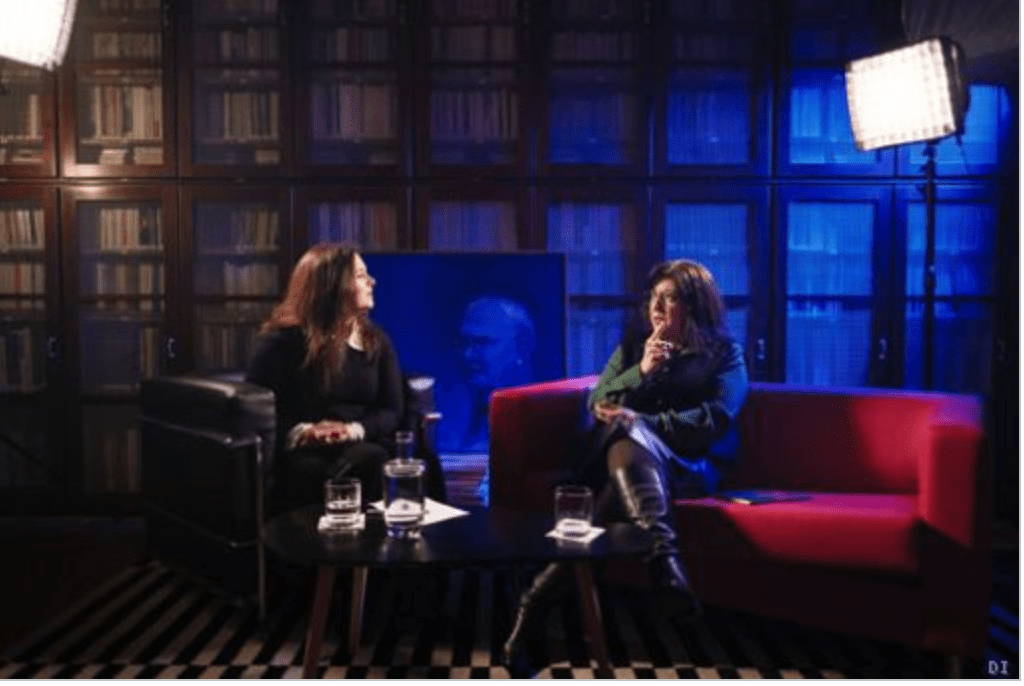
Andreia Fernandes: In Raminho, people often say the village always turned to Álamo for words and guidance. Now that he is gone, he leaves many empty spaces.
Ana Bretão: He leaves an immense legacy. Especially in the last three years of his life, he left us with many challenges.
There are spaces he leaves behind that simply cannot be filled. Perhaps I am biased—but for me Álamo was a genius. And in many of the areas where his genius manifested itself, replacing him will be difficult.
But he always issued a kind of challenge. He said it often: “Read me.” He would say, “I don’t want to be honored—I want to be read.”
Andreia Fernandes: He preferred being read to being remembered?
Ana Bretão: Exactly. “I want to be read,” he would say.
And he constantly encouraged people—sometimes directly, sometimes indirectly. Through the theatre group, through the readers’ circle. His message was always the same: “Continue. Continue.”
He told me many times about the readers’ group at the Álamo Oliveira Library: “Don’t let this die. Don’t let it disappear. This is something beautiful.”
Whenever we organized a poetry recital, he was genuinely happy—deeply happy. He would say again, “Keep doing this.”
So I still hope that the spaces he leaves behind will not remain entirely empty.
Andreia Fernandes: What about the theatre group Pé de Milho?
Ana Bretão: That was, I think, the apple of his eye. I’ve said this before—and others have said the same—it was not easy to be rehearsed by Álamo. Anyone who worked with him will confirm it. He was demanding. Not particularly gentle. Very direct, very assertive. He liked things done well.
I think Pé de Milho was the theatre of his old age. Like someone who has a child late in life. He created that group almost as a final inheritance for the parish—a legacy.
We did beautiful work there. Some of it written by him. Deixem Dormir as Viúvas (Let the Widows Sleep), for instance, is an extraordinary play—very funny, but also a brilliant piece of social criticism.
In a way, that theatre group was his late-born child. And he wanted us to care for it.
Andreia Fernandes: The choir, however, was not a late project.
Ana Bretão: No, not at all. The choir had existed long before he arrived. He returned from the war and took charge of it. He opened it up and transformed it.
He had no formal musical training—aside from the education he received in the seminary—but he possessed remarkable musical sensitivity. He introduced adaptations, wrote beautiful lyrics for liturgical music, and reshaped the repertoire.
Andreia Fernandes: Many of those compositions carried a social message.
Ana Bretão: Yes. Some of them were quite bold—like Missa Terra Lavrada. That entire mass is almost revolutionary. Almost a cry of rebellion.
Andreia Fernandes: When asked to choose one of his books, you selected Poemas Vadios (Vagabond Poems). Why?
Ana Bretão: For several reasons. First, because of the title itself—vadios, vagabonds. I think Álamo was a good vagabond.
He lived his freedom fully until the end. His final freedom, in fact, was never having to enter a nursing home, something he deeply feared.
He was a healthy vagabond. An intelligent vagabond. Someone who lived his freedom without ever harming the freedom of others, always with discretion and gentleness. For me, he remains a beautiful example of that kind of wandering soul.
And these poems are also “vagabond” because they come from the final stage of his life, written around 2020. He was already ill. Many of the poems confront old age—the end of life, the fear of death, the decline of the body, the uncertainty of what lies beyond.
And yet he also wrote about ordinary things—a pain in the knee, a visit to the bathroom. He could turn anything into poetry.
In my view, some of these poems are among the finest he ever wrote.
Andreia Fernandes: He feared what might lie beyond death, even though he was a believer.
Ana Bretão: Yes. A believer who went to mass every Sunday, decorated the church, directed the choir, and did countless things for the parish.
But it was a healthy faith—one that he constantly questioned. His books can be quite controversial in that regard: Murmúrios com Vinho de Missa, Marta de Jesus, Os Belos Seios da Serpente. When I finished reading Marta de Jesus, he asked me what I thought. I told him, “This is the book that will get you excommunicated.”
Andreia Fernandes: Yet he had that freedom.
Ana Bretão: Yes—and he was respected for it, even by people within the Church. Many clergy have read his books and admire them.
He challenged things, certainly, but he also possessed immense knowledge—especially of the Old Testament. That allowed him to play with religious symbolism, to reinvent it, to create new allegories. That is something remarkable. In Os Belos Seios da Serpente, it is extraordinary.
I strongly recommend that people read it.
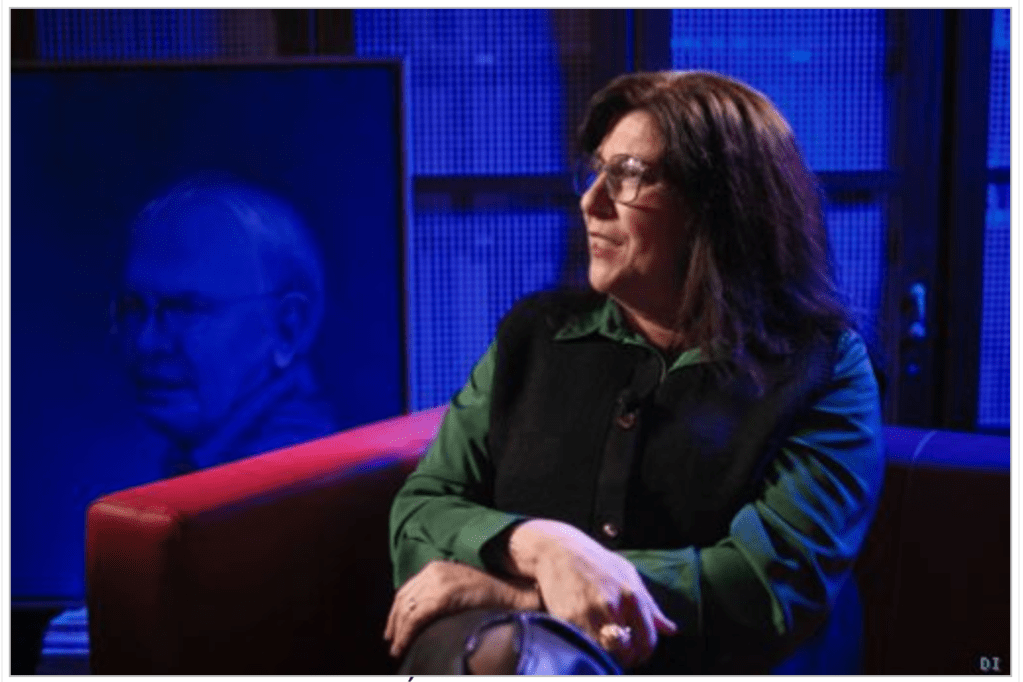
Andreia Fernandes: These poems about the end of life must resonate differently now.
Ana Bretão: They do. They move me deeply. This book makes me cry.
When we held Álamo’s funeral, we were not mourning a writer, or a painter, or a genius, or a playwright. We were mourning someone from our own family.
There was not a single dry pair of eyes in that church.
We miss him as family. For me, he was like a beloved uncle.
I witnessed his physical decline—never his intellectual one. Even the last time I saw him, perhaps two months before he died, there was no decline of the mind.
When I visited him in the hospital, I asked what he needed. He said immediately: “Books, of course. And a little notebook and a pen.” Then he carefully explained where they were so I could fetch them.
But that physical decline was painful to watch. His final year was difficult.
Andreia Fernandes: It happened quickly.
Ana Bretão: Yes. And in a way, it was abrupt—almost violent.
When I first read this book, he was still well, so I didn’t feel it as strongly. But when I read it again after his death, the poems touched me differently. Because I finally understood everything he had not told us.
There was the part we could see.
And then there was the part he never said.
That part is all in this book.
Interview conducted by Andreia Fernandes
Photos by António Araújo

 Filamentos (artes e letras)