
The Emigrants in the Festivals of the Azores
There are places in the world where summer is measured not by temperature but by return. In the Azores, the season does not truly begin until the emigrants come home.
Azorean emigrants are not guests at our festas; they are part of their very architecture. Each year, they are counted among the most anticipated presences at the great celebrations of our islands and municipalities. Some festivals have gone further still, carving out space in their official programs expressly in honor of those who crossed the ocean but never severed the cord of belonging.
On the island of Flores, the largest celebration in the municipality of Lajes is tellingly called the “Festa do Emigrante,” held each July. The name alone acknowledges a truth long understood: departure did not erase identity; it deepened it. On São Miguel, during the May festivities of Senhor Santo Cristo dos Milagres, the Coliseu Micaelense hosts its own “Festa do Emigrante,” and the President of the Regional Government receives distinguished emigrants visiting Ponta Delgada. In Terceira and Faial, municipal receptions in Angra do Heroísmo, Praia da Vitória, and Horta are woven into the official programs of the Sanjoaninas in June and the Festas da Praia and Semana do Mar in August.
Under the pretext of a parish feast, a municipal festival, or an island-wide celebration, the emigrant becomes the most cherished visitor of the Azorean summer.
In an editorial titled “Our Emigrants,” published on July 17, 2025, in the newspaper O Dever of Lajes do Pico, its director, Canon João António Neves, captured this annual migration of the heart with pastoral clarity. His reflection deserves not merely citation but contemplation.
Summer arrives, he writes, and with it the long-awaited return of our emigrants. They come especially from Canada and the United States—Toronto, Boston, Fall River—arriving with suitcases heavy with gifts and eyes heavier still with longing. They bring American accents braided with Azorean Portuguese, a music born of distance and devotion. The airports stir with unusual movement; Pico’s runway hums with arrivals second only to Ponta Delgada and Lajes on Terceira.
Stone houses flicker back to life. Doors long closed swing open. Balconies bloom again. The streets swell with reunions that blur the line between tears and laughter. It is the season of the Holy Spirit festas, of patron saints and summer festivals, of the chamarrita danced late into the night. It is the taste of limpets and yams, of massa sovada kneaded as a grandmother once taught, of recipes that carry memory as faithfully as any passport.
For those who left, the Azores were never abandoned; they were carried inward. Winter may unfold in North America, but the heart keeps an Atlantic calendar. When emigrants return, they bring more than dollars or souvenirs—they bring testimony: stories of hard labor, of sacrifice, of success earned through grit and of pride never relinquished. They are living bridges between worlds.
The time is short but fervent. In many cases, the emigrants celebrate with greater intensity than those who remained. Nights stretch longer. There is always room for one more coffee, one more visit, one more story shared across kitchen tables polished by decades of conversation. And when departure comes again, it leaves a hollow—but also certainty. The land waits. It always waits.
To be Azorean is to understand this paradox: to be far away and yet never absent.
No house is untouched by this rhythm. Each summer, nearly every family receives a relative or friend who has lived abroad—who returns to fulfill a vow to the Divine Holy Spirit, to embrace aging parents, to walk again the cobbled streets of childhood, to say with quiet authority: I was born here. I worked this soil. Though I live elsewhere, I remain close.
This is my land. These are my people.
In an age when migration is often narrated in the language of loss, the Azores offer a different grammar—one of continuity. The emigrant does not disappear; he circulates. She does not sever; she connects. The Atlantic is not a border but a corridor.
And each summer, when the planes descend, and the festas begin, the islands become whole again—not only for those who stayed, but for those who left and never truly did.
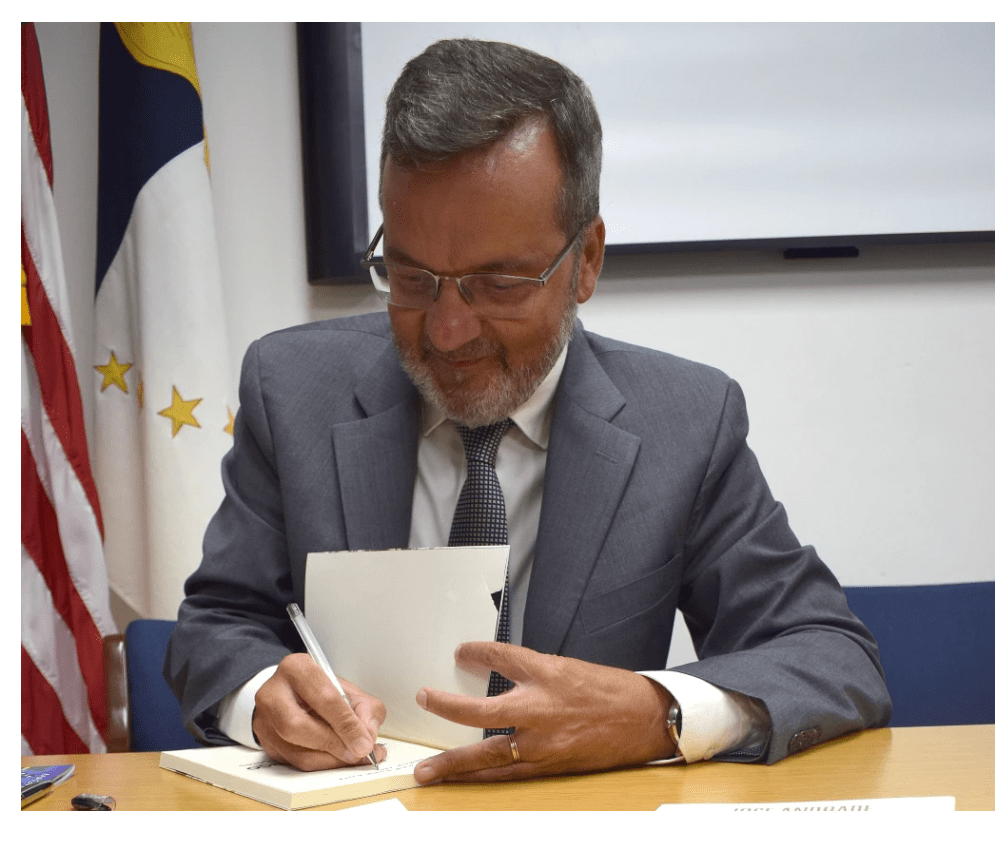
José Andrade is the Regional Director for the Azorean Communities in the Secretariat of Parliamentary Relations and Diaspora of the Regional Government of the Azores.
Translated by Diniz Borges
 Filamentos (artes e letras)