
I’m not sentimental — or at least I like to think I’m not. But more often than I care to admit, my eyes fill with tears at a foolishly tender scene in a film, or an especially intense passage in a book. Or when I see people who seem to need my tears.
That man — his beard coarse and graying, perhaps nearing fifty, perhaps just forty badly worn — made me feel like a comfortable coward with tears in my eyes.
I was heading to breakfast at the Café Central: a crusty roll, orange juice, and coffee. It was Carnival Sunday. He appeared in front of me — ragged, moving slowly, gray pants hanging over dark, dirty sneakers, wavy hair uncombed and unwashed. And the eyes.
A person’s gaze carries something that never lies. If you want to know someone, look into their eyes.
He looked at me with a feverish intensity, and two seconds later turned his gaze toward the Palace of the Captains-General, as if seeing it for the first time. But his eyes were searching for me. In the first second, his look revealed that I might be his salvation. In the second, it revealed fear — and the unbearable shame of having to ask for something.
He unsettled me. He was drained, and I did not know him. His gaze was restless, swollen with anxiety, desperate for a look that would receive his own. I turned away, uncomfortable, fixing my eyes instead on the bakery window where filhós danced behind the glass. I slipped into the café, compulsively averting my gaze from his compulsive one.
Was he an alcoholic? Was he strung out on heroin, in withdrawal? I distracted myself with the bread.
When I came back out, I met that anxious, pleading gaze again. I dodged it with the skittish speed of a hare and walked toward my car, parked near the Prior do Crato square. I felt his eyes sink into my back like a cat’s claws in flesh. It hurt. I kept walking.
Then a trembling, supplicating voice rose from deep within him — from someone who had tried for a long time and failed, who wanted much and could do nothing.
“Sir, wouldn’t you have a euro and a half you could lend me?”
I didn’t. And I told him I didn’t.
He smiled — almost relieved that I had answered him at all. As if apologizing. Like a dog licking the hands of those who kick it. Yes, with that old, humble, ashamed dog’s look, he added with a faint smile, “Nowadays everyone uses a card.” It was all an apology.
I walked to the car. I opened the door. Started the engine. Backed up. Pulled forward. Checked for traffic. Turned. Accelerated. Slowed. Pulled over. Stopped.
I went to the ATM near the little Ginjinha stand by the garden. Withdrew cash. Returned to him near the Aliança café. Placed ten euros in his hand. Asked his forgiveness. Gave him a hug.
Whatever he might use it for, I gave it to him — because from the first second of his gaze, those ten euros already belonged to him. And I had no right to deny ten euros to that look. Nothing more.
I was on my way to celebrate Mass at eleven o’clock in Altares. During that holy drive, his gaze remained embedded in my back, aching like two harpoons. Tears pressed stubbornly at my eyes. And a question lodged in my throat, unable to rise because of the knot there:
Why is it that the dogs we kick come back to lick our hands?
This article was originally published in Diário Insular in the column “Dorsal Atlântica.”
Translated by Diniz Borges
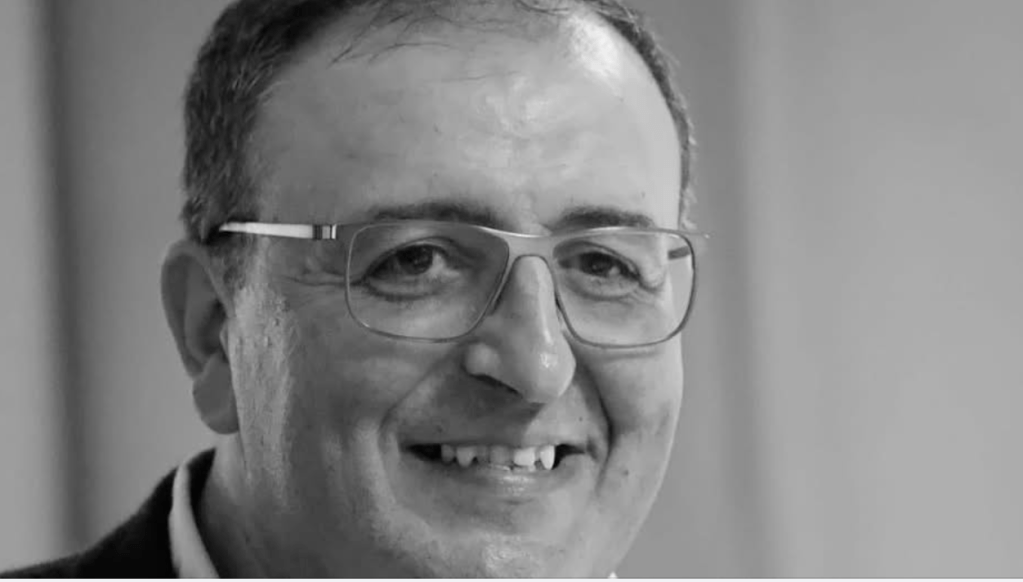
Father José Júlio Rocha is a Catholic Priest on Terceira Island, Azores, who collaborates regularly with the local press.
 Filamentos (artes e letras)