
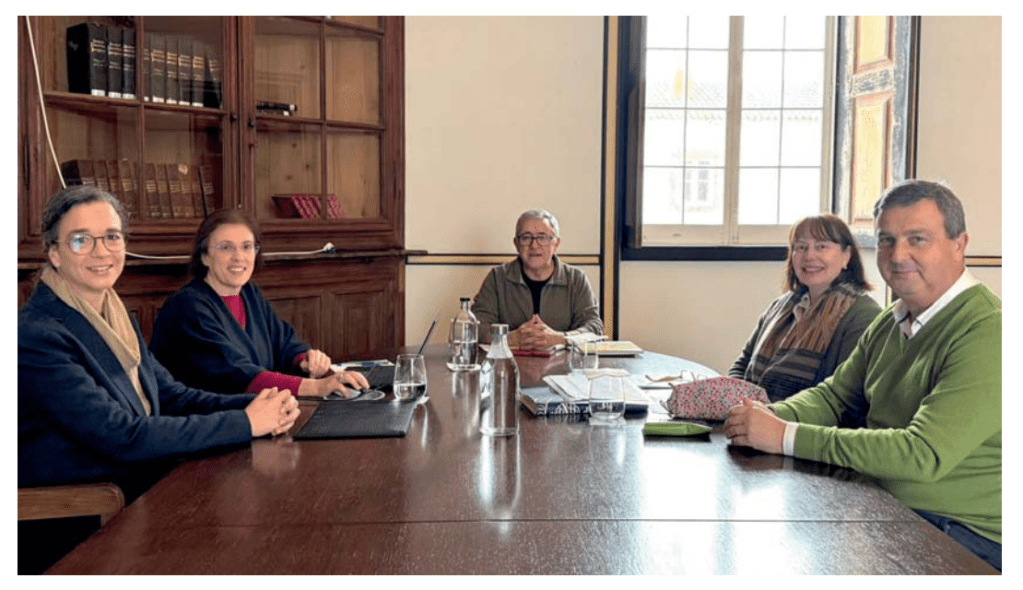
In the quiet architecture of public policy — where culture is shaped not by spectacle but by steady intention — the Regional Secretariat for Education, Culture and Sport of the Azores has once again turned its attention to books. Through the Regional Directorate for Education and Educational Administration, the government has updated the list of works recommended under the Regional Reading Plan for the 2025–2026 academic year, following a recent meeting of the Plan’s Scientific Commission.
This year’s revision carries both breadth and quiet ambition. One hundred and three new titles have been added; seven of them recommended for more than one audience, bringing the total number of new entries to 110. It is not merely an expansion of a catalog but an act of cultural curation — an ongoing conversation between the islands and their young readers.
For students in the school system, 43 new entries were introduced. Six are destined for preschool classrooms, where language is still discovering its rhythm in the mouths of children. Ten titles were selected for the first cycle of basic education, one for the second cycle, four for the third cycle, and twenty-two for secondary education — the age when reading ceases to be instruction and begins to resemble inquiry.
Beyond the school audience, the Commission also approved 67 additional works intended for university students and the general public. The updated list will soon be available on the Education Portal, extending the invitation to teachers, families, and readers across the archipelago.
Implemented in the region in 2011, the Regional Reading Plan was conceived as more than a program. It is a mission — to cultivate the habit of reading, particularly among students in primary and secondary education, and to anchor that habit in a carefully curated list of recommended works. At its heart lies a simple but profound principle: that books shape identity.
The selection privileges works by Azorean authors or those directly engaged with Azorean themes. The criteria are deliberate and exacting. Picture books are chosen for their aesthetic quality, allowing pre-readers and early readers to develop sensitivity, imagination, and intelligence in harmonious balance. Narrative, lyrical, and dramatic works are selected for their progressive complexity and literary value. Classical works of children’s and young adult literature sit alongside stories drawn from traditional heritage. Informational books are evaluated for rigor and suitability for younger audiences, while activity books are included for their capacity to foster functional literacy. Other titles are chosen for their alignment with defined educational projects in school settings.
The list is updated each academic year, drawing on works analyzed and approved by the Scientific Commission and proposed by publishers, authors, and other institutions. It is a process that suggests care rather than haste — a belief that what children read matters enough to merit scrutiny.
To ensure that these books do not remain abstract recommendations, the Regional Directorate annually purchases titles from the list — with special emphasis on new additions — for public school libraries across the islands. Since the 2020–2021 academic year, this effort has represented an investment of approximately €65,000.
In a small Atlantic region where geography once meant distance, the Regional Reading Plan stands as a quiet infrastructure of belonging. Each added title is another thread binding classroom to community, page to place — a reminder that culture is sustained not only through grand gestures, but through the patient turning of pages.
Adapted from a news story in Diário dos Açores, Paulo Viveiros, director.
 Filamentos (artes e letras)