
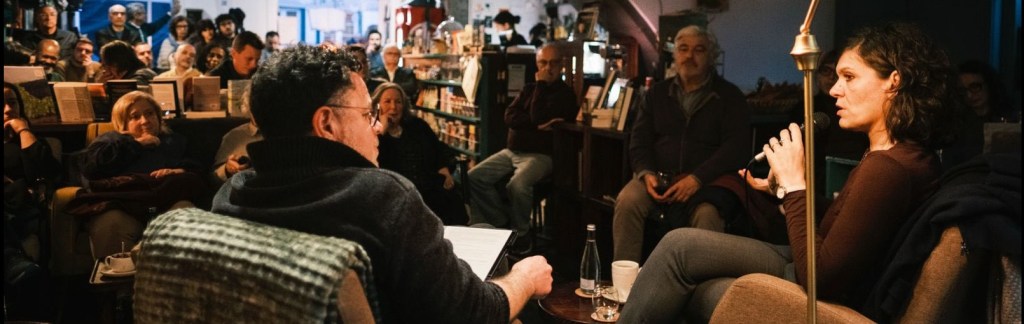
The first edition of the Monte Brasil – International Festival of Literature and History is not yet fully programmed, but it is moving forward, propelled by conviction as much as by logistics. And already, bold ideas are taking shape. One of them would declare Angra do Heroísmo a City of Reading Aloud.
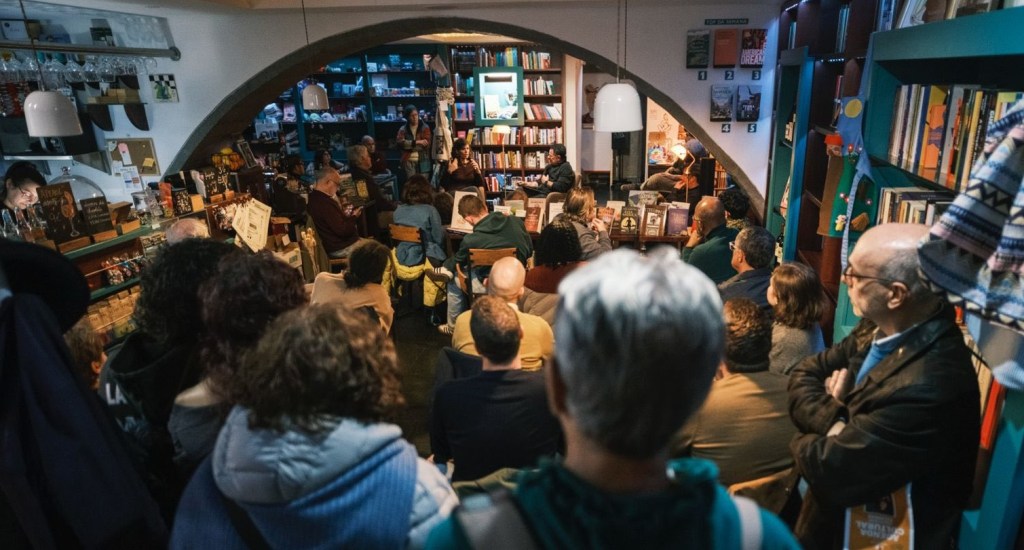
“Angra do Heroísmo is probably the city in the country with the most public readings,” writer Joel Neto said at the festival’s presentation. “On a per capita basis, it’s incomparable. We have readings at city hall, at the museum, at the library, in the schools, here at Lar Doce Livro, and we will soon create one at the Azores Book Hotel. We’re going to federate them and claim for Angra the title of City of Reading Aloud.”
The initiative was born from within the walls of the beloved bookstore Lar Doce Livro. Customers, friends, and staff came together to create Dois Caminhos – Association for the Promotion of the Arts and Culture, with the express purpose of organizing a literature and history festival in Angra do Heroísmo.
“For a long time, we’ve wanted to create, in the orbit of the bookstore, a cultural and literary festival that would allow us to bring in national and international voices,” said Neto, who owns the bookstore and serves as president of the association. “We want to expand Angra’s worldview, while honoring its literary and historical dimensions.”
The festival will unfold in three movements: a season, a residency, and the festival itself.
This year, exceptionally, the residency comes first. Historian and professor Raquel Varela of NOVA University Lisbon is already on Terceira Island, where she will remain through midweek.
At the end of March, the “season” will follow. Though the program is not yet finalized, it is expected to open with a full two-night presentation of journalist Arlindo Gomes’s live radio report from the early hours of April 25, 1964, marking a powerful prelude to the fiftieth anniversary of Portugal’s democratic revolution.
“This first year, we want the festival to revolve around three milestones,” Neto explained. “Fifty years of April, fifty years of autonomy, and six hundred years of the Azores.”
The festival proper is expected to run for 10 days, from late November to early December. National and international writers will headline the event, but local authors will also take center stage.
Waiting on Support
The scale of the festival remains contingent on funding. For now, confirmed support comes from the Municipality of Angra do Heroísmo, along with partnerships from Lar Doce Livro and the Azores Book Hotel.
“We still don’t know how large this can become,” Neto acknowledged. “The funds from the regional cultural support program have yet to be allocated, and we’re awaiting responses to other funding requests.”
There are plans to invite oral storytellers from Portugal and abroad and to establish partnerships around major literary figures such as Fernando Pessoa. Beyond literature and history, the festival aims to include music, painting, theater, crafts, and other artistic expressions.
Guido Teles, vice president of the Angra City Council, praised the initiative but noted the limits of municipal resources. “The city deserves this festival,” he said. “But the municipality does not have a budget capable of supporting all the events the city deserves.” He pointed to what he described as a retrenchment in cultural support from the Regional Government.
Carnaval and Democracy
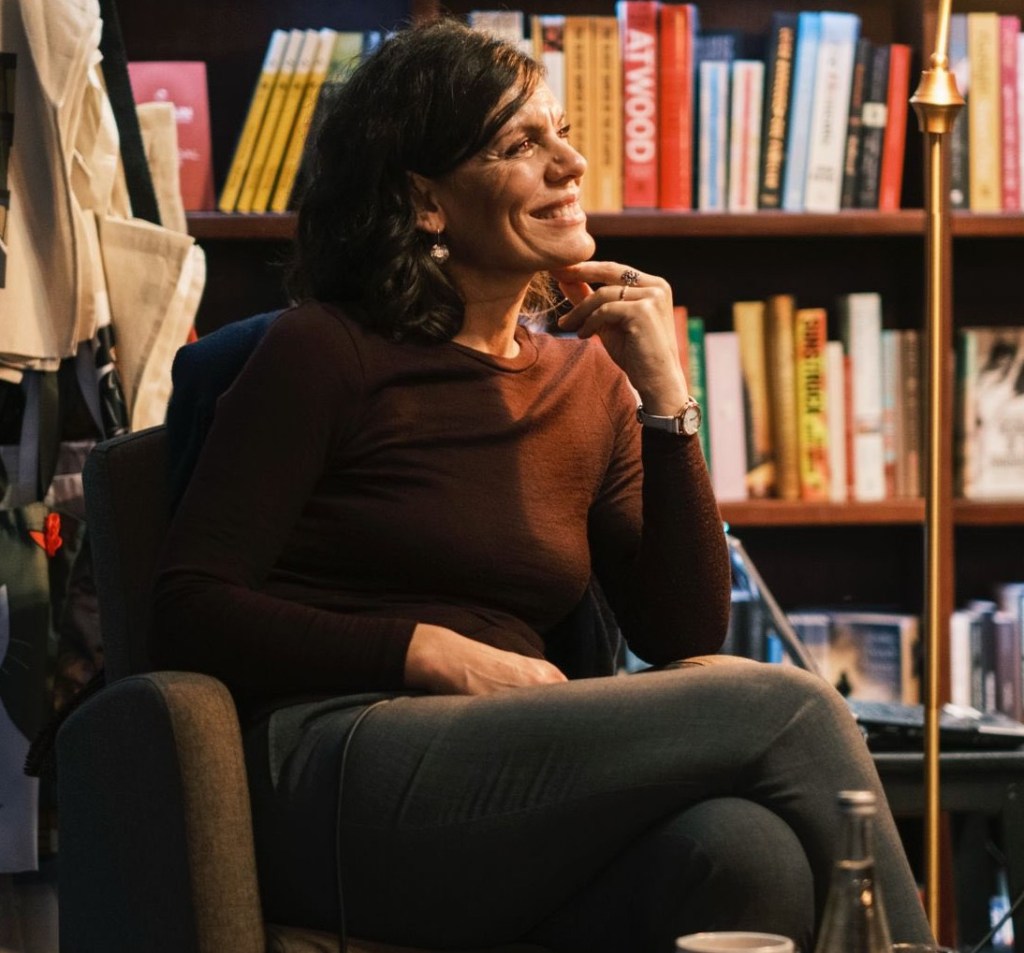
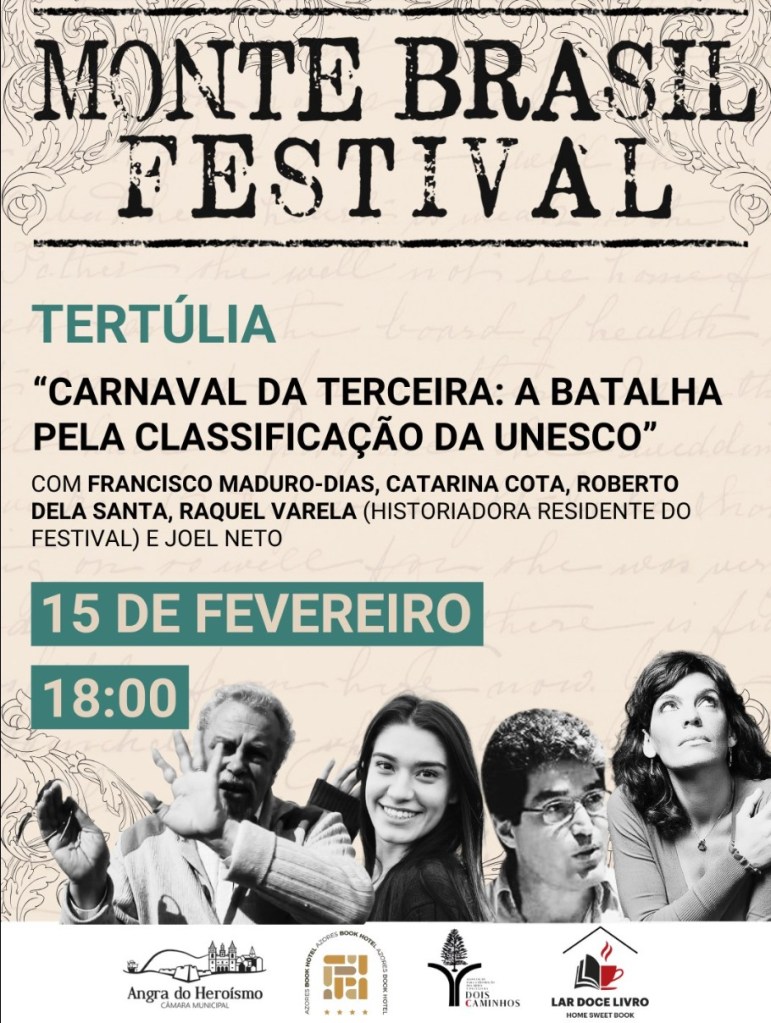
Raquel Varela’s visit to Terceira is also tied to another living tradition: the island’s danças and bailinhos of Carnaval. She will observe the performances and contribute to discussions about whether these unique theatrical expressions should be recognized as Intangible Cultural Heritage of Humanity.
“It is unique in the country and very rare in Europe,” she said.
Varela is also participating in debates and giving lectures to students on fake news and disinformation. “We must teach children and young people how knowledge is constructed,” she argued, “so they can understand how news is built and dare to think for themselves.”
She links the rise of disinformation to the deterioration of working conditions for journalists and teachers and to the weakening of public independence within universities. “Fake news finds easy ground,” she said, “because our public sphere—both in journalism and education—was already fragile.”
For Varela, Portugal faces a “very dangerous” moment, marked by “the rise of a fascist party with parliamentary representation, which is a real threat to democracy.” But other dangers loom as well, including the state’s inability to adequately serve its citizens.
“We must give people the means again,” she insisted. “Democracy cannot be a vote pinned to the lapel every four years. It must be a daily practice. And that daily practice must also be cultural. There can be no separation. Culture cannot be something we do at the end of the day when we have half an hour left over. Culture and work are inseparable from our lives.”
In that sense, the Monte Brasil Festival is more than a literary gathering. It is an argument—quiet but firm—that culture is not ornament, but infrastructure. Not diversion, but democracy itself spoken aloud.
From Diário Insular–pictures from Home-Sweet-Book
 Filamentos (artes e letras)