
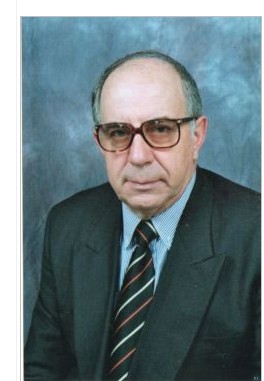
With the passing of António Freitas Rocha Mendes (1938–2026), Azorean popular culture is poorer, and Terceira Island—particularly the parish of Santa Bárbara—loses one of its most devoted guardians. He died at 87, leaving behind not only a body of work but also a living archive of gestures, rhythms, words, and collective memory, patiently carried across generations.
Known in Santa Bárbara as a tireless steward of intangible heritage, António Mendes belonged to that increasingly rare lineage of cultural figures who did not merely study tradition but inhabited it. From an early age, he revealed a precocious talent for verse and dramatic writing. At just 18, he was already shaping the island’s festive imagination, signing his first Carnival sword dance in 1957—an early indication of a lifelong vocation.
His life unfolded as an extended act of cultural service. As conductor of the Santa Bárbara Philharmonic and as master and author of countless Sword Dances, Mendes gave form and continuity to one of Terceira’s most emblematic expressive traditions. His writing—sharp, humorous, attentive to the cadences of everyday speech—became instantly recognizable. Wit, irony, and popular wisdom coexisted naturally in his texts, never condescending, always rooted in the intelligence of the community itself.
In the literary realm, he leaves behind works that now belong to the collective memory of the island. Particularly significant was the 2018 publication of his anthological volume dedicated exclusively to Terceira’s Carnival. Bringing together decades of scripts, verses, and dramatic structures, the book stands as a foundational document for understanding the evolution of sword dances and popular comedies. Presented during the Carnival festivities in his native parish, the volume affirmed António Mendes not only as an author and director, but also as a meticulous historian of Azorean popular arts.
His death creates a silence that will be felt in rehearsal halls, parish stages, and Carnival nights yet to come. But his voice will endure—spoken through the young performers he taught, carried in the rhythms of the dances he shaped, and preserved on the shelves of those who recognize culture as a form of belonging.
The funeral took place in Santa Bárbara, where family, friends, and community offered him a final and heartfelt farewell. António Mendes returns now to the island’s deep memory—where tradition is not static, but alive, spoken, sung, and renewed.
In Diário Insular, José Lourenço — diretor.
 Filamentos (artes e letras)