

The Diário dos Açores, which today marks its 156th anniversary, stands as the oldest daily newspaper in the Azores and one of the most enduring documentary records of Azorean life since the nineteenth century. Published continuously since February 5, 1870, the newspaper has chronicled the daily pulse of the islands, registering both ordinary life and the most consequential political, social, and cultural events shaping the region.
According to Isabel Iva Matos M. Cogumbreiro Garcia, Director of the Public Library and Regional Archive of Ponta Delgada (BPARPD), the Diário dos Açores is among the three most frequently consulted periodicals in the institution’s Reading Room. It is sought primarily by researchers, as many of the reports it publishes “serve as the point of departure for the development of research lines in specific thematic areas,” she notes.
Garcia emphasizes that newspapers must be understood as primary historical sources. They record facts, document projects, and transmit the values embedded in the daily life of a community. In this sense, newspapers function both as the first imprint of history and as its vehicle. Their informational content is fundamental to the construction of collective identity; newspapers are simultaneously reflective of society and formative of it. The preservation and dissemination of newspapers are therefore essential conditions for strengthening a community’s sense of belonging.
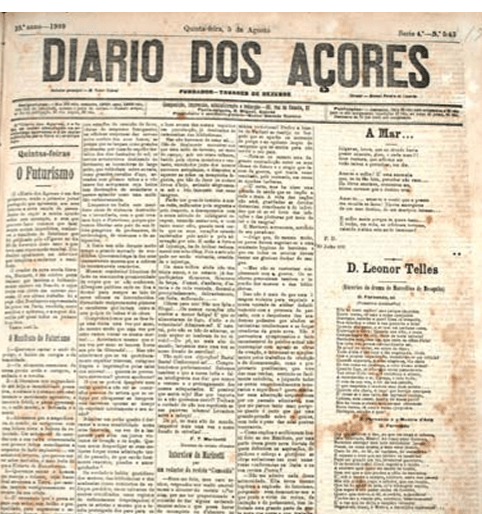
The history and identity of the Azores are reflected in the information carried by newspapers in every era. Although journalistic narratives strive for objectivity, they inevitably mirror the interests and ideologies of the groups that produce them. In the Azores, as in the rest of the world, newspapers contribute decisively to the formation of public opinion, influencing behavior and transmitting values through discourse that shapes readers’ perceptions of reality. For this reason, newspapers constitute an indispensable historical source, allowing scholars to understand not only events themselves but also how those events were interpreted at the time. They often provide access to information that was never recorded in official documentation.
Reading statistics at the BPARPD are recorded globally by document type rather than by individual title. In 2025, for example, 2,080 periodicals were consulted by 612 users. Although consultation statistics for the Diário dos Açores on digital platforms are not available, long-term observation of reader behavior confirms that the newspaper is predominantly used by researchers. Its consultation is particularly valuable for substantiating historical interpretations of local events, and many of the articles published in the Diário dos Açores frequently serve as catalysts for academic inquiry.
Addressing the historical and documentary value of the newspaper, Garcia states that it is “enormous and unavoidable,” owing to the consistency of its daily coverage of events in the Azores, particularly on the island of São Miguel and in the city of Ponta Delgada. The Diário dos Açores represents a unique case within the region. Most other newspapers have had irregular publication schedules—weekly or biweekly—or have experienced interruptions or changes in periodicity over time. Through systematic consultation of this newspaper, it is possible to reconstruct community dynamics and identify the social sensibilities and prevailing trends of each historical period. A substantial portion of historical interpretation and scholarly research is grounded in reports published in the Diário dos Açores, a fact that alone attests to the newspaper’s central importance as a source of knowledge.
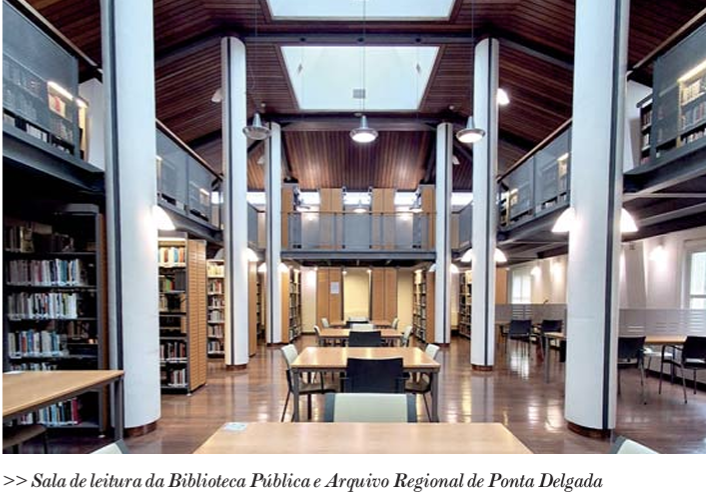
Regarding the scope of the newspaper holdings at the BPARPD, Garcia explains that two of the institution’s seven storage floors are dedicated exclusively to periodicals: one to magazines and one to newspapers. The magazine collection comprises approximately 330 linear meters, while newspapers account for 315 linear meters. The newspaper archive includes 590 titles from diverse geographical origins and publication frequencies. Among them are international titles such as The Scientist and Corriere del Mare. National newspapers are also extensively represented, including Diário de Notícias da Madeira, Diário de Notícias, República, and Expresso.
With respect to Azorean newspapers, the BPARPD holds the majority of titles published since 1835 across nearly all islands. Complete runs of São Miguel–based newspapers are preserved, and the archive also includes newspapers published within the Azorean diaspora. Taken as a whole, Garcia affirms that the newspaper holdings of the BPARPD constitute one of the richest and most comprehensive journalistic collections in the Azores and in Portugal.
Private collections play a crucial role in this documentary heritage. According to Garcia, the private collections held by the BPARPD mirror Azorean society, particularly that of São Miguel. Through these collections, it is possible to reconstruct the values, intellectual currents, and cultural tendencies of different periods. Books and newspapers that belonged to prominent figures allow researchers to apprehend the intellectual spirit and preferences of their time. Among the most significant collections are those of the Canto brothers, Teófilo Braga, João Maria de Aguiar, Antero de Quental, Armando Cortes-Rodrigues, Natália Correia, and Mota Amaral. Some of these collections contain rare newspaper issues that complement and enrich the general holdings. The collections of Teófilo Braga and José Bruno Tavares Carreiro, as well as the Miscelâneas of the Canto brothers, preserve unified sets of essential periodicals fundamental to the study of Azorean history.
Researchers consulting older editions of newspapers most frequently seek information related to historical events on the island of São Miguel and in the cities of Ponta Delgada and Ribeira Grande; institutional histories; political and economic developments; and biographical data on prominent regional figures.
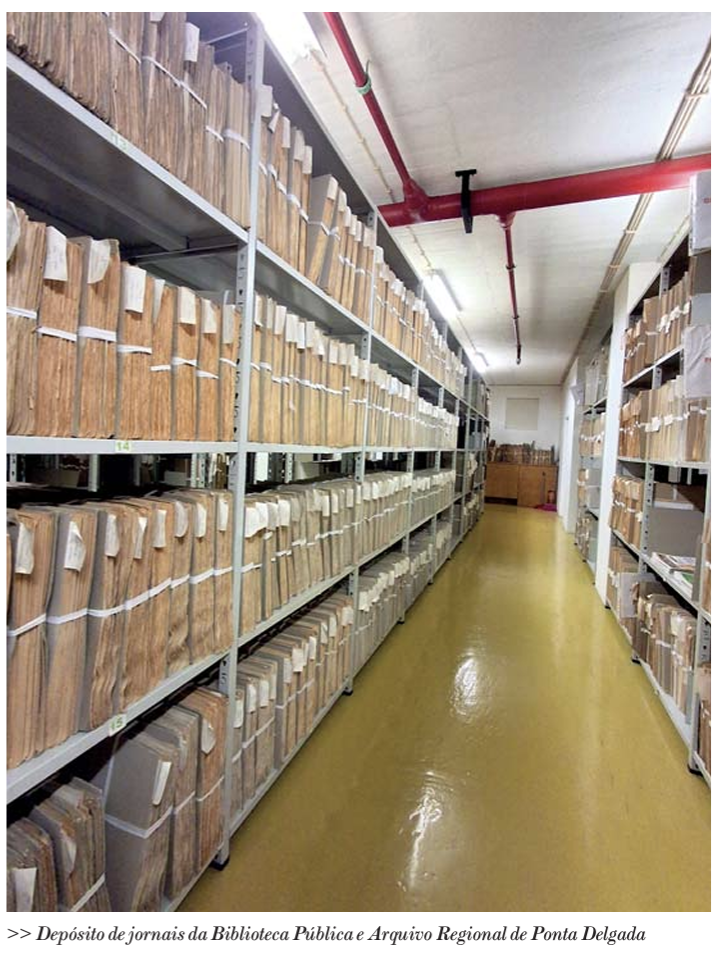
Garcia also addresses the challenges inherent in preserving newspapers in paper format. Paper remains one of the most reliable supports for information, as it does not require technological mediation for reading and can remain accessible for long periods when properly preserved. However, paper preservation requires stable environmental conditions, including controlled humidity and temperature, appropriate storage to prevent structural deformation, the absence of metallic fasteners, regular pest control, and limited exposure to light. In her view, lack of space, insufficient preservation knowledge, and limited financial resources constitute the greatest obstacles to safeguarding paper newspapers.
Digitization, Garcia argues, is essential for two fundamental reasons: it expands access and preserves the original material. Digitized newspapers—especially those that allow optical character recognition (OCR) and full-text searching—enable broader and more efficient research, even if they sometimes generate excess information. Remote access democratizes consultation, allowing newspapers to be accessed anytime and anywhere. Moreover, reducing physical handling of original newspapers prolongs their lifespan while improving readability for users.
The BPARPD’s digitization plan prioritizes newspapers most affected by physical deterioration, followed by those most frequently consulted. Selected titles undergo conservation and restoration processes before digitization, image enhancement, metadata integration, and local access. In parallel, under the Digital Autonomy project, a significant number of periodicals from the BPARPD collection have been digitized and are available for local consultation through the ROD (Digital Objects Repository) and the Azoreana website.
For researchers and general readers alike, digital formats offer multiple advantages, including adaptable reading interfaces, rapid content reproduction, and unrestricted access via computers or mobile devices. These features promote the democratization of culture and ensure broader freedom of access to information.
Garcia concludes with a message of pride and hope regarding Azorean journalistic heritage. She underscores the immeasurable cultural value of Azorean newspapers and calls for continued encouragement and support for regional journalism. Newspapers, she affirms, are the guarantors of the Azores’ collective memory and the preservation of regional identity. As mirrors of the community, they must be understood as a collective investment in the future.
From Correio dos Açores.
 Filamentos (artes e letras)