
Body, Soul, Azoreanity, and Universality in Do Corpo e da Alma-Body and Soul
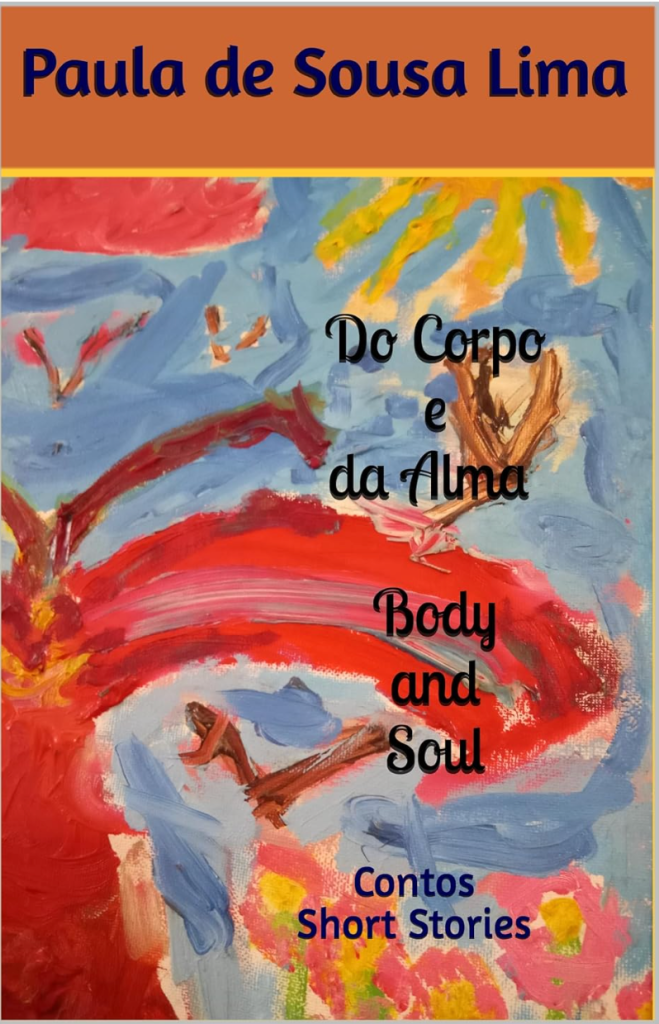
Some books advance by narrative accumulation; others, rarer and more exacting, organize themselves by an inner logic of attention. Do Corpo e da Alma (Body and Soul, translated by Avelina da Silveria) by Paula de Sousa Lima, belongs to this second order. It is not a collection driven by plot or dramatic escalation, but by a shared respiration—an ethical and perceptual unity that binds its texts into an interior archipelago. What links these narratives is less continuity than coherence: a sustained inquiry into how body and soul inhabit a space defined by limit, repetition, and inwardness.
The islands, here, are not merely a geographic setting. They function as a condition of perception. Insularity shapes not only the physical world of these texts, but the way consciousness moves within them. Space is experienced as bounded, time as dense, and interiority as necessity rather than retreat. The writing proceeds from this condition with quiet assurance, never announcing its themes, never forcing symbolic weight. Meaning emerges gradually, through proximity and attention.
Paula de Sousa Lima’s prose is marked by a notable clarity. The language is sober, precise, and rigorously controlled. There is no rhetorical excess, no reliance on emotional display. Each sentence seems to know exactly what it must carry—and no more. This restraint does not diminish intensity; it sharpens it. The effect is a prose that trusts silence as much as statement, implication as much as articulation. The reader is invited not to consume meaning, but to inhabit it.
What distinguishes these texts is their fidelity to the ordinary. Small gestures, pauses, moments of observation—these are the materials from which the narratives are constructed. Action is minimal, but awareness is acute. The drama, when it occurs, is internal and ethical rather than event-driven. This is writing attentive to the slow pressure of time, to the quiet negotiations between self and world, to the subtle ways in which identity is shaped by place.
Azoreanity is present throughout, but never as a declared subject. It appears instead as rhythm: in the pacing of the prose, in the acceptance of slowness, in the sustained attention to limits—geographical, emotional, existential. The islands are neither idealized nor lamented. They are understood as formative, as spaces that require reflection and reward patience. Interior life, in this context, is not an escape from the world, but a response to its intensity within confined borders.
Although deeply rooted in a specific geography, the writing does not collapse into localism. On the contrary, its commitment to the concrete is precisely what allows it to open outward. By remaining faithful to bodies, silences, and lived spaces, the prose reaches a form of universality that does not depend on abstraction. The human experience articulated here—of waiting, observing, enduring, and thinking—is immediately recognizable beyond the islands that shape it.
This quality situates Paula de Sousa Lima’s work within a broader transatlantic and translinguistic tradition of ethical realism: writing that locates meaning not in spectacle, but in attention; not in revelation, but in sustained looking. It is a tradition that values clarity over flourish and understanding over display—one in which the writer’s task is not to impress, but to see accurately.
The bilingual nature of this edition is therefore essential, not incidental. Translation here is not a supplement but an extension of the book’s ethical project. The English version preserves the cadence, restraint, and silences of the original, confirming that literary identity is not diminished by translation when the work is approached with care and intelligence. Instead, it expands—entering new circuits of reading without losing its center. A most amazing translation by poet and novelist, Avelina da Silveira.
Taken as a whole, Do Corpo e da Alma (Body and Soul) is a work of aesthetic maturity and moral clarity. It does not seek to astonish. It seeks to remain. Its power lies in its patience, its exactness, and its refusal of excess. The islands it evokes are not peripheral spaces, but centers of gravity—places where body and soul are brought into careful alignment, and where literature fulfills one of its most demanding functions: to make the invisible quietly legible.
Diniz Borges
You can order the book in North America through Amazon, both in print and as an e-book.
 Filamentos (artes e letras)