The Mayor of Ponta Delgada, Pedro Nascimento Cabral, said on Thursday that “Ponta Delgada 26 affirms that culture is not a closed past, but a future under construction,” stressing that the city’s designation as Portuguese Capital of Culture represents a “lasting commitment to identity, autonomy, and the cultural projection of the municipality.”
“Today we are recognizing the living history that is our identity—one that is born of the nature that surrounds and shapes us: volcanic earth, the intense green of the landscape, the deep blue of the ocean, the mist that sharpens rather than dulls our gaze and inspires artists, artisans, musicians, writers, and creators,” the mayor said.
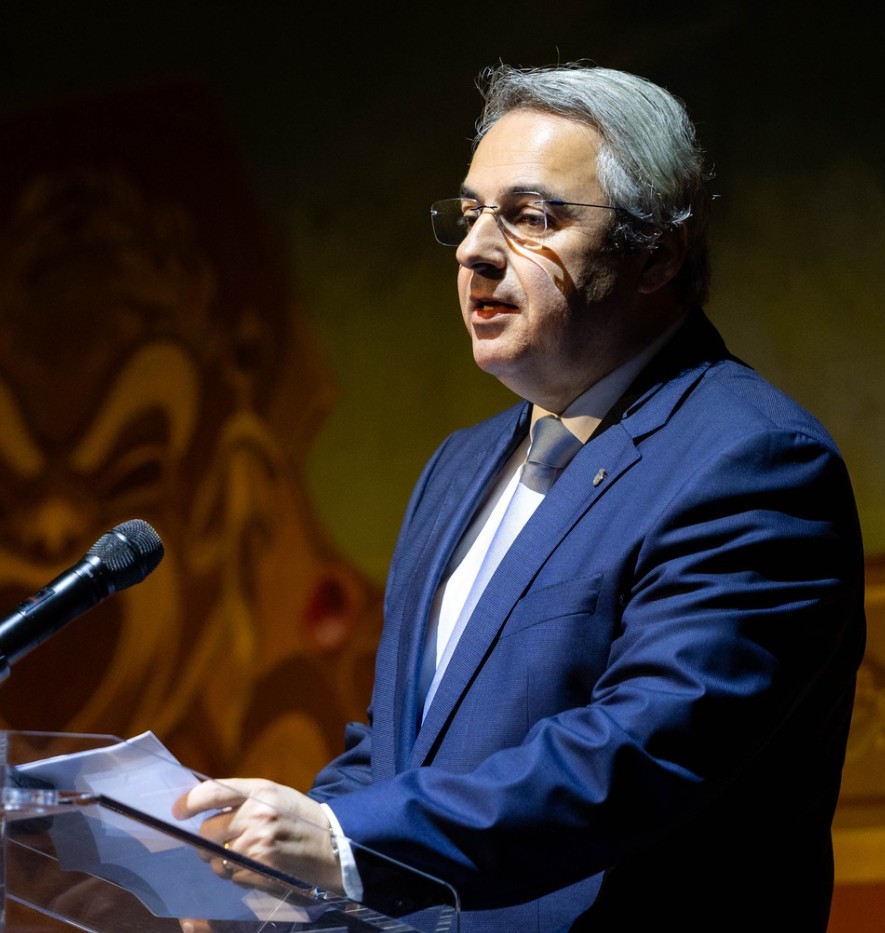
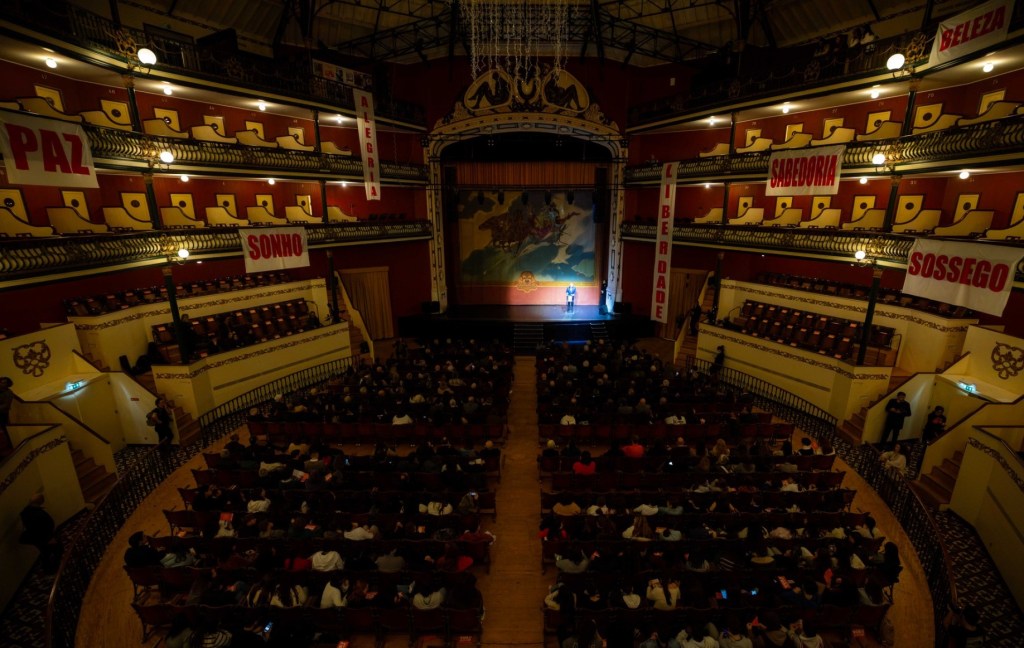
Cabral was speaking at the official opening ceremony of Ponta Delgada 2026 – Capital Portuguesa da Cultura, held at the Coliseu Micaelense, in a solemn session marked by strong symbolic, historical, and institutional significance.
In his address, the mayor emphasized that the launch of the project carries “heightened significance” because it coincides with the 50th anniversary of the Azores’ political and administrative autonomy being enshrined in the Portuguese Constitution. “Beyond the symbolism of the date,” he said, “this is recognition of a centuries-old claim—one that affirms culture as an autonomous pillar powering our progress.”
“Ponta Delgada 26 is, for us, an achievement that elevates our comprehensive commitment to every dimension of development—by honoring age-old traditions that illuminate the history of the municipality, the Region, and above all, the people of the Azores,” he added.
Presenting PDL26 as “a space where multiple voices, expressions, and sensibilities converge,” Cabral explained that “it is an ideology that places us in tomorrow—a place where tradition and contemporaneity converse naturally,” advocating for a living, participatory, and transformative culture.
The mayor also underscored the initiative’s civic and humanist dimension, noting that it “raises the banners of freedom, tolerance, and irreverence—rejecting conformity and calling forth critical thinking, creativity, and civic courage,” a clear statement of culture as a driver of active citizenship.
“Here, insularity is not a limit, but a catalyst,” he concluded, framing PDL26 as a lasting symbol of the legacy intended for future generations: “the expression of deep pride in our culture and a firm awareness of our identity, grounded in the construction of a Portugal that is also made here.”
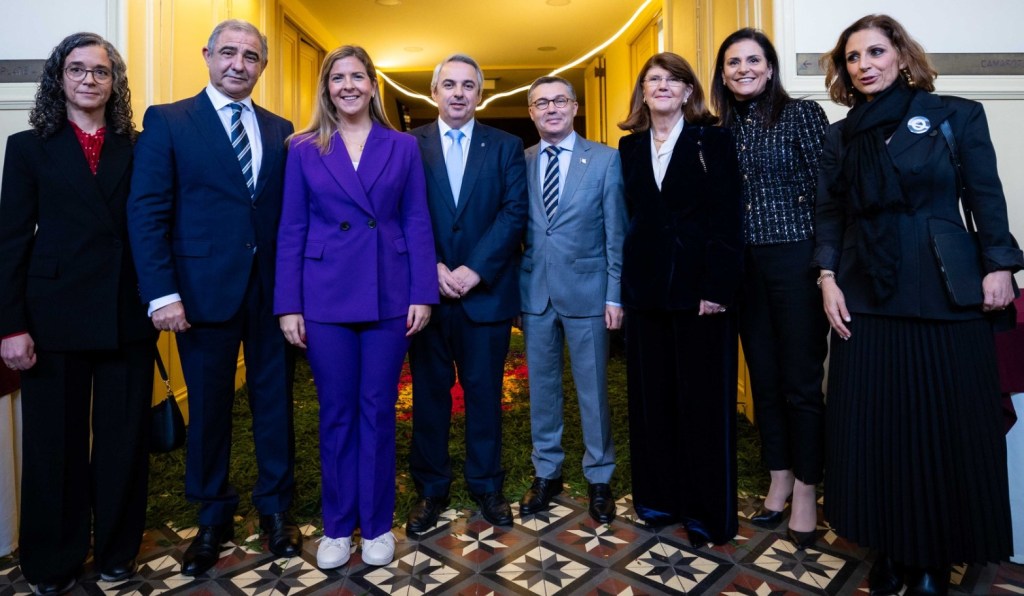
The ceremony was led by the PDL26 Commissioner, Katia Guerreiro, and featured institutional remarks by the Minister of Culture, Margarida Balseiro Lopes; the President of the Regional Government of the Azores, José Manuel Bolieiro; and the President of the Legislative Assembly of the Autonomous Region of the Azores, Luís Garcia.
Students from several local schools were also in attendance, reinforcing the project’s engagement of the educational community and younger generations.
The evening concluded with the performance Deixa Passar a Vida, with artistic direction by António Pedro Lopes, musical direction by Marco Torre, and appearances by acclaimed Azorean musicians Zeca Medeiros and Rafael Carvalho. Conceived around the poem Ode à Paz by Natália Correia, the performance gave artistic form to the humanist and universal spirit inspiring Portugal’s Capital of Culture.
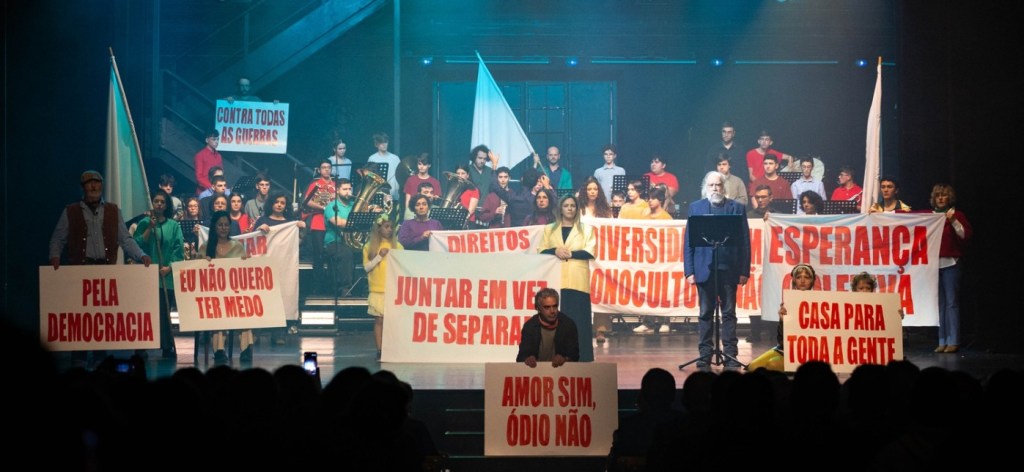
From Press release–Photos from the Municipality of Ponta Delgada.
 Filamentos (artes e letras)