
Where islands dream, and stories cross oceans.
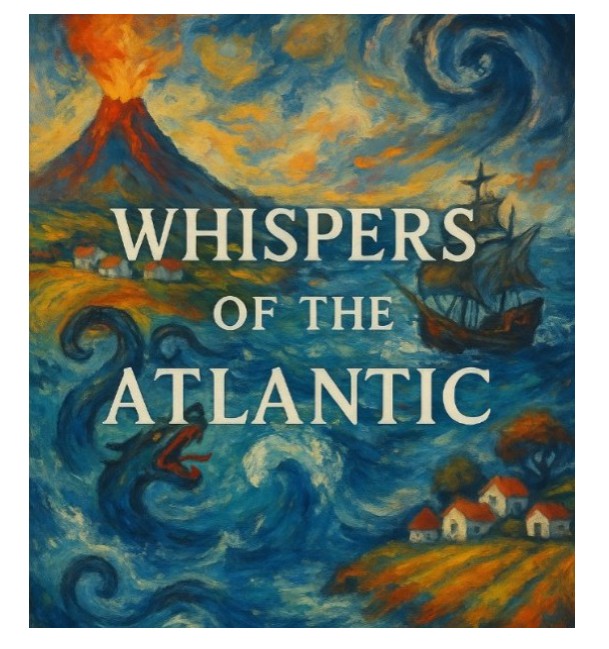
A Legend of Fire, Faith, and Mercy
Many centuries ago, the people of the island had fallen into grave neglect of one another. Quarrels erupted over the smallest matters, abuses were commonplace, and neighbor turned against neighbor. From the pulpits, priests preached penitence and humility, warning that divine punishment would surely come. Yet the people did not change their ways and persisted in discord and cruelty toward one another.
On May 1, 1808, the earth itself began to tremble. Violent earthquakes shook the entire island, and from the summit of the island’s central mountain range a great eruption broke forth. Ash and lava poured down from the heights, terrifying the inhabitants of the lowlands, who watched the incandescent flow advancing toward them. “The punishment for sin has arrived,” cried the priests from their altars, echoed by the faithful in the streets.
According to legend, the eruption occurred near the village of Santo António, in the vicinity of Pico da Esperança. Burning stones were hurled high into the air, and a slow, torrid, and powerful river of lava flowed down the volcano, following a ravine toward the sea.
In the villages, many people wept and prayed, helpless before the violence of nature. Others, disoriented and frantic, ran back and forth in a futile search for shelter. Then a Franciscan friar—known among the people by the nickname “Malagueta,” and serving as guardian of the convent and of the secular clergy—conceived an act born of faith. He proposed that everyone set out in procession, praying fervently to God to bring the eruption to an end. With them they carried the Crown of the Holy Spirit from one of the Impérios of the town of Velas, walking within a symbolic enclosure formed by the staffs of the Holy Spirit.
They proceeded through the streets of Santo António, whose houses lay directly in the path of the lava. Drawing as close as they dared to the slow, viscous flow, they cast the staffs of the Holy Spirit upon the ground, arranging them to form a line—a path they implored the lava to follow, one that would lead it safely to the sea.
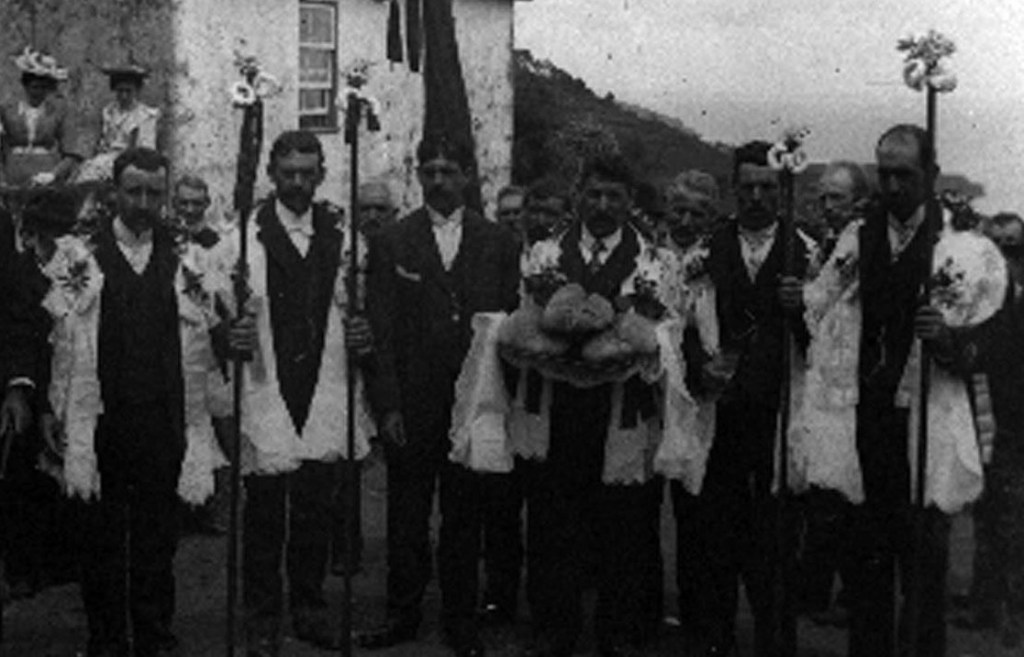
Their faith was so great that, soon after, the river of lava began to change its course, turning toward the ocean and following the very path traced by the staffs of the Holy Spirit. The people, still in tears and trembling with fear and awe, began to give thanks to the Divine Holy Spirit. They made many vows in gratitude for having been spared from the fire.
Thus, the legend tells us, began the custom of founding new Impérios and of distributing generous alms to the poor during the feasts of the Holy Spirit—a tradition born from terror transformed into mercy, and from destruction reshaped into communal care.
The Legend of the Staffs of the Holy Spirit is an oral tradition from the island of São Jorge, in the Azores. It speaks to the people’s belief in divine forces, portraying God as both protector and master of nature’s powers—yet also as a presence who, moved by the community’s supplications, may alter His will and redirect the manifestations of the natural world.
Whispers of the Atlantic: Legends from the Azores
Vision Statement
To preserve, translate, and reimagine the legendary heritage of the Azores as a cultural bridge across oceans—connecting generations, honoring the voices of the ancestors, and ensuring that these stories remain vibrant for the future of the diaspora and the world.
Mission Statement
Through the Whispers of the Atlantic series, Bruma Publications and Filamentos are committed to:
- Collecting and translating Azorean folktales, myths, and legends with literary fidelity and poetic resonance.
- Sharing these stories with English-speaking readers in North America and beyond fosters cultural pride and cross-cultural dialogue.
- Preserving centuries-old oral traditions as living cultural treasures, not museum relics.
- Inspiring new generations of writers, artists, and dreamers to draw from Azorean heritage in building bridges across languages, cultures, and oceans.
 Filamentos (artes e letras)