
“Where Islands Speak Through Art and History – From the Heart of the Azores to the Diaspora”
Azorean Institute of Culture: A Pillar of Thought, Memory, and Contemporary Reflection
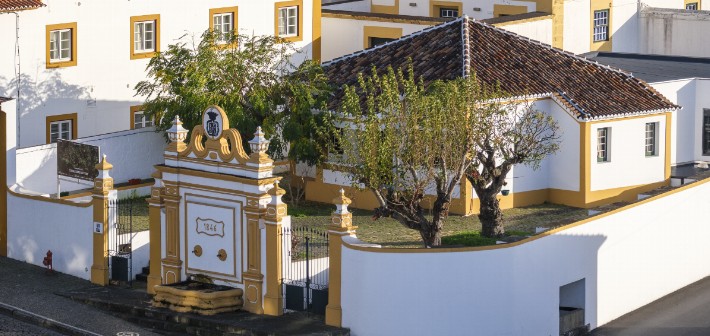
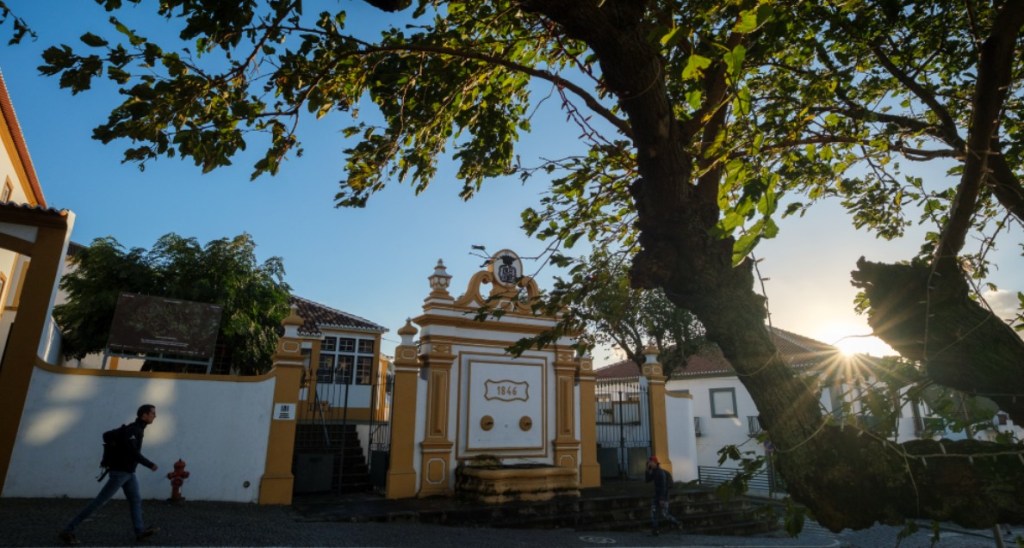
The Instituto Açoriano de Cultura (IAC) is a non-profit cultural association founded on May 23, 1955, by a group of professors from the Seminary of Angra, guided from the outset by a humanist and universalist vision. Based in Angra do Heroísmo, and later declared a Public Utility Institution by the Regional Government of the Azores, the IAC has, for seven decades, played a central role in shaping the cultural and intellectual landscape of the archipelago.
Throughout its history, the Institute has promoted initiatives of major cultural and scientific impact, establishing itself as a space for cultural production, mediation, and dissemination. One of its most influential contributions came in the 1960s with the Study Weeks—a series of encounters held initially between 1961 and 1966 in the three former district capitals—that brought together thinkers, scholars, artists, and members of civil society to reflect on Azorean identity, culture, and development. These forums quickly became key sites of critical debate, fostering a collective awareness of the challenges and possibilities of island life and laying intellectual groundwork that many regard as foundational to the Azorean autonomy process.
Over the decades, the Study Weeks addressed a wide range of themes, including intellectual life, unity and responsibility, knowledge, insular development, society and change, the January 1, 1980 earthquake, autonomy as a cultural and political phenomenon, the Azores in world contexts, built heritage and new technologies, and military architecture. After a hiatus of roughly two decades, the IAC revived the Study Weeks in 2021, at a moment when the Region was approaching the 50th anniversary of Autonomy (2026). Recent editions focused on Autonomy (2021) and the Sea as an unlimited frontier (2022). The XVII Study Week, scheduled for February and March 2026, will address the theme of “E/I/Migrations,” adopting a plural, decentralized approach across three Azorean islands.
Beyond these landmark gatherings, the IAC’s work extends across multiple cultural fields: publishing reference works, organizing contemporary art exhibitions, fostering scientific and philosophical debate, and preserving both tangible and intangible heritage. Flagship projects such as the Inventory of Built Heritage of the Azores and the two-volume History of the Azores exemplify its long-term contribution to documenting and valuing Azorean cultural heritage.
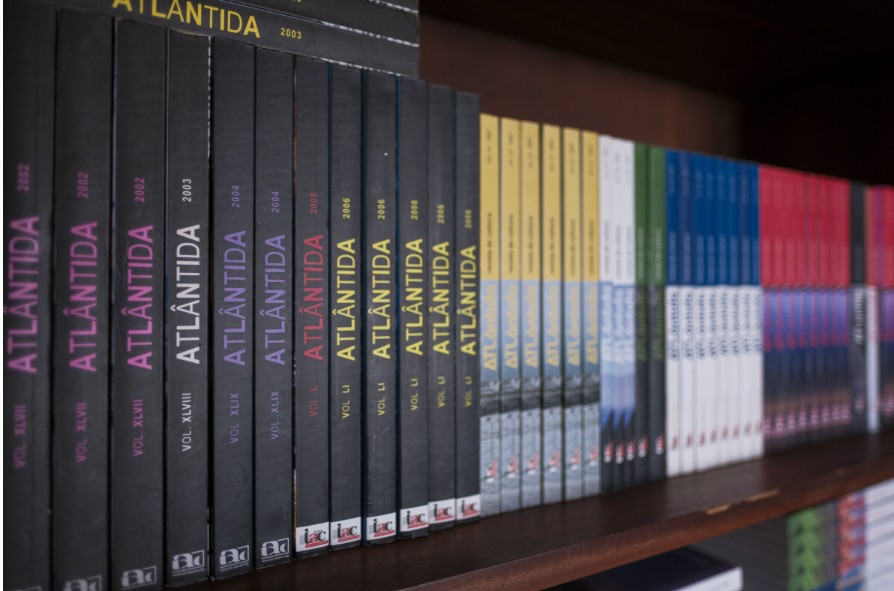
A cornerstone of the Institute’s activity is Atlântida, its cultural journal published without interruption since 1956 and widely regarded as one of the most prestigious cultural publications in the Azores. Issued annually and organized around thematic dossiers, Atlântida brings together contributions from regional, national, and international authors across disciplines ranging from literature and the arts to history, political science, and ecology. Recent themes have included Utopias and Dystopias (2021), The Sea (2022), Communities (2023), and Landscapes (2024). Carefully edited and richly illustrated, the journal has become both a forum for contemporary reflection and a repository of Azorean cultural memory, publishing seminal texts by figures such as Vitorino Nemésio, Natália Correia, Urbano Bettencourt, and Álamo Oliveira.
Editorial activity more broadly constitutes one of the IAC’s central missions. Since its founding, the Institute has published dozens of titles in history, literature, sociology, art, philosophy, and political thought, through collections such as Biblioteca Açoriana, Ensaios Atlânticos, Cadernos de Ciências Sociais, and Coleção Poesia, in addition to Atlântida. This sustained editorial effort has built a reference bibliographic corpus on the Azores, serving scholars, students, and the general public, while also preserving cultural memory and encouraging critical thought.
Launched in 2019, the Poetry Collection exemplifies this commitment. Dedicated to poets of recognized merit whose work has often remained under-acknowledged, the collection has published five carefully edited volumes to date, each with critical introductions and distinctive graphic design inspired by maritime imagery. Titles include collected works by Pedro da Silveira, Mário Machado Fraião, Marcolino Candeias, J. H. Borges Martins, and Madalena Férin, reaffirming the Institute’s role in safeguarding and renewing Azorean poetic voices.
Over time, the IAC has been led by four presidents—José Machado Lourenço, Augusto Manuel Arruda Cabral, José Guilherme Reis Leite, and Jorge Augusto Paulus Bruno—and has continually adapted its mission to new challenges. In recent years, it has expanded its reach beyond Terceira Island to the entire archipelago, embracing contemporaneity as a guiding axis while maintaining a strong commitment to Azorean specificity. As its long-time president has noted, the Institute continues to define itself not merely as an institute of Azorean culture, but as an Azorean institute of culture—one rooted in the islands yet open to the world, committed to memory, creation, and the shared circulation of knowledge.
From Enciclopéda Açoriana and IAC’s website.
https://iac-azores.org/o-iac/apresentacao
https://www.culturacores.azores.gov.pt/ea/pesquisa/Default.aspx?id=7718
 Filamentos (artes e letras)