
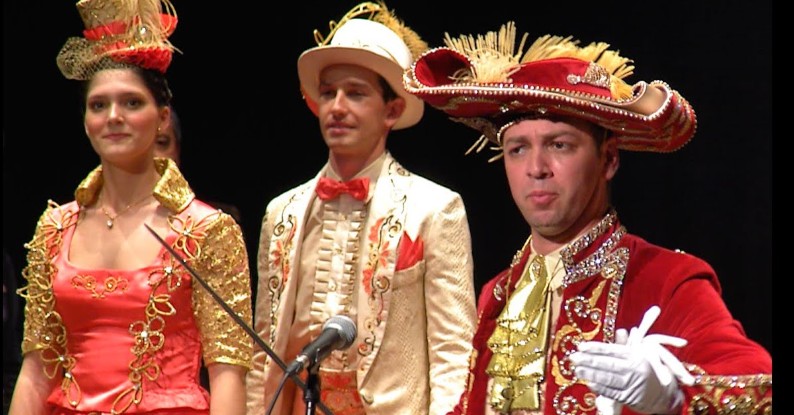
This year, the Dança de Espada of Lajes will take to stages in Canada and along the U.S. East Coast before returning to perform at Carnaval on Terceira Island. How did this opportunity come about, and how is the preparation going?
We’re bringing a two-year process to a close. In 2024, we decided to take on this second project, especially since we had already traveled to emigrant communities in 2018—specifically, California and the U.S. East Coast. This time, we begin in Canada and then move on to the East Coast. It’s a major undertaking, given the scale of bringing a cultural project involving 45 people to emigrant communities. So far, judging by the preparations, everything is going very well. We’ve been warmly received by both communities. We have two people there—Roger Mendes and Tony Gouveia—who have been indispensable, our right hands on the ground. The performances are organized. Now it’s rehearse, rehearse, rehearse, so that on the 29th we can depart for Canada. We’ll be in Canada from January 29 to February 4. Then we’ll travel by bus to Boston and stay there from February 4 to 11. On the 11th, we return to Terceira to perform Carnaval at home. This is a brand-new dance, created from scratch. Some people ask whether we’re taking the 2025 dance. No—we’re taking an entirely new one. Four performances are planned in Canada and eight in the United States.
What draws you back to emigrant communities? What stood out in the first experience that made you want to return?
What led us there the first time were the emigrant communities themselves—especially through our families—who encouraged this kind of journey and allowed us to see how Carnaval is organized abroad. For us, it was an honor. It was a way to recognize and pay tribute to the work they do, knowing they are also guardians of our traditions. Now, years later, we decided to return because back then, we had hoped to include Canada as well, but logistical and time constraints made it impossible. The promise lingered—to one day go to Canada.
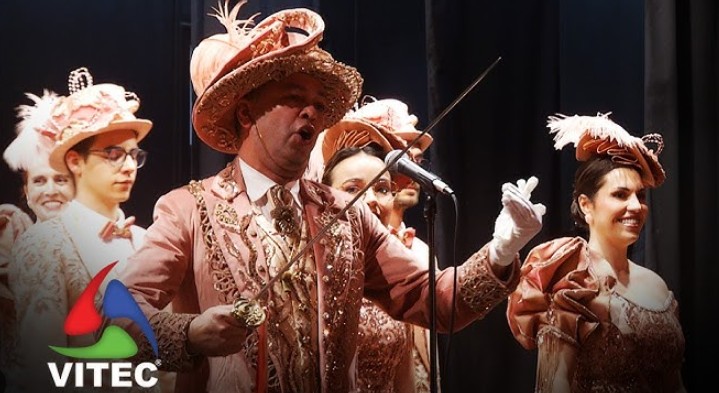
How do emigrants receive Terceira’s Carnaval dances? Do they value our traditions more?
With today’s audiovisual media, people can access Carnaval at any time. But the difference between seeing a performance live and watching it on television is immense. That’s what we’re offering there: the chance for our emigrants to witness, in loco, a cultural expression in which they themselves were pioneers. We’ll meet many people who carried these traditions with them and kept them alive, and we’ll also see their children continuing that legacy—one of our collaborators is a case in point. And there’s a reunion aspect, too; we have family there. Much like what will happen here, since we’ll also be welcoming a Dança de Espada group from California. Their coming here is a stimulus, a renewal of what they do, and an act of sharing. They have Carnaval organized in California, on the East Coast, and in Canada—but once this tradition travels beyond borders, it becomes a shared space. It’s an encounter that ensures neither side loses; instead, both are enriched.
Is Carnaval still alive in these communities? Do the second and third generations ensure its continuity?
Second and third generations do carry it forward, but—much like here—they face challenges. We struggle with volunteerism, with institutions, with organizations; they do too. Many of those now managing community halls no longer have roots in the Azores or even on Terceira. They aren’t as attuned to these traditions. The groups themselves face difficulties. Although oral tradition persists, some families no longer visit the Azores as often, and others don’t pass Portuguese on to their children. Some Carnaval dances abroad are no longer performed only by people from Terceira; they include participants from Graciosa, São Jorge, and the mainland. The tradition has spread and taken root there—it’s no longer exclusively Terceiran. Despite the obstacles, they maintain it—not with the same prominence it had in the early decades of emigration, but it endures. They have an organized Carnival, yet the stages on Terceira are always different.
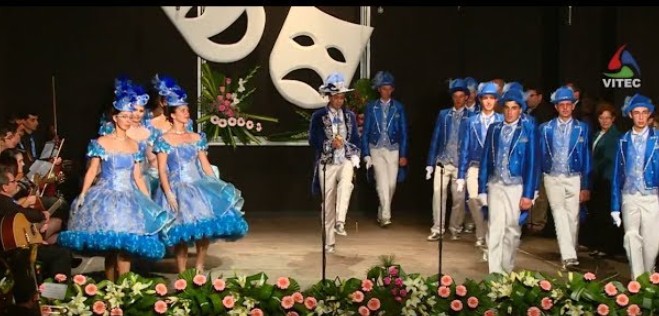
Are the sword dances-danças de espada- still at risk on Terceira Island?
Very much so. Sword dances are at serious risk, and the pandeiro dances are heading in the same direction. The Carnaval danças de pandeiro are also in danger. You already hear far fewer pandeiros being played on the island.
What can be done to reverse this trend?
I don’t think there’s much that can be done. The resources exist—the musicians, the people—but it’s a matter of collective identification. Perhaps society no longer identifies as strongly with the sword dance, no longer feels the same need for this kind of theater, which appeals more directly to emotion. It’s a form that involves a high level of musical and choreographic spectacle, very different from a bailinho. Ultimately, it comes down to the people. If people don’t feel the need, they don’t organize. In our case, people enjoy watching us and seek us out, but beyond that, they don’t feel compelled to organize themselves. Organization happens sporadically. Two years ago, there was a dance in Porto Judeu; the Dança de Espada da Sé has worked to promote this tradition. Beyond that, we haven’t seen widespread interest. By contrast, Carnival itself remains alive and well. Some groups won’t perform bailinhos this year, but new ones have emerged. It’s a matter of cycles, of fashions. Carnaval absorbs a bit of that ebb and flow—and perhaps one day the need for sword dances will return.
From Diário Insular, José Lourenço-director.
For the next three weeks, Filaentos will present various segments on the Carnaval, Terceira Island Style, as an important part of the island’s popular traditions and its role as a truly unique amateur theater festival.
 Filamentos (artes e letras)