
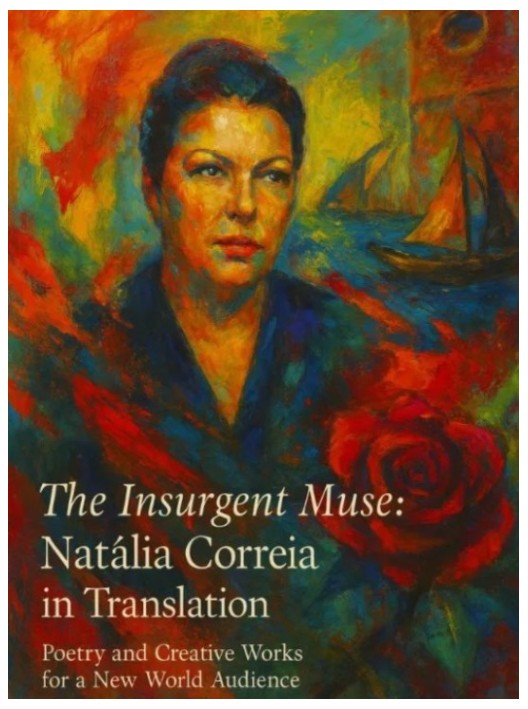
The Poet and the World
Poetry as Impatience
(1968)
Of the differences that may be drawn between philosophical thought and poetic thinking, perhaps the most decisive lies in the antithesis between philosophical patience and poetic impatience. This divergence arises from the position of the human being before wisdom itself.
The philosopher relates to wisdom through friendship—through a relational bond grounded in a masculine posture of penetration and discovery, from which categorical, hypothetical, and disjunctive judgments arise. The poet, by contrast, is a sophist—not in the later pejorative sense, but in the pre-Platonic meaning of one who disseminates wisdom, who forms superior human beings. That is to say, the poet assumes wisdom in an absolute act, surrendering to it through a feminine mode of belief.
The consequence of this choice is the rejection of what philosophy maintains: the subordination of existence to thought. Poetry, in its sophic quality, commits itself instead to an ontological deepening that allows existence to stand independent of thought.
“I think, therefore I am” becomes, for the poetic mind, an obstacle to the freest and fullest act of imagination. For reality is not encompassed by reason—which limits it through doubt—but is instead offered to the imagination, which configures that which, being imaginable, is real.
Thus, poetry is practiced as a belief within a broader field of human availability—one that includes the ultraconscious and what lies beyond thought itself. Philosophy restricts this field, for it would overflow the circle that confines it if reason were not its central axis. Even when philosophy opens itself to imagination and feeling, recognizing them as innate forms of thought, this concession remains subject to the philosopher’s intellectual consciousness. It differs from the poet’s sensuous consciousness, which aspires to penetrate the absolute of thought—an absolutism the poet rejects, understanding that thought alone is insufficient to express innate truths, since human beings know things they do not think.
It is before the great common denominator of philosophy and poetry—the pursuit of total synthesis—that philosophical thought and poetic thinking fundamentally diverge, though both are rooted in humanity’s destiny to become ever more fully the active subject of the world.
The philosophical path considers the elements given for constructing synthesis separately, proceeding methodically from simpler to more complex propositions, without dispensing with analysis, which operates as both an inverse and a complementary movement. In this view, synthesis depends on its component elements and can only be a whole as a consequence of correct propositions.
The poetic path toward total synthesis is the inverse. From a poetic perspective, synthesis never appears as a coherent whole, but rather as a nucleus that radiates apparent contradictions in the face of human reason. The poet, taking synthesis as dogma, seeks to grasp—within contradictory or unexpected relations—the nexus of contradiction itself, discovering in this strange coexistence a correspondence of antitheses. These antitheses mislead philosophical thought but draw the poet toward imaginative operations that reveal the mediated unity underlying things that appear to contradict one another.
This is the aim of Surrealism, whose defense of subjective freedom is nothing more than the doctrinal intensification of poetry’s particular task: to increasingly withdraw the self from the interdictions imposed by the persona that possesses it, denying it freedom to traverse the subconscious paths that lead to synthesis. Hence, too, an inevitable obscurity—because the poet, unlike the philosopher, proceeds from the least known truths toward the most known. What the poet signifies, therefore, appears abstruse to the analytic mind.
Here, the reason poetry distinguishes itself from philosophy through impatience becomes visible—an impatience that explains its startling, contagious nervousness. The poet does not wish, as the philosopher does, to convince—indeed, to convince himself—through demonstration, by proving conclusions derived from premises accepted as true.
The poet’s aim is to secure the other’s assent to a truth that is not, as in philosophy, a necessary truth whose reason can be uncovered through analysis, but a reality whose unveiling is the very reason for the poet’s existence.
The philosophical ascent toward synthesis is a work of patient composition and decomposition, a permanent abstract labor that undergirds the whole. The philosophizing human being remains within conceptual relativity, abandoning it only by fleeing into theology—that is, by seeking necessary reasons imposed by faith.
In radical opposition to this structural process, the poet concentrates on synthesis itself, treating it as a potential reality whose realization depends solely on complete subjective independence from the concepts that sculpt the human persona. Thus, the historical present appears as ambiguity: a present demanded by a future synthesis—a hopeful present, therefore, in which signs of a superior truth are tangible within the inferior truth of the present. It is precisely this inferiority that fuels the poet’s conflict with actuality.
This is why the poet’s relation to the epoch is always litigious. The poet’s conflict with his or her time arises from an impatience to bring into the present a better future, in a perpetual act of homage to humanity, which is the poet’s absolute discipline.
Research by Ângela de Almeida. Translation by Diniz Borges
From articles written by Natália Correia and published in Diário de Notícias, in Lisbon, Portugal, from October 17, 1968, to October 16, 1969.

 Filamentos (artes e letras)