
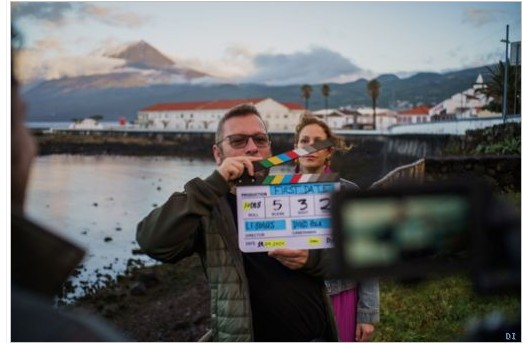
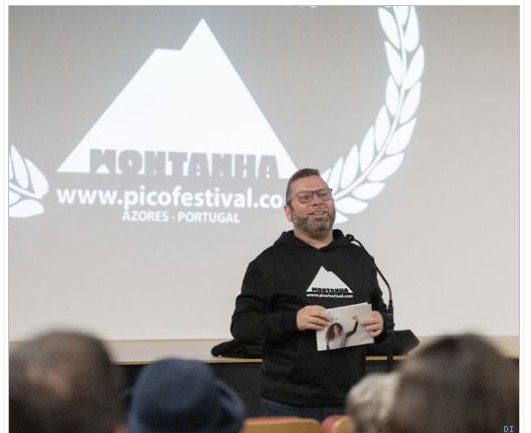
The 12th edition of the Montanha Pico Festival kicked off this week and runs through January 29, featuring short and feature-length films across multiple genres on the island of Pico. What impact does this festival have on the promotion of cinema in the Azores?
The Montanha Pico Festival is internationally recognized. It is part of the global mountain film festival network and is listed among the professional festivals accredited by Portugal’s Institute of Cinema and Audiovisual. Montanha is the only film festival in the Azores that, alongside its core focus on mountain culture, also dedicates a specific section to works produced in the Azores. In that sense, it not only encourages creation on our islands, but also provides one of the most important platforms for local filmmakers to see their work projected on the big screen.
Beyond screenings, we award prizes and have created two complementary initiatives: the PAA Awards — the Azorean Audiovisual Awards — and the Azorean Audiovisual Encounter, both biennial. These initiatives extend far beyond what is presented during the festival itself. Taken together, the Montanha Pico Festival is the most comprehensive project we have managed to build for the film and audiovisual sector in our region.
In this 12th edition, we are presenting 35 works over 10 nights, across three venues: Tuesdays at the Auditorium of the Whaling Museum, Thursdays at the Municipal Auditorium of Lajes do Pico, and a special weekend, January 23 to 25, at the Madalena Auditorium, dedicated to the section “The Best of Portugal,” where we screen Portuguese feature films.
Are there any updates on the Prémio Curta Pico?
The second edition is now open, from today through July 1, for the submission of project ideas. The Prémio Curta Pico is a competition designed to support audiovisual production in the Azores. It is open to directors and producers who submit a proposal for a fiction short film, with a final duration of between seven and fifteen minutes, to be filmed on the island of Pico.
The prize includes financial support from the island’s municipalities, which means the film must be shot entirely on Pico. The jury will give preference to projects that focus on the island’s history, traditions, locations, landscapes, the mountain itself as a character, or that involve professional talent and the local community of Pico or the Azores more broadly.
In the first phase, proposals will be evaluated by a three-member jury, each representing one of the island’s three municipalities. Finalists will be contacted directly and invited to move on to the second phase. In that stage, finalists will have up to ten weeks to complete the process, including pre-production elements such as assembling the production team, preparing a projected budget, and submitting a script.
The final proposals will then be evaluated by a jury of professionals from the sector, and only one project will be selected as the winner. The winning short film concept will be announced by MiratecArts in January 2027, the year in which the film will be produced and completed. The finished work will premiere at the Montanha Pico Festival in 2028. That is the roadmap for the second edition of the Prémio Curta Pico. The official call for proposals is available at picofestival.com.
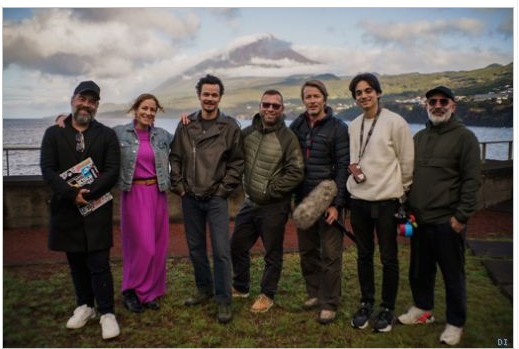
The first project to win this prize was the short film First Date, by Luís Filipe Borges. What journey has the film taken since then?
The winner of the inaugural MiratecArts Prémio Curta Pico — and the first film by Luís Filipe Borges — First Date returned this week to the island of Pico, opening the Montanha Pico Festival to a packed house at the Municipal Auditorium of Lajes do Pico. Its premiere had taken place in January 2025 at the Madalena Auditorium, after which the film embarked on a tour of 50 festivals across 16 countries, earning 21 awards.
Those awards came from Portugal to the United States, from the United Kingdom to Angola, from Sweden to India, with the most recent honors arriving from Brazil. Film critics have consistently highlighted the work, praising every artistic aspect — from the screenplay to the cinematography to the performances. The film has become a powerful promotional tool for the Azores, and especially for the island of Pico, unlike anything we have seen before. It is reaching corners of the world that had never heard of the Azores, and the striking images — filmed in Lajes do Pico, Madalena, and São Roque do Pico — are frequently singled out by critics around the globe.
Is the success of First Date proof that more investment should be made in audiovisual production in the Azores? Is there still a lack of support for this industry to truly establish itself in the archipelago?
Artistic cultural creation is one of the most necessary areas of investment for our region. The single week of production on Pico to shoot First Date generated thousands of euros in lodging, transportation, food, and services. When we invest in what is ours, money circulates locally — and that is the key to the growth of any community.
What the Azores do not lack is creative talent, on every one of our islands. We need to further develop this sector, which is itself a driver of the local economy. When MiratecArts presents a month of programming without guests, the difference is immediately felt in local accommodations, restaurants, transportation, and beyond. In months when we host live guests and participants, our towns and parishes are alive and thriving. That is what investing in local economic development looks like.
The regional budget available to support, on average, 350 annual applications for cultural projects is smaller than, for example, the support given to a single cheese factory to renovate its small family operation. It makes no sense, in this day and age, to continue working in the cultural sector with budgets that assume the work is entirely amateur and voluntary, as it may have been decades ago.
There are hundreds of individuals in our region who could realistically earn a full-time living through their art, creating works that serve as tools of promotion, education, and cultural heritage for the future of the Azores. Instead, most of our artists are forced to spend their days in unrelated jobs just to earn a salary.
We need employment programs specifically for creatives. It is imperative to adapt and properly fund existing programs for this new era of artistic creation in the Azores. And just as important, we must program our artists and their original works into municipal seasons and regional events — paying professionals fairly and recognizing the true value of their labor.
If one more public entity asks me for work with no budget, I might explode. And signing agreements and then failing to pay helps no one. If there are funds allocated to invest in the sector, they must be invested fully — and paid on time. Azorean cultural organizations survive only through external support or because people donate their time, their talent, and often their own money. I have been leading MiratecArts for 14 years, but without the board members and volunteers, we would have closed long ago. Running a cultural organization on an island without external financial support is extraordinarily difficult. Like it or not, this is an industry, and it must be respected and supported like any other.

The Montanha Pico Festival is MiratecArts’ first event of 2026. What else are you preparing for the rest of the year?
January 2026 marks the launch of MiratecArts’ 14th season, beginning with the Montanha Pico Festival. Since 2012, we have worked with more than 3,220 artists, and this year we expect to welcome a couple hundred more. Spring is dedicated to restructuring, followed by the Azores Fringe Festival in May and June.
This year we are also preparing another Pedras Negras Encounter, a weekend devoted to books and literature. We are always seeking partners across the islands to help promote and host Fringe programming, as it is the only annual cultural project produced in the Azores that reaches all nine islands.
Summer takes place at the Forte de Santa Catarina in Lajes do Pico, with Música no Forte, and we also host the open-air cinema festival Lavadias. This year, the Azores BirdwatchingArts Festival will take place earlier, in September. The Cordas Festival in October and AnimaPIX in December remain on the calendar at the Madalena Library Auditorium.
We are awaiting responses and hope to be able to present full artistic seasons in partnership with some municipalities. And it’s worth remembering that the MiratecArts Galeria Costa — our headquarters and owned property — always has its doors open to visitors. In recent years, we have surpassed five thousand visitors annually, which is deeply gratifying.
The dream of finding patrons to restore the stone house on the property, creating a center for interpretation and hospitality, is still alive. Perhaps someone reading this will want to join this artistic eruption in the middle of the Atlantic Ocean. We are here to talk — and to work together. Art matters.
In Diário Insular, José Lourenço-director
 Filamentos (artes e letras)