
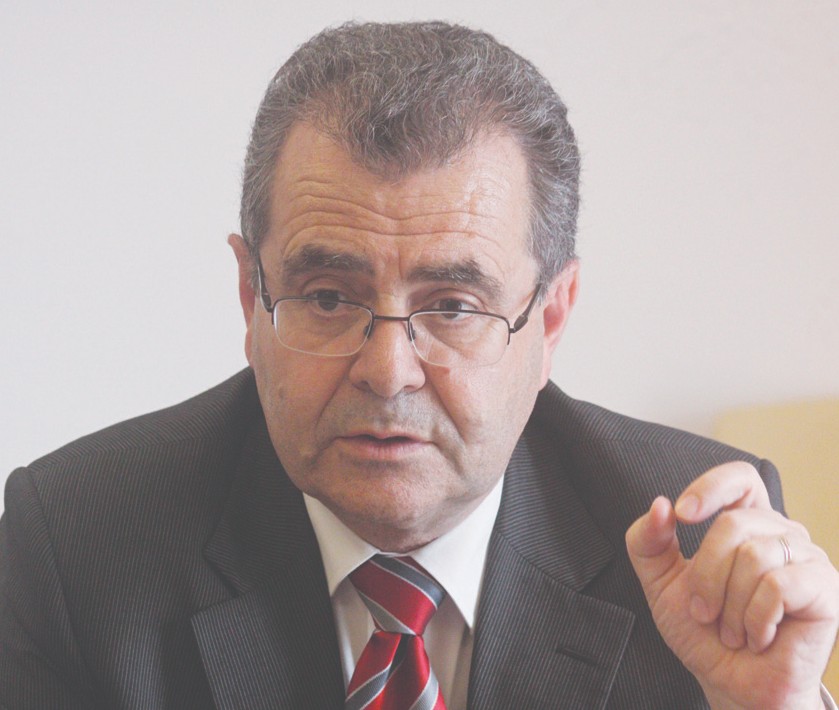
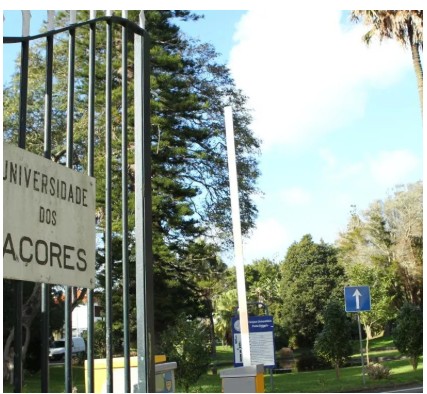
As the University of the Azores (UAc) marks its 50th anniversary tomorrow, former Rector Avelino de Freitas de Meneses reflects on the institution’s past, present, and future in an interview with Correio dos Açores. He stresses that “success in the past does not guarantee sustainability in the present or the future.” During his tenure, the University experienced growth in student enrollment, faculty qualifications, and a major transformation of its infrastructure. Today, he argues, priorities must include student recruitment, improved learning outcomes, and the valorization of insularity. The historian also notes that the University is currently facing a “shortfall in adequate funding.”
Correio dos Açores – How do you assess the University of the Azores on the occasion of its 50th anniversary?
Avelino de Freitas de Meneses (Former Rector of the University of the Azores) – In the Azores, 1976 was a remarkable year.
First and foremost, thanks to the April 25 Revolution, autonomy evolved from administrative decentralization to political emancipation, enshrined as a constitutional principle of the Portuguese Republic. With a then-unprecedented capacity for self-governance and exceptional resource availability, the Azoreans embarked on a path of progress unique in our more than five centuries of history. The newly founded University of the Azores played a decisive role in this process by training the human capital essential to achieving higher levels of development.
In the past, the University helped shape a better country and a better archipelago. Indeed, it became one of the principal agents transforming the islands’ landscape. In the future, through the continued qualification of our people, the University will contribute even more decisively to the progress of the Azores and to the strengthening of Portugal—both of which depend, above all, on the cultivation of knowledge.
How has the institution evolved over the decades? In which scientific areas has this evolution been most evident, and why?
Quantitatively, the University has seen steady progress—more students, more faculty, more infrastructure and equipment. Qualitatively, progress has been equally consistent—better teaching, stronger research, and improved overall resources.
The University has sustained a stable academic offering and scientific output aligned with the character of the Azores, gaining visibility within Portuguese and international academic communities through faculty specialization and research development. At the same time, it has maintained the flexibility to adapt its teaching and research to the changing needs of the Azores—not because it is a “regional” institution, but because it is an institution embedded in a region. In other words, the University’s success has stemmed from the intersection of universality and insularity.
That said, past success does not guarantee present or future sustainability. As elsewhere, Portuguese higher education risks a division between universities for “good” students and universities for “less prepared” students. For the University of the Azores, attracting strong students is essential—and retaining Azorean students is critical to that effort. Why? Because after the proliferation of higher education institutions and amid demographic decline, there are fewer students to distribute across peripheral regions. With few exceptions, most strong students from outside remain where they are; they do not come here.
This dilemma cannot be solved by the University alone. Government action is also required—specifically, a reversal of current trends. While successive Azorean governments have gradually encouraged greater participation in higher education, this is not enough. They must more consistently and decisively promote enrollment at the University of the Azores itself. This has not yet happened. Under such circumstances, how can we expect the Republic to treat the University of the Azores differently—because it is just—if the Azorean governments themselves do not do so?

During your tenure as Rector, which structural measures stand out, and what were the most significant moments of your mandate?
At the University of the Azores, by a twist of fate, I was among the first students. Through sustained effort, I became the first to complete a doctorate. Eventually, I was entrusted with the rectorship, driven by a sincere desire to serve and by a measured ambition conducive to effective action. From that period, I retain a deep sense of fulfillment—compensating, in part, for the scientific, pedagogical, and cultural opportunities sacrificed to the prolonged dedication required by university governance.
From my term as Rector (2003–2011), three achievements stand out. First, the increase in student enrollment—approximately 1,000 additional students, or about a 20% rise, bringing total enrollment above 4,500—is clear evidence of institutional success in expanding educational access. Second, the significant increase in doctoral qualifications among faculty and researchers—approximately 96% in the university sector—is another indicator of success, reflecting enhanced competence. Third, the transformation of infrastructure. While facilities are not the essence of an institution, in this case, the construction of new campuses in Angra do Heroísmo and Horta ensured the University’s original tripolar structure.
These investments improved working conditions, increased productivity, eased inter-island tensions that can undermine collective action, and better aligned the University with its true nature—as an institution of the Azores as a whole, a symbiosis of unity and dispersion.
And since self-praise borders on reproach, I will stop here. Ultimately, the best assessment of any leader comes from social analysis and historical judgment, which are far more neutral.
What challenges remained unresolved, and what legacy do you believe you left to your successors?
The assessment of one’s legacy properly belongs to others. Still, the progress achieved—more students, better-qualified faculty and researchers, and excellent facilities—certainly contributed to ongoing institutional development.
I also recall a persistent concern: the constant noise surrounding financial sustainability, which may have harmed the institution’s image. This was not a sign of mismanagement or impending insolvency, but rather the result of a sustained struggle for fair and differentiated treatment within the national system. Without resisting the pressures of centralism—often disguised as “rationalization,” meaning contraction—we would have risked insignificance, contrary to our duty to foster development.
By engaging national and regional political processes—through dialogue, pressure, and, at times, dramatization—we secured the financial resources necessary for operations. Even today, the University of the Azores continues to face inadequate funding. A sustainable model requires contributions from the national government, which must recognize the costs of insularity; from the regional government, which must assume the costs of tripolarity; from host municipalities, which benefit directly; and from businesses, provided the University demonstrates its public value.
How do you evaluate the current state of higher education, particularly at the University of the Azores?
Tradition has not always favored a positive understanding of universities’ roles in societal development. There persists a belief that universities are slow to innovate, resistant to pedagogical renewal, disconnected from community needs, and inflexible in delivering advanced services. This perception is increasingly outdated. Today’s universities demonstrate a strong capacity for intervention.
By focusing on student employability, aligning curricula with societal needs, promoting the transfer of scientific and technological knowledge through applied research, and fostering entrepreneurship grounded in knowledge application, universities play an active role in development.
In the Azores, lifelong learning needs—particularly for professionals unable to travel regularly—and the archipelago’s territorial discontinuity require expanding distance education. Technological resources and faculty openness to new tools make this feasible; ongoing training will complete the task.
Looking ahead, the University’s success depends on bringing its activities closer to more islands and more places, without necessarily building new infrastructure or increasing operating costs. New technologies and local partnerships are essential strategies, with distance education an unavoidable geographic imperative. Ultimately, supply—the University’s capabilities—must be aligned with demand—the needs of society.
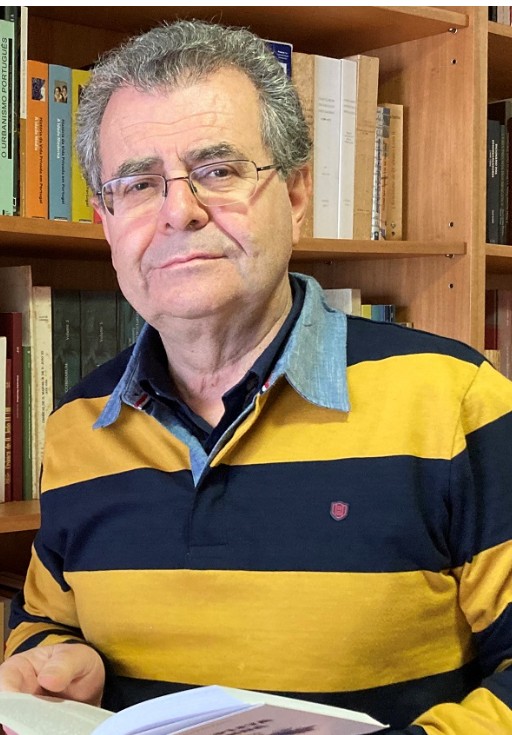
What are your expectations for the University’s future in scientific, pedagogical, and community engagement terms?
The Azorean character—diversity within unity—imposes a demanding mission: advancing overall development while reducing inter-island disparities. The University must universalize knowledge even when rooted in local realities.
Success depends on valuing geography. If isolation is a challenge, a global perspective is an opportunity. The University must take advantage of the sea—the last frontier of humanity. Today, Portugal’s ocean is not a global empire but a vast archipelago, especially the immeasurable sea of the Azores. In science, these waters encompass not only oceanography, biology, and the environment, but also history, literature, and politics.
More than land wealth or maritime promise, knowledge matters most. More than resources, qualifications matter. Promoting equality of opportunity and social inclusion requires centralizing education. Whereas past wealth depended on raw materials and cheap labor, present wealth depends on access to knowledge. Education is thus the most powerful means of transforming Portugal, the Azores, and the world, as the greatest producer of equality through the redistribution of wealth.
This is the moment for human development. From the University, we expect a dual mission: attracting more students and delivering better education. Student access requires extending tuition-free undergraduate education—an obligation of governments. Educational quality requires greater investment in pedagogical, scientific, and cultural domains, the pillars of academic success.
What message would you like to leave readers and the academic community as the University marks its 50th anniversary?
To overcome relative underdevelopment, the Azores must know their history, understand their immediate circumstances—across all the islands—and invest in what matters most: the qualification of their people. Today’s economy rests on knowledge. Hence, the University’s importance as perhaps the greatest driver of development in the Azores in recent decades.
Internally, however demanding, the University must pursue permanent reform so that faculty, researchers, and students never lose their capacity to transform society. And so that the ancient autonomy of the university remains a force for innovation, not inertia, we ask citizens not merely for emotional support, but for informed and constructive critique.
Diogo Simões Pires is a journalist for Correio dos Açores, Natalino Viveiros, director.
 Filamentos (artes e letras)