
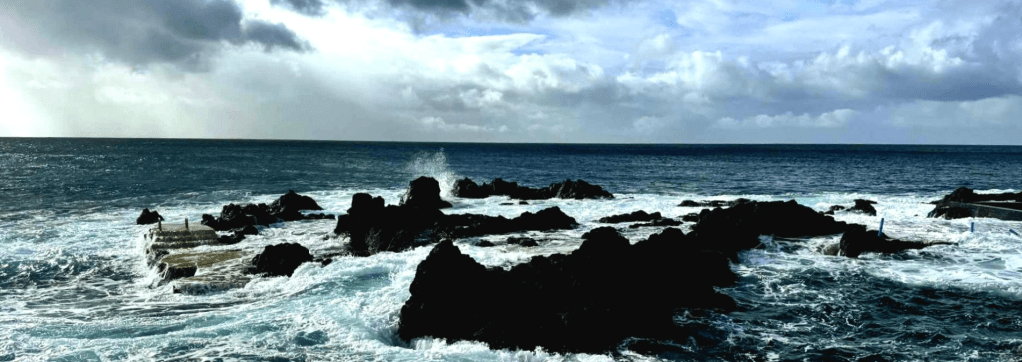
“We don’t need to know about mathematics and all those prayers she spits out of her mouth… we are the children of fishermen, our destiny is the sea…”
Circulating on social media is the outcry of a 13-year-old boy who exposes, in almost brutal terms, the deep fracture between the school and those it is meant to serve. His words reveal a profound sense of displacement, as if the school were a foreign territory—one whose language, forms of knowledge, and expectations do not belong to the children of the people, but rather to an elite that has shaped the institution in its own image.
What is being denounced here is clear: the school, as it has been constructed, was never designed for everyone. It was organized according to values, rhythms, and contents defined by a dominant class that has always viewed education as an instrument for reproducing its own power. The school fails because it does not know how to dialogue with the knowledge of the people; because it does not integrate itself into the life of the community; because it denies dignity to knowledge that emerges from labor, from the sea, and from the land.
The children of chronically excluded classes feel that they do not belong in school—not because they lack ability, but because the school was never prepared to belong to them. And because education is necessary—and here, too, it fails. Many young people arrive at school carrying different worlds within them: practical forms of knowledge, family memories, a relationship to work and to life that does not fit into textbooks or classroom discourse. And the system, instead of welcoming these identities, treats them as marginal, as if they were imperfect forms of humanity.
On social media circulate the raw, almost desperate words through which a boy translated his world. This is not a gratuitous outburst of rebellion, but the voice of someone who understood, far too early, that the school we have does not belong to him. That his place is not within classroom learning, but out at sea, in labor, in the invisible daily lives of exhausted families—worn down by poverty and by the abandonment of promises of equality.
In the Azores, this individual cry echoes within a grim statistical reality. The Region continues to lead the indicators of poverty and inequality. In 2023, 24.2% of the population was at risk of poverty, a figure well above the national average. Severe material deprivation, labor precarity, and the absence of concrete prospects shape a landscape of exclusion in which the school rarely acts as a shield or an escape route.
And when education is considered, the data confirm the tragedy: 19.1% of Azorean youth dropped out of at least one level of schooling without completing it—a proportion significantly higher than the national average of 16.8%. Although the early school-leaving rate in the Azores fell to 21.7% in 2023, it remains three times higher than that of many mainland regions. In the 2023/2024 school year, 1,815 cases of grade retention and school dropout were recorded in the Region, with 323 students failing to renew enrollment in the 12th grade.
These numbers are not merely statistical. They are lives dissolving, dreams shattering, futures torn away before they even begin. This abandonment does not occur by chance, nor because of laziness or lack of interest. It results from persistent social exclusion—from poverty that constrains choices, from precarity that undermines dignity, from the historical devaluation of children born into families that have long been ostracized.
The public school, idealized as a space of mobility and equality, often becomes an instrument for reproducing inequality. It demands academic knowledge, abstract curricula, standardized and universal rhythms, while forgetting those who live according to the sea, the land, the harshness of labor, income instability, or crushing poverty.
The school, as it currently exists, does not converse with the lives of a large part of the young people who attend it. It ignores popular culture, practical knowledge, work experience, and collective ancestry.
It is urgent to transform this school—but not merely through programs of “reintegration,” “dropout prevention,” or “academic reinforcement.” These measures are welcome, but, as statistics show, insufficient. What the archipelago needs are contextualized curricula that value Azorean culture, the knowledge of the sea and the land, and the histories of local communities.
It is increasingly urgent to strengthen real support policies for families: combating poverty, guaranteeing dignified incomes, ensuring stable employment. Only then will the school cease to compete with the urgency of survival. The creation of social inclusion services, guidance, and continuous support throughout schooling is essential—especially in the most vulnerable areas—so that dropping out is no longer the only possible exit.
Adequate infrastructure and resources are indispensable. We can no longer postpone the recognition of knowledge derived from work—fishing, agriculture, construction—as a legitimate part of education, valuing life trajectories and identities and opening real paths toward the future.
Education cannot be a privilege reserved for those who already possess stability. School must be a space of affirmation for those born with less, not a mechanism of exclusion for those who live with less.
May the voice of this young person—and of so many others who think the same way—not be ignored. May it become the engine of profound change. May the Azores cease to be an archipelago of grim statistics. May the school reinvent itself as a shared home, as a real possibility.
I hope those responsible for educational policy do not fall asleep over this cry.
“Our destiny is the sea…”
Azorean society should commit itself to transforming the school into a point of departure for other destinies.
Henrique Levy is a poet and novelist
Translated by Diniz Borges
 Filamentos (artes e letras)